Trump says interim accord to end Iran war is 'over', warns of new US strikes
US President Donald Trump has declared an interim agreement aimed at ending the protracted conflict with Iran "over," raising immediate fears of escalating hostilities following a series of retaliatory strikes in the Gulf. Trump's comments came as oil prices surged and global bond markets reacted to the renewed tensions, with the President also warning of new US strikes against Iranian targets.
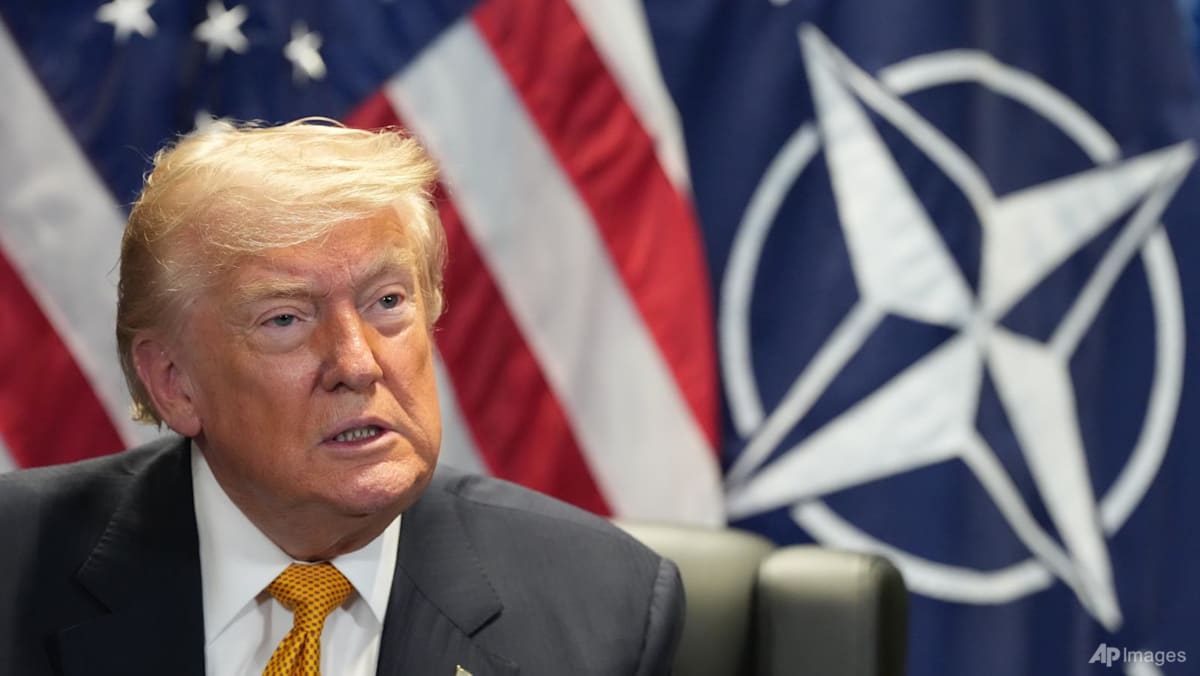
Escalation in the Gulf: Accord 'Over' as Trump Warns of More Strikes
By Decode Today News
In a significant shift, US President Donald Trump stated that an interim accord designed to bring an end to the war with Iran was "over," casting a shadow over the future of diplomatic efforts. His remarks followed a rapid escalation of tit-for-tat attacks, including Iranian strikes on US military sites in Bahrain and Kuwait, and US counter-strikes on Iranian targets. The President indicated that new American military action was likely to occur, further fueling concerns about a broader conflict.
The latest flare-up, which saw oil prices jump by approximately 7 percent, intensified after Iran claimed attacks on US military facilities. These came in response to earlier US forces striking Iranian targets, themselves a reaction to attacks on tankers in the crucial Strait of Hormuz. This cycle of violence has severely rattled a shaky ceasefire agreement, dampening hopes that a memorandum of understanding (MOU) signed on June 17 could evolve into a lasting peace deal to conclude the conflict that began with US-Israeli airstrikes on Iran on February 28.
Speaking in Ankara before a NATO summit, President Trump was asked directly about the interim memorandum. "It's a very interesting question. To me, I think it's over. I don't want to deal with them," he told reporters. He added, "As far as I'm concerned, it's just a waste of time dealing with them." Despite this strong stance, he did acknowledge, "Now, I'll let our wonderful negotiators keep talking if they want, but I don't see it. I don't like these people, you know that."
The President did not explicitly state that Washington would return to full-fledged war and it remained unclear whether negotiations for a permanent deal would continue. However, his strong rhetoric suggested a hardening of his administration's position. "If we make a deal with Iran I'm not sure that will stick," Trump remarked, citing that he found them "to be very dishonourable people."
Warnings and Retaliation Amidst Uncertainty
Later in the day, before a meeting with Ukrainian President Volodymyr Zelenskyy, Trump issued a stern warning of impending US military action. "I'll give a little warning: We're going to hit them hard tonight," he declared to reporters. Yet, at a subsequent press conference, he offered a seemingly contradictory note, stating he did not anticipate the war would restart. "Anything that happens is going to be over very quickly ... and will only make it safer, including for oil."
The United States had earlier launched strikes and revoked a license that permitted Iran to sell oil, directly in response to the attacks on three tankers in the Strait of Hormuz. US Central Command reported that over 60 small boats used by the Islamic Revolutionary Guard Corps (IRGC) were among the targets hit, an operation intended to impose a heavy cost on Iran for violating the ceasefire by striking shipping. Trump confirmed these actions, stating the US "knocked out 28 boats last night" and implied more could follow. He also verified that the US had attacked Iran's main oil hub of Kharg Island, repeating a previous warning that US forces could take over the island: "They may hit it again tonight."
Iranian state media reported explosions on Kharg Island, Qeshm Island, and in the southern port cities of Sirik and Bandar Abbas. A US official, speaking to Reuters, indicated that these strikes specifically targeted Iranian air defense systems, coastal surveillance systems, surface-to-air missiles, anti-ship cruise missiles, and drone launch sites. Importantly, no civilian deaths were reported in Iran.
In response to the US actions, Iran's top joint military command, Khatam al-Anbiya Central Headquarters, denounced the US strikes as a "blatant act of aggression." Iranian Foreign Ministry spokesperson Esmaeil Baghaei stated that the US attacks had violated the memorandum of understanding by challenging a clause emphasizing Iran's responsibility for safe passage through the Strait of Hormuz.
Global Economic Repercussions
The renewed hostilities had immediate and significant impacts on global markets. Brent crude futures leapt by 7 percent, marking the largest single-day increase since late May, to reach US$79.07 a barrel. While this figure is considerably below the peaks above US$120 witnessed at the height of previous fighting, it was enough to inject fresh inflation risk into the bond market, especially given that months of prior conflict had already drawn down global oil inventories. Shipping data underscored the precarious situation in the Gulf, showing at least four oil and gas tankers had turned back rather than attempting to navigate the Strait of Hormuz, a critical conduit for global energy trade.
Iran's strategic control over the Strait of Hormuz, which lies between Iran and Oman, has historically provided Tehran with immense leverage in its negotiations with Washington. The now-declared "over" interim US-Iran agreement had seen the US Treasury issue a general license allowing the sale of Iranian crude oil and petrochemical products through August 21. The revocation of this license on Tuesday, giving Iran until July 17 to wind down transactions, was condemned by Iran's Foreign Ministry as a clear breach of the framework agreement.
Iran's Stance and Potential Responses
The Revolutionary Guards (IRGC) confirmed their attacks on US military sites in Bahrain and Kuwait, also claiming to have shot down a US MQ-9 drone attempting to interfere with their operation. Bahrain's army later reported that it had successfully thwarted Iranian attacks. However, it remained unclear precisely how Iran planned to further retaliate, with no immediate comment from the hardline Revolutionary Guard, who are believed to hold significant sway over policy decisions since the war's outset.
Iranian Deputy Foreign Minister Kazem Gharibabadi stated that for Iran to be understood, it must communicate with Trump in the "language of force." Adding to the threats, Iran's Press TV, citing an "informed source," reported that Iran would close the Strait of Hormuz if new US attacks occurred. A spokesperson for Iran's parliament's National Security Commission outlined other potential retaliation options, including withdrawing from the nuclear Non-Proliferation Treaty (NPT), altering Iran's nuclear doctrine, and closing the Bab-el-Mandeb Strait, another vital global shipping route at the mouth of the Red Sea.
Despite Trump's history of occasionally stepping back from threats he has made against Iran, the market reactions and the concrete military actions indicate a serious intensification of the long-standing geopolitical tensions.
Frequently Asked Questions
What was the "interim accord" Trump declared "over"?
The interim accord refers to a memorandum of understanding (MOU) signed on June 17, which was intended as a step towards a permanent peace deal to end the war between the US and Iran. It included provisions like a general license for Iran to sell oil, which has since been revoked by the US.
What were the recent military actions?
Iran attacked US military sites in Bahrain and Kuwait. In retaliation, the US struck Iranian targets, including Kharg Island, Qeshm Island, and southern port cities, reportedly targeting air defense systems, coastal surveillance, missiles, and drone launch sites. The US also claimed to have destroyed numerous IRGC small boats.
How have global markets reacted to the escalation?
Oil prices, specifically Brent crude futures, jumped by 7 percent, reaching US$79.07 a barrel. Global bond markets tumbled, signaling renewed inflation risk due to concerns about global oil supply and geopolitical instability.
The Path Forward
The latest pronouncements from President Trump and the subsequent military exchanges mark a dangerous turn in the ongoing conflict between the United States and Iran. While the President's statements have at times shown a degree of inconsistency regarding the likelihood of full-scale war, the concrete actions, including missile strikes and the revocation of oil trade licenses, suggest a deliberate escalation. The immediate future appears fraught with uncertainty, with the potential for further military action, continued market volatility, and a deepening of regional instability. The world watches closely to see if diplomacy can find a path amidst the "language of force" now being spoken by both sides, or if the region will descend into a wider conflict.


