US Intensifies Strikes on Iran for Second Day as Trump Declares Peace Agreement "Over"
US Intensifies Strikes on Iran for Second Day as Trump Declares Peace Agreement "Over"
By Decode Today News
The United States military has launched a second consecutive day of strikes against Iran, mere hours after former President Donald Trump declared an interim agreement aimed at de-escalating the ongoing war was "over." Explosions were reported across key Iranian locations, including the strategic port city of Bandar Abbas in the Strait of Hormuz, Sirik, another southern coastal city, and Bushehr province, home to Iran's nuclear power complex, signaling a significant escalation in the region.
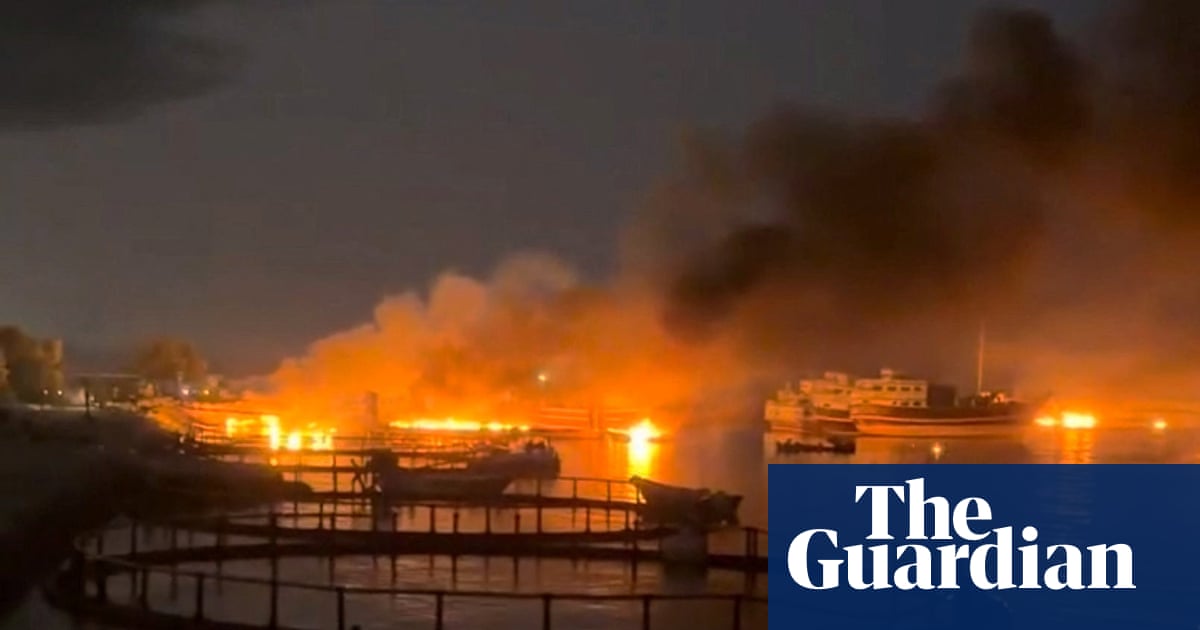
Key Developments in US-Iran Escalation
- The US military executed a second day of strikes on Iran, targeting strategic sites after President Donald Trump announced the cessation of an interim peace agreement.
- These strikes were confirmed by US Central Command as direct retaliation for Iranian attacks on three cargo ships in the Strait of Hormuz.
- Trump stated on Truth Social that the action was "in retribution for yesterday's bombing of ships by Iran," warning of "much worse" if attacks recur.
- Economic impacts include a noticeable fall in US stock markets and a significant surge in Brent crude oil prices, reflecting heightened global instability.
- Iran also continued its own retaliatory strikes, targeting US military sites in Bahrain and Kuwait, leading to alarms and drone interceptions.
The latest wave of US military action comes as regional tensions, already high, reached a boiling point following Tuesday's targeting of three cargo ships transiting the Strait of Hormuz. This incident marked the most extensive exchange of fire between the two sides since a memorandum of understanding (MOU) was signed last month, on June 17, which had offered a glimmer of hope for a permanent resolution to the ongoing conflict.
On his Truth Social platform, President Trump issued a stark warning: "This is in retribution for yesterday's bombing of ships by Iran. If it happens again, it will get much worse!" His declaration of the interim agreement being "over" effectively dismantles the fragile ceasefire that had been in place, throwing the region back into a state of heightened uncertainty and military confrontation.
US Central Command corroborated the strikes, posting on X that forces were conducting "additional strikes against Iran to further degrade their ability to threaten freedom of navigation in the Strait of Hormuz." This statement underscored the strategic importance of the waterway, a vital choke point for global oil supplies, and the US commitment to safeguarding international shipping.
Iran Responds and Economic Fallout
The escalation was not one-sided. After initially targeting US military sites in Bahrain and Kuwait on Wednesday, Iran reportedly renewed these attacks on Thursday. Sirens blared at least twice in Bahrain, home to the US Navy’s 5th Fleet headquarters, though there was no immediate information regarding damage. Kuwait’s military reported actively intercepting incoming drones and missiles, indicating a sustained and aggressive response from Tehran.
Iranian state media also reported that further explosions were heard on Abu Musa Island. This island is one of three small islands claimed by the United Arab Emirates, which collectively form the backbone of Iran’s strategic control over the Strait of Hormuz. Despite the widespread reports of attacks, Iran’s Mehr news agency stated that the strikes on Bushehr province did not cause damage to the Bushehr nuclear power plant, a key piece of infrastructure that remains a point of international focus.
The economic repercussions of this renewed confrontation were immediate and significant. US stock markets experienced a downturn on Wednesday, reflecting investor apprehension over global stability. Brent crude, the international oil benchmark, surged by more than 5% to nearly $80 a barrel. These financial movements highlight the extensive ripple effects a conflict in this critical region can have on global energy markets and the broader economy, impacting consumers and businesses worldwide.
Political Reactions and the Path Forward
The US actions drew strong reactions. Speaking on the sidelines of a NATO summit in Ankara, Turkey, President Trump had earlier foreshadowed the intensity of the strikes, stating the US would "probably hit [Iran] hard again tonight." He also indicated that the latest strikes would not necessarily lead to "long-term" military action, suggesting that "anything that happens is going to happen very fast," and that the US military might "just finish the job." He characterized Iran's conduct as "behaving very badly," accusing the country of launching drones and missiles at ships.
US Senator Bernie Sanders, a vocal critic of military interventions, expressed strong disapproval of Trump's move. In a post on X, Sanders asserted, "Restarting his reckless war with Iran won’t make America stronger. It will cost more lives and waste more taxpayer dollars." He further added, "after getting the United States into a war based on lies, Trump has now declared the ceasefire with Iran ‘over’ after less than a month," highlighting the short-lived nature of the interim agreement.
Iran, for its part, maintained its stance regarding the Strait of Hormuz. Its parliament speaker, Mohammad Bagher Ghalibaf, a key negotiator in talks over a permanent end to the war, posted on X, "The era of bullying and extortion is over. It leads nowhere. We don’t fold." This statement underscores Iran's resolve and its assertion that the interim ceasefire deal granted it the right to manage traffic through the crucial strait, a claim disputed by the US and international maritime law principles.
Adding to the intrigue, on his return journey from the NATO summit, President Trump dismissed questions regarding security concerns involving Iran after a surprise decision to fly part of the journey on an older Air Force One aircraft, rather than the newer Qatari-gifted jet he had arrived in. When asked if he was aware of any credible threats against Air Force One by Iran, Trump brushed off the question, stating, "I have a threat all the time. I’m number one on their list."
A Region in Mourning Amidst Escalation
The fresh round of strikes unfolded as Iranians were preparing for the burial of Supreme Leader Ayatollah Ali Khamenei in his hometown of Mashhad in northeast Iran. Khamenei was reportedly killed on the first day of the US-Israeli strikes that initiated the ongoing conflict. His death triggered a multi-day funeral ceremony that drew millions of mourners across various cities in both Iran and Iraq, a stark backdrop of national grief against a rapidly escalating military confrontation.
The intertwining of these events – a nation in mourning for its deceased leader and renewed military aggression – adds another layer of complexity to an already volatile situation, making the current period one of profound instability for the region.
FAQ: Understanding the US-Iran Escalation
What sparked the recent US strikes on Iran?
The immediate catalyst for the US strikes was the targeting of three cargo ships in the Strait of Hormuz by Iran on Tuesday. US Central Command confirmed these actions were in "retribution" for those attacks and to degrade Iran's ability to threaten maritime navigation.
What is the significance of the Strait of Hormuz in this conflict?
The Strait of Hormuz is a critical global shipping lane through which a significant portion of the world's oil supply passes. Control or disruption of this strait can have profound impacts on global energy markets and international trade, making it a key strategic flashpoint in any regional conflict.
How has the global community reacted to the escalation?
While the source material does not detail broad global reactions, it highlights specific responses. US stock markets fell, and global oil prices surged, indicating international economic apprehension. Domestically, US Senator Bernie Sanders strongly condemned the actions, while Iranian officials like Parliament Speaker Ghalibaf expressed defiance.
The Deeper Ramifications
The declaration by President Trump that the interim peace agreement with Iran is "over," followed by sustained US military strikes, marks a perilous turning point in the long-standing tensions between the two nations. This swift escalation, occurring amidst the emotional backdrop of the Supreme Leader's funeral, has dismantled hopes for diplomatic resolution and plunged the Middle East into a period of acute instability. The direct military exchanges, the economic fallout impacting global oil prices and stock markets, and the strong rhetoric from both sides suggest a deepening confrontation. The world watches closely as the strategic Strait of Hormuz remains at the heart of this dispute, its security critical not just for regional stability but for the health of the global economy. The immediate future appears to hold little prospect for de-escalation, raising profound questions about the human and financial costs of a renewed war.


