Decode Today News delivers breaking news on AI, tech, business, politics, and world events — updated daily.
breaking news, AI news, technology news, India news, world news, business news #decodetodaynews
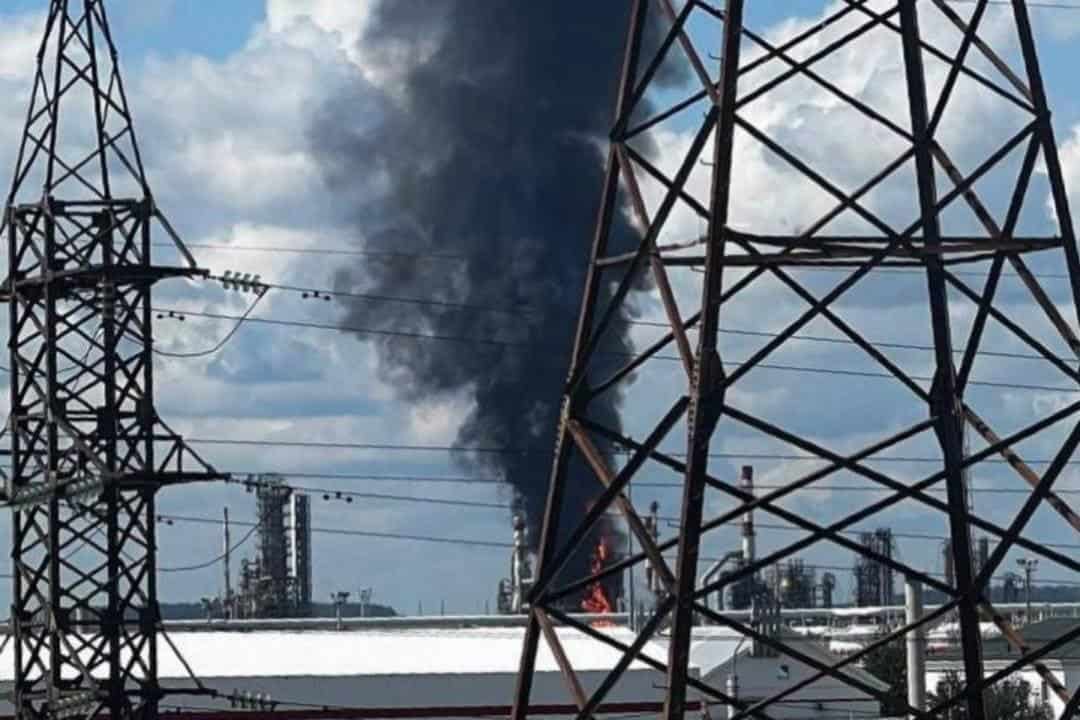
Ukrainian long-range strike drones successfully targeted an oil processing unit at Russia's **Lukoil-Permnefteorgsintez oil refinery** in Perm, Russia, a significant industrial facility within the Perm Krai region. The strike, reported by the monitoring outlet **Exilenova+**, follows earlier reports of drone activity across the region since early morning, with some drones reportedly heading toward the city of Perm. Eyewitness videos shared from the scene depict a substantial fire burning at the refinery, characterized by thick black smoke billowing above the facility, indicating a significant operational impact.
This incident marks another successful long-range engagement by **Ukraine's Defense Forces**, demonstrating their continued capability to target critical Russian energy infrastructure far from the front lines. The distance from the combat zone to the refinery struck today exceeds **1,500 kilometers**, underscoring the expanding reach of Ukrainian drone operations. Such strikes aim to disrupt the aggressor state's logistical and economic capabilities, particularly its energy supply chain.
Lukoil-Permnefteorgsintez: A Strategic Target
By Decode Today News
Drones Strike Oil Processing Unit at Perm Refinery Decode Today
The **Lukoil-Permnefteorgsintez oil refinery** stands as one of Russia's largest oil refining facilities and a pivotal industrial asset within Perm Krai. Its strategic importance is rooted in its substantial processing capacity and output of vital petroleum products. The refinery boasts a design processing capacity of approximately **13 million tonnes of crude oil per year**. This capacity enables it to produce a wide array of petroleum products crucial for both military and civilian operations, including:
Petrol: Essential for transport and military vehicles.
Diesel Fuel: A critical resource for heavy machinery, military logistics, and power generation.
Aviation Kerosene: Indispensable for air force operations and commercial flights.
Lubricants: Vital for the maintenance and functioning of industrial and military equipment.
In addition to these primary products, the facility also processes associated petroleum gas, further contributing to Russia's energy complex. The refinery's products are instrumental in supplying the aggressor state's domestic market, underpinning its economic stability and military efforts. A portion of its output has also historically been designated for export, contributing to Russia's foreign exchange earnings. Disruption to such facilities can have cascading effects on supply chain resilience and global market stability, particularly concerning refined petroleum products.
Repeated Targeting and Operational Impact
The recent strike is not an isolated incident; the **Lukoil-Permnefteorgsintez refinery** has been a recurring target for drones operated by **Ukraine's Defense Forces**. Previous attacks were reported on **May 7** and **May 8**, with another significant drone assault occurring on **April 30**. This pattern of repeated strikes suggests a deliberate strategy to degrade Russia's refining capabilities and impose ongoing cybersecurity risk and operational challenges on its energy sector.
The consistent targeting of key energy assets like the Perm refinery underscores a broader strategic objective for Ukraine: to diminish Russia's ability to fund and sustain its military aggression. Attacks on such distant and high-value targets highlight advancements in drone technology and operational planning by Ukrainian forces. The implications of these strikes extend beyond immediate physical damage, potentially affecting Russia's overall energy security, production capacity, and economic leverage on the global stage. Prolonged disruptions could necessitate significant investment yield in repairs and introduce cost efficiency pressures across Russia's industrial base.
Understanding Ukraine's Strategic Imperatives
The sustained campaign targeting Russian oil infrastructure by **Ukraine** is multifaceted, driven by both defensive necessity and strategic ambition. For **Ukraine**, these operations serve several key purposes:
Disrupting Logistics: By targeting refineries producing petrol, diesel, and aviation kerosene, **Ukraine** aims to directly impede the supply lines fueling Russian military operations. This impacts the operational integrity and mobility of Russian forces.
Economic Pressure: Strikes on vital economic assets, particularly those involved in energy exports, impose significant economic costs on Russia. This strategy seeks to reduce the financial resources available to the Kremlin for sustaining its war efforts, impacting market valuation and overall economic performance.
Stretching Defenses: Forcing Russia to deploy air defense systems to protect industrial sites deep within its territory diverts resources from the front lines and other strategic locations. This creates vulnerabilities that **Ukraine** can potentially exploit elsewhere.
Maintaining Initiative: These long-range strikes demonstrate **Ukraine's** ability to project power and maintain offensive pressure, even as front-line engagements continue. It signals an evolving military capability and a commitment to asymmetric warfare.
Symbolic Impact: Successful strikes deep within Russia also carry significant symbolic weight, challenging perceptions of Russian inviolability and potentially influencing domestic morale.
The utilization of long-range drones, capable of penetrating over **1,500 kilometers** into Russian airspace, represents a critical aspect of **Ukraine's** defensive posture. These systems often leverage advanced technology, potentially incorporating elements of AI infrastructure for navigation and target acquisition, though specific details remain unconfirmed. The ongoing conflict continues to showcase the evolving nature of modern warfare, with drone technology playing an increasingly pivotal role in shaping strategic outcomes and impacting critical energy infrastructure. The long-term effects on Russia's energy sector, including potential shifts in consumer demand and adjustments to operating margin for key state-owned enterprises, remain a subject of close observation for global markets.
Decode Today News delivers breaking news on AI, tech, business, politics, and world events — updated daily.
breaking news, AI news, technology news, India news, world news, business news #decodetodaynews