Trump: Saudi Nuclear Deal Requires Israel Recognition
US-Saudi Nuclear Pact Contingent on Israel Recognition
By Decode Today News
Former U.S. President Donald Trump has stated that a proposed civil nuclear deal between the United States and Saudi Arabia is entirely dependent on Riyadh recognizing the State of Israel and joining the Abraham Accords. This condition, announced by Trump on Truth Social, ties the multi-billion-dollar energy partnership to significant geopolitical shifts in the Middle East, potentially reshaping regional dynamics.
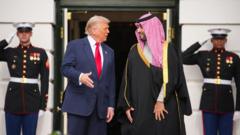
According to Trump, the "Civil Nuclear Deal," which he emphasized pertains exclusively to non-military use and will permit no uranium enrichment, "will be approved, but is totally subject to Saudi Arabia joining the very respected and successful Abraham Accords." While the text of the nuclear agreement has not been publicly released, and Saudi Arabia has not yet responded to Trump's remarks, White House press secretary Karoline Leavitt confirmed that Trump had discussed this condition with Saudi leaders on multiple prior occasions. "He has said if they don't join the Abraham Accords, the deal is off," Leavitt stated on Thursday, indicating ongoing diplomatic engagement.
Understanding the Geopolitical Mechanics of Israel's Role
The Abraham Accords, initiated during Trump's first presidential term, marked a historic normalization of relations between Israel and several Arab nations. The United Arab Emirates (UAE) and Bahrain were the first to sign, followed by Sudan, Morocco, and Kazakhstan. Saudi Arabia, a regional powerhouse, has historically conditioned its recognition of Israel on the establishment of a Palestinian state. Trump's current demand thus introduces a significant departure from this long-standing Saudi foreign policy principle, presenting a pivotal moment for Middle Eastern diplomacy and regional economic integration.
The potential inclusion of Saudi Arabia in the Abraham Accords is seen by some as a profound step towards broader peace in the Middle East. Israel's Prime Minister Benjamin Netanyahu's office, in a post on X, described Saudi Arabia joining the accords as "an historic leap forward for peace in the Middle East," though their statement made no specific mention of the nuclear deal itself. This perspective highlights the strategic objectives of expanding diplomatic ties and fostering greater stability across the region.
The Nuclear Deal: Safeguards, Concerns, and Economic Promise
The proposed agreement, described by the U.S. Department of Energy as a "peaceful nuclear co-operation agreement" and a "bilateral safeguards agreement," is intended to lay the legal foundation for a "decades-long, multi-billion-dollar partnership." This collaboration aims to advance several priority economic and strategic objectives, including robust nuclear nonproliferation protocols. The department also noted that the deal would provide "great access for American companies in the Saudi nuclear energy programme," promising significant investment yield and market valuation opportunities for U.S. enterprises.
Despite the economic promises and nonproliferation assurances, the deal has drawn criticism from experts and some Republican and Democratic lawmakers who expressed concerns about the risk of future nuclear proliferation in an already volatile region. The International Atomic Energy Agency (IAEA) acknowledged awareness of U.S. and Saudi plans for a "bilateral civil nuclear cooperation agreement" and anticipated a request for IAEA verification measures, underscoring the international compliance framework required for such projects.
Key Aspects of the Proposed Nuclear Deal and Related Stances:
- Nature of Agreement: "Peaceful nuclear co-operation agreement" with "bilateral safeguards agreement."
- Uranium Enrichment: Trump asserts "no enrichment of material."
- Prerequisite: Saudi Arabia must join the Abraham Accords, recognizing Israel.
- Economic Impact: Promises "great access for American companies" in Saudi nuclear energy, creating multi-billion-dollar partnership.
- Regulatory Oversight: To be reviewed by the U.S. Congress; IAEA expects request for verification measures.
- Potential Risks: Concerns from experts and lawmakers regarding nuclear proliferation.
The Uranium Enrichment Conundrum and Proliferation Fears
A critical point of contention and concern revolves around uranium enrichment capabilities. Earlier U.S. media reports suggested the deal might allow Saudi Arabia to enrich uranium in the future – a process vital for nuclear power plant fuel but also a potential pathway to nuclear weapons. However, Trump's recent remarks explicitly deny this possibility, stating there will be "no enrichment of material."
Experts remain wary. Rosemary Kelanic, director of the Middle East program at the U.S.-based Defense Priorities think tank, found the idea of the U.S. allowing Saudi Arabia uranium enrichment facilities "quite shocking." She emphasized, "The U.S. has never done that before. We have never helped another country enrich on their own soil," explaining that enabling a nation to produce its own nuclear fuel significantly increases its risk profile for developing nuclear weapons. This highlights the inherent cybersecurity risk and compliance security challenges in nuclear technology transfer.
Regional Repercussions and Israeli Perspectives
The broader geopolitical context of the deal includes the long-standing U.S.-Israeli conflict with Iran over its nuclear ambitions. Iran has consistently denied Western accusations of seeking nuclear weapons. Saudi Arabia's Crown Prince Mohammed bin Salman previously indicated in 2018 that while his nation was not planning to acquire nuclear weapons, it would "without a doubt if Iran developed a nuclear bomb, we will follow suit as soon as possible." This statement underscores the delicate balance of power and the potential for a regional arms race, making nonproliferation protocols paramount.
Reactions from Israeli officials have been mixed, reflecting the complexity of the situation:
| Official/Body | Stance on Saudi-Israel Normalization | Stance on Saudi Nuclear Program |
|---|---|---|
| PM Benjamin Netanyahu's Office | Views Saudi joining Abraham Accords as an "historic leap forward for peace." | Did not mention the nuclear deal in its statement. |
| Economy Minister Nir Barkat | N/A | Stated Israel "can manage it" if Saudi Arabia pursued nuclear power for peaceful means. |
| Former Defense Minister Avigdor Lieberman | N/A | Critical; stated, "Every military nuclear program begins with a civilian one," highlighting proliferation concerns. |
Israel itself is widely believed to possess nuclear weapons, though it maintains a policy of neither confirming nor denying this status. The diverse Israeli perspectives underscore the strategic calculations involved, weighing the benefits of regional diplomatic normalization against the potential cybersecurity risk and geopolitical stability implications of a Saudi nuclear program, even if described as peaceful.
As discussions continue, the intertwining of nuclear energy cooperation with a demand for diplomatic recognition of Israel represents a significant and evolving chapter in Middle Eastern foreign policy, impacting global energy security and international compliance frameworks.


