China Vows Response to New US Sanctions on Iran
China Pushes Back on New US Sanctions Targeting Iran and Trading Partners
By Decode Today News
Beijing has pledged to defend its national interests following the United States' announcement of expanded economic sanctions against Iran and any nations engaged in trade with the Islamic Republic, a move that directly impacts China. Foreign ministry spokesman Lin Jian articulated China's firm opposition to what it characterized as "illegal unilateral sanctions," signaling that Beijing would implement "all necessary measures" to safeguard its legal rights and economic relationships. This declaration came after US Treasury Secretary Scott Bessent revealed the new measures on Monday, issuing a stark caution that any nation financially collaborating with Iran would face international isolation.
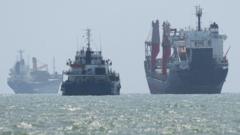
China stands as the primary purchaser of Iranian oil, an arrangement that has seen a decline in volume under the existing US blockade of Iranian ports. Lin Jian underscored that "Cooperation between China and Iran has always been conducted within the framework of international law and should not be interfered with or disrupted." The US, however, is resolute in its strategy. Treasury Secretary Bessent described the planned sanctions as "the single greatest financial offensive ever" against Iran, explicitly warning that financial institutions and commercial enterprises would share in Iran's isolation if they failed to sever ties with the country. While he refrained from singling out specific nations, Bessent confirmed that US President Donald Trump would be engaging world leaders via telephone "with specific requests to cease their interactions with the regime." In a direct address concerning Chinese banks, Bessent made it unequivocally clear that "no one was above the reach of US sanctions," emphasizing the global scope of American financial enforcement.
Understanding Unilateral Sanctions and Global Trade Dynamics
Unilateral sanctions, such as those imposed by the US, represent economic penalties levied by one country against another, or against specific entities within another country, without the explicit endorsement of international bodies like the United Nations. Historically, these measures aim to compel policy changes, deter specific behaviors, or exert political pressure. However, their legitimacy and effectiveness are often debated, particularly when they conflict with the economic interests and sovereignty of other nations. China's stance, articulated by Foreign ministry spokesman Lin Jian, highlights a fundamental disagreement over the extraterritorial application of US law and its impact on international trade. Beijing consistently advocates for cooperation within recognized frameworks of international law, viewing unilateral actions as destabilizing to the global economic order and potentially infringing upon the principles of free trade and national self-determination.
The economic leverage exerted through these sanctions can be substantial, as seen in the US Treasury's ability to map intricate financial channels and networks. Bessent revealed that the Treasury had already identified and sanctioned almost 60 entities, individuals, and vessels involved in Iran's efforts to circumvent existing sanctions for oil trade. This demonstrates a sophisticated approach to disrupting the financial architecture supporting targeted regimes. For global businesses and banks, navigating this landscape presents significant compliance security challenges, as the risk of being cut off from the vast US financial system compels adherence to American directives, even when operating in other sovereign jurisdictions. This often creates a complex environment for enterprise integration and international investment yield, as companies must balance potential market access against geopolitical risks.
Iran's Readiness and Strategic Counter-Measures
Ahead of the US announcement, Iran had already signaled its preparedness. Iranian Economy Minister Ali Madanizadeh conveyed Tehran's "full preparedness" for the expanded sanctions, suggesting they would ultimately lead to "another defeat" for the United States. He assured state television that "The government is and was ready and has a two-year plan to manage these events," indicating a proactive and long-term strategy. Madanizadeh added, "We also have our own tools and know how to play the game," implying that Tehran had been "waiting for these plans for a long time" and possesses a predefined approach to mitigate the economic pressures. This perspective suggests a degree of economic resilience and strategic planning within the Iranian regime, which analysts have noted is willing to "absorb any pain" and pass it on to its populace rather than concede to external pressure.
The latest US sanctions package has been branded "Operation Economic Outcast" and described as an "economic D-Day" against Iran. This aggressive terminology underscores Washington's intent to intensify economic warfare. These measures come nearly six months after the onset of the Iran war, a conflict that has already triggered significant hikes in oil prices across the globe. Tehran has effectively disrupted exports through the Strait of Hormuz, a critical waterway vital to the global economy for oil transit. Simultaneously, the US has also slowed maritime traffic through its own naval blockade in the region. Recent diplomatic efforts to de-escalate the conflict have faltered, with a 60-day ceasefire formally expiring last week without any tangible progress towards a lasting settlement. With the imposition of new sanctions, Treasury Secretary Bessent articulated a shift in US policy, stating that America was "no longer managing the Iranian threat, we are ending it," implying a more decisive and final approach than previous containment strategies.
The Geopolitical Stakes of US-China Relations
The timing of these new sanctions is particularly sensitive, preceding scheduled talks next month between President Trump and Chinese President Xi Jinping. Washington is acutely aware of the potential for retaliation from Beijing, especially given China's significant role as the processor of the majority of the world's rare earths and other critical minerals. These materials are indispensable in the manufacturing processes of a vast array of high-tech products, including smartphones, advanced technology components, electric vehicle batteries, and sophisticated AI infrastructure. Beijing has previously demonstrated its willingness to tighten export controls on rare earths, a move employed as leverage in prior trade negotiations with the US. The current escalation introduces further complexity into the already strained US-China relationship, potentially impacting global supply chains and technological market valuations. The delicate balance of power necessitates careful consideration of each nation's economic vulnerabilities and strategic importance in the context of global trade and technology.
Key areas of potential friction and strategic considerations include:
- Rare Earths Dominance: China's near-monopoly on rare earths processing offers significant strategic leverage in any trade or geopolitical dispute.
- High-Tech Dependencies: Western manufacturers rely heavily on these critical minerals for consumer demand goods and defense applications, creating supply chain cybersecurity risk.
- Upcoming Bilateral Talks: The sanctions add a contentious layer to the highly anticipated discussions between the US and Chinese presidents, potentially affecting future cooperation on other global issues.
- Economic Impact: Any retaliatory measures from China, such as further restrictions on rare earth exports, could significantly impact the operating margin of tech companies globally.
Iran's Economic Resilience Amid International Pressure
Despite the severe and expanding sanctions, analysts have expressed skepticism regarding the immediate and direct impact of these new measures on Iran's energy revenues. David Oxley, chief climate and commodities economist at Capital Economics, told the BBC that the direct effect would likely be "somewhat of a damp squib." He elaborated, "We suspect that the new package will have only a limited direct impact on Iranian energy flows in the short term." This assessment is largely attributed to the fact that approximately 90% of Iran's oil exports are directed to China, a nation that has consistently disregarded US sanctions in the past and is perceived as unlikely to yield to pressure this time around.
Ali Vaez, deputy director of the Middle East and North Africa Program at the International Crisis Group, echoed this sentiment, stating that "Generally, the Chinese are against unilateral sanctions. They would comply with multilateral or international sanctions, but unilateral sanctions just imposed by the US - they have always seen that as illegitimate." This distinction highlights a fundamental difference in how international economic compliance is viewed by major global powers. Vaez further noted that while Iran's neighboring countries, such as Pakistan, Turkey, and Iraq, aim to maintain favorable relations with the US, they "can't really afford to cut off ties with Iran." These nations often have deep economic, cultural, and sometimes energy-related dependencies that make a complete severance of ties impractical. He concluded that imposing economic pressure on Tehran "doesn't work" effectively because the Iranian regime is prepared to "absorb any pain" and shift the burden onto its general population, minimizing the direct political impact on its leadership.
Other significant trade partners that could face repercussions from the expanded US sanctions include India and Russia, neither of which has yet issued a formal response to Washington's latest announcements. The intricate web of global energy trade, geopolitical alliances, and national economic interests ensures that these new sanctions will reverberate across multiple continents, shaping international relations and market dynamics for the foreseeable future.