Decode Today News delivers breaking news on AI, tech, business, politics, and world events — updated daily.
breaking news, AI news, technology news, India news, world news, business news #decodetodaynews
China has launched its most extensive automotive recall campaign to date, with **eleven carmakers**, including industry giants **Tesla** and **Xiaomi**, initiating significant software updates and vehicle recalls on **August 21**. This sweeping action in the world's largest vehicle market directly addresses safety concerns related to emergency door-release systems in electric vehicles (EVs), particularly designs featuring concealed or "hidden" door handles, as regulators intensify scrutiny.
The campaign specifically targets issues where mechanical emergency door release handles may prove difficult to locate or operate during critical situations, such as severe collisions or electrical system failures, potentially impeding occupant escape or rescuer access, according to statements from the companies and regulator. This regulatory push signals a broader move as **China** is poised to become the first nation to **ban concealed door handles from 2027**, phasing out a design widely adopted by domestic EV manufacturers and notably popularized by **Tesla**.
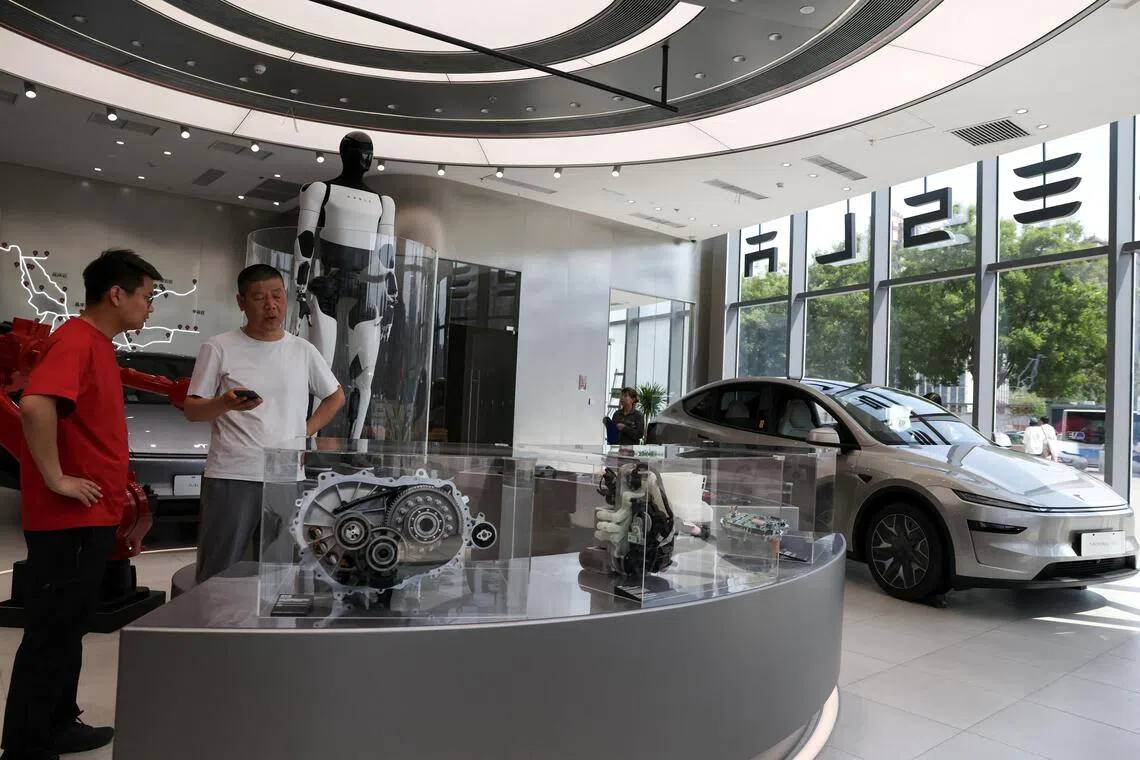
China launches biggest-ever car recall campaign over door handle safety Decode Today
The recent actions, largely classified as product recalls under Chinese regulations, stem from an increased focus by Beijing on the rapidly evolving EV industry. As carmakers introduce cutting-edge technologies amidst an intense price war, regulators are implementing tougher safety requirements to safeguard consumer demand and ensure compliance security. This environment has driven unprecedented oversight from bodies like the State Administration for Market Regulation (SAMR).
The design in question, which typically enables vehicle doors to be opened via a key fob, smartphone, or a press-operated mechanism, has drawn considerable regulatory attention in both China and the US. The primary concern revolves around the potential for these integrated handles to be inaccessible during emergencies, posing significant risks to vehicle occupants.
Tesla's Extensive Recall and Remedial Actions
**Tesla**, a key player in the global EV market, is undertaking a substantial recall impacting **2.98 million imported and China-made Model 3, Model Y, Model S, and Model X vehicles**. This recall is scheduled to commence on **September 25**, as the company informed the **SAMR**, according to the regulator's statement.
The US automaker acknowledged that its mechanical emergency door-release handles could be challenging to identify after a severe collision and subsequent electrical system failure. This challenge could significantly hinder occupants' ability to escape or rescuers' ability to access the vehicle, underscoring a critical safety gap.
To mitigate these risks, **Tesla's** remedy involves a multi-pronged approach. The company will install **warning labels** within the affected vehicles to clearly identify the emergency handles. Furthermore, **Tesla** will deploy an over-the-air (OTA) software update designed to automatically lower vehicle windows following a collision, providing an additional egress pathway and potentially aiding rescuers.
Broader Industry Impact and Compliance Measures
Beyond **Tesla**, at least five other prominent car brands announced their largest recalls on record on **August 21**, according to their respective filings with **SAMR**. These include **Xiaomi**, **Leapmotor**, **Xpeng**, **Zeekr**, and **Lynk & Co**. The collective action underscores the widespread adoption of the concealed door handle design across the Chinese EV landscape and the far-reaching impact of the new regulatory environment on market valuation and enterprise integration of safety standards.
For nine of the eleven carmakers involved, including **Tesla** and **Xiaomi**, the primary remedy involves the free installation of warning labels to help vehicle occupants identify emergency door handles. Most of these manufacturers will also leverage OTA software updates to address the safety concerns, reflecting a broader industry trend towards software-defined vehicle improvements and compliance security.
This massive recall campaign highlights the ongoing evolution of automotive safety standards, particularly within the fast-paced electric vehicle segment. As new technologies are integrated, regulatory bodies are tasked with ensuring that innovation does not come at the expense of fundamental safety. The move towards a ban on concealed door handles by 2027 signals a decisive shift in design requirements, potentially influencing global automotive design and engineering practices for future EV models.
The fierce price war in **China's** automotive market adds another layer of complexity. Carmakers, already under pressure to maintain competitive pricing and operating margins, must now also absorb the costs and operational adjustments associated with these extensive recalls and upcoming design changes. This situation emphasizes the growing importance of proactive compliance security and robust design verification processes within the industry to mitigate future risks and maintain consumer demand.
Understanding the Mechanics of China's Regulatory Push
The decision to ban concealed door handles from **2027** positions **China** as a global leader in dictating specific design standards for vehicle safety. This move is a direct response to the inherent risks associated with these handles during emergency scenarios. While sleek and aesthetically pleasing, their reliance on electronic systems or precise mechanical actions can become a liability when power fails or deformation occurs during an impact. The difficulty in intuitively locating or operating these handles under duress has been a significant point of concern for regulators.
The design, which initially gained popularity for its contribution to vehicle aerodynamics, reduced drag, and modern aesthetic, often integrates with a car's advanced electronics, allowing for smart access features. However, the balance between technological sophistication and fundamental emergency access has clearly tipped in favor of enhanced safety, driven by the increased oversight from the **SAMR**. This regulatory intervention is a crucial development in the automotive sector, setting a precedent for how future vehicle designs will need to prioritize practical safety over purely aesthetic or technological innovation. The global search traffic for "EV safety" and "automotive recalls" is likely to surge as a result of such a significant event.
Key Actions and Timeline Summary
The ongoing efforts demonstrate a concerted push by Chinese regulators to enhance vehicle safety and consumer protection within its rapidly expanding electric vehicle market. This aggressive stance is set to redefine design standards and operational practices for carmakers globally.
August 21: Eleven carmakers, including Tesla and Xiaomi, announce software updates and recalls.
September 25: Tesla's recall of 2.98 million Model 3, Y, S, X vehicles commences.
2027: China will ban concealed or "hidden" door handles.
Overview of China's Largest Automotive Recall
Affected Automaker
Recall Scope / Models
Primary Remedy
Recall Start Date
Tesla
2.98 million imported and China-made Model 3, Model Y, Model S, Model X
Warning labels, OTA update (auto-lowers windows post-collision)
September 25
Xiaomi
Largest recall on record (specific models not detailed)
Warning labels, OTA software updates
August 21
Leapmotor
Largest recall on record (specific models not detailed)
Warning labels, OTA software updates
August 21
Xpeng
Largest recall on record (specific models not detailed)
Warning labels, OTA software updates
August 21
Zeekr
Largest recall on record (specific models not detailed)
Warning labels, OTA software updates
August 21
Lynk & Co
Largest recall on record (specific models not detailed)
Warning labels, OTA software updates
August 21
Other 5 automakers
(Details not specified in source)
Warning labels, OTA software updates (most)
August 21
This pivotal moment in the automotive industry underscores a global shift towards rigorous safety evaluations of innovative technologies. For investors, this highlights the critical importance of evaluating a company's compliance security posture and its ability to adapt to evolving regulatory landscapes, which can significantly impact market valuation and operating margin, especially during periods of fierce market competition. The focus on emergency access in EVs will likely shape consumer demand and product development strategies for years to come.
Decode Today News delivers breaking news on AI, tech, business, politics, and world events — updated daily.
breaking news, AI news, technology news, India news, world news, business news #decodetodaynews