Decode Today News delivers breaking news on AI, tech, business, politics, and world events — updated daily.
breaking news, AI news, technology news, India news, world news, business news #decodetodaynews
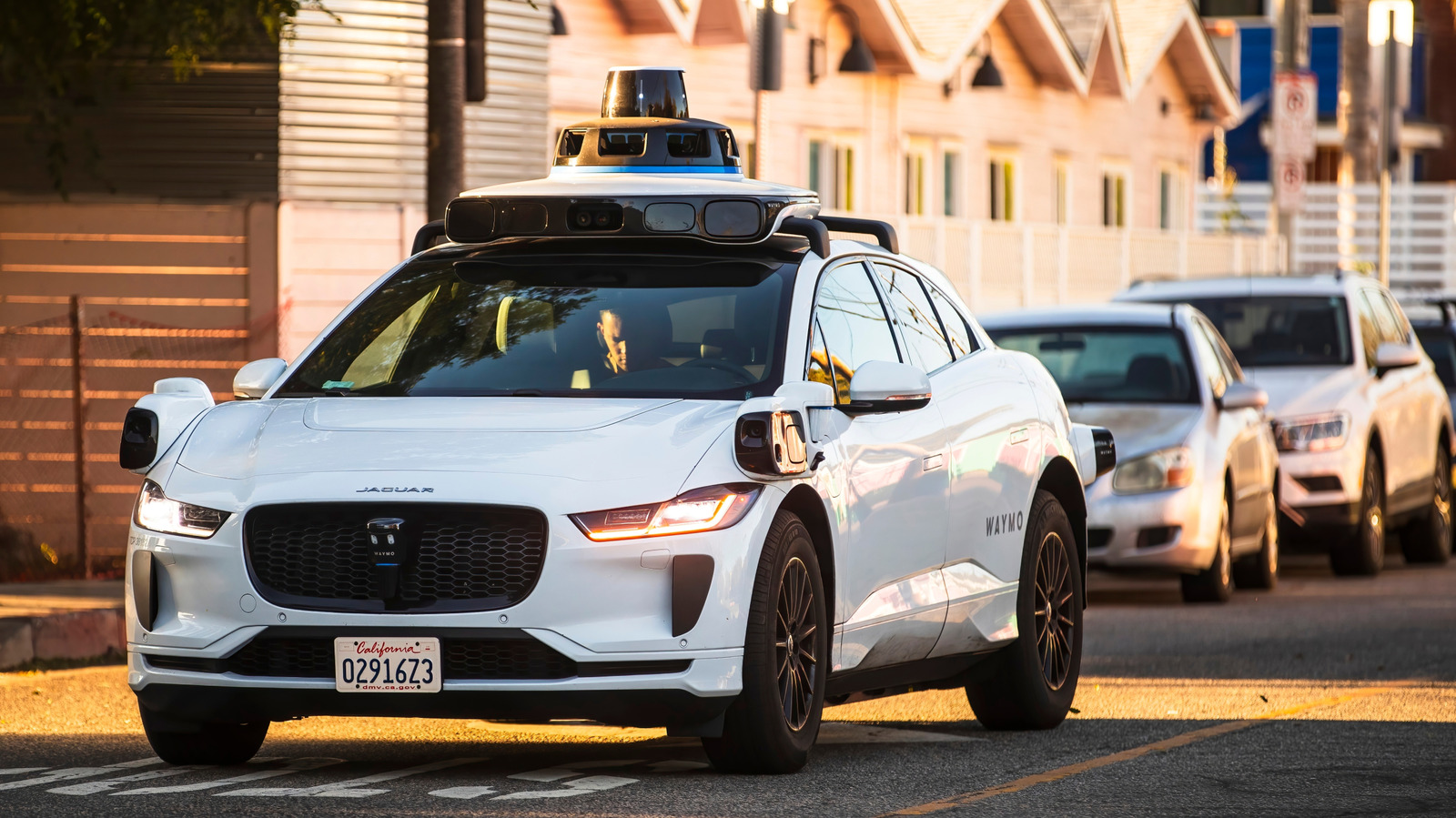
The autonomous vehicles deployed by **Waymo**, capable of navigating complex city traffic with no human behind the wheel, exemplify sophisticated **Level 4 automation**. While these advanced **vehicles** may appear to have reached the zenith of self-driving capabilities from a passenger's perspective—handling steering, braking, and decision-making throughout an entire trip without intervention—they do not yet meet the criteria for **Level 5** under the **Society of Automotive Engineers (SAE)** driving automation framework. The fundamental difference between **SAE Level 4** and the ultimate **Level 5** lies not in how "independent" the driving appears, but rather in the specific conditions and environments where that independence is permitted to exist.
At its core, **Level 4 automation** enables a system to fully manage the driving task without human input, but critically, only within a predefined set of conditions and geographical locations. **Level 5**, in contrast, represents a system that entirely eliminates these boundaries, operating universally. This distinction is paramount in understanding why **Waymo Driver**, the company's automated driving system, is classified as **SAE Level 4**, as clearly outlined in **Waymo's** published safety research. This classification explains why an empty driver's seat does not automatically elevate a **Waymo** vehicle to **Level 5**.
Unpacking SAE's Driving Automation Framework
By Decode Today News
If Waymo cars are Level 4 automation, what does it take to be a Level 5? Technology
The **SAE International J3016** standard defines six levels of driving **automation**, ranging from **Level 0** to **Level 5**. These levels are crucial for categorizing the varying degrees of automated driving capabilities and clarifying the roles of the human driver and the automated system. The **National Highway Traffic Safety Administration (NHTSA)** begins its categorization at **Level 0**, where human drivers are entirely responsible for the driving task, even if certain safety systems may offer brief, intermittent assistance.
Understanding the Mechanics of Automation
The progression through the **SAE automation levels** illustrates a gradual shift in responsibility from the human operator to the vehicle's automated system, a critical consideration for **automotive technology** and **AI infrastructure** development.
Level 0: No Driving Automation - The human driver performs all dynamic driving tasks. Safety systems (e.g., emergency braking) can briefly intervene but do not automate driving.
Level 1: Driver Assistance - The vehicle provides continuous assistance with either steering OR acceleration/braking. The human driver remains responsible for monitoring the driving environment and performing all other driving tasks.
Level 2: Partial Driving Automation - The system can simultaneously assist with both steering AND acceleration/braking. Like Level 1, the human driver must continuously supervise the system and remains responsible for the car.
Level 3: Conditional Driving Automation - The automated driving system can perform the entire dynamic driving task under specific conditions. However, the human driver must be prepared to take over when prompted by the system, requiring a high degree of situational awareness.
Level 4: High Driving Automation - The automated system can handle the entire driving task without human input within a defined **Operational Design Domain (ODD)**. Once operating within its ODD, vehicle occupants are considered passengers, not backup drivers. This is where **Waymo's** system currently resides.
Level 5: Full Driving Automation - The automated driving system can perform all driving tasks under all conditions, similar to a human driver. It operates universally, with no geographical or environmental limitations. This level is not yet available for consumer purchase.
The critical transition occurs at **Level 3**, where the automated system begins to assume primary responsibility for driving under certain conditions, although human intervention is still expected when requested. At **Level 4**, this expectation for human takeover disappears once the system is operating within its intended conditions. This fundamental shift means occupants in a **Level 4 autonomous vehicle** are truly passengers, underscoring why **Waymo** can accurately describe its service as fully autonomous without claiming **SAE Level 5**. Its vehicles complete rides without anyone behind the wheel, yet this capability operates within clearly defined limits.
Waymo's Level 4 Prowess and Its Limits
The boundaries defining where a self-driving system is designed to operate are known as the **Operational Design Domain (ODD)**. This concept is central to understanding the limitations of **Level 4 automation**. The **ODD** encompasses a comprehensive set of conditions for which an automated driving system is engineered. This includes, but is not limited to, specific geographical areas, the types of roads it can navigate, and the range of weather conditions it is designed to handle. Within these boundaries, a **Level 4 system** is expected to perform all driving tasks autonomously.
**Waymo's** continuous enhancements to its **Waymo Driver** system exemplify the ongoing evolution within **Level 4 automation**. For instance, the company reported that its sixth-generation **Driver** has expanded capabilities, enabling it to operate in more diverse environments, including challenging extreme winter weather. Such advancements enhance the system's robustness and expand its functional range. However, as long as these expanded capabilities still operate within a defined set of boundaries—even if those boundaries are continuously broadening to include new cities or more varied weather types—the system remains classified as **Level 4**, not **Level 5**. This incremental expansion, focusing on specific challenges and environments, allows developers to manage the complexity of the problem, ensuring higher levels of **compliance security** and more targeted **enterprise integration** strategies.
The Formidable Leap to Universal Automation (Level 5)
The transition from **Level 4** to **Level 5 automation** signifies a dramatic increase in complexity, demanding an order of magnitude more sophisticated **AI infrastructure** and validation efforts. Removing the defined boundaries of an **ODD** means the system must account for virtually every conceivable driving scenario across all possible conditions, globally. This presents an immense challenge for **automotive technology** developers and regulatory bodies alike.
Even at **Level 4**, evaluating system performance is extraordinarily intricate. **Waymo's** own 2026 research on collision-avoidance testing highlighted the profound difficulty of assessing a **Level 4 system** due to the potentially "enormous number of operational scenarios" where a hazardous situation could emerge. The company's methodology for identifying these hazardous scenarios draws upon extensive human driving data, insights from **Waymo's** own automated-driving tests, and expert knowledge. This rigorous approach underscores the depth of validation required for advanced **automation**.
Real-world events vividly illustrate these limitations. In May 2026, **Waymo** vehicles operating in **Atlanta** and **San Antonio** encountered flooded roads, prompting the company to suspend or restrict certain operations as it worked to refine its system's capabilities for such conditions. These incidents highlight the ongoing challenges in achieving universal operational capability, showcasing that despite significant technological advancements, specific environmental variables continue to define the current boundaries of **Level 4 autonomy**.
The leap to **Level 5** is not about a vehicle becoming "more autonomous" during a particular maneuver; a **Level 4 Waymo** already handles steering, braking, and decision-making completely autonomously within its operational domain. Instead, **Level 5** is about extending that existing high level of autonomy to a universal scope, removing all geographical and environmental constraints. This expansive vision has significant implications for **consumer demand**, **market valuation**, and the long-term strategic direction of the **automotive** sector.
The Future of Autonomous Driving
The timeline for the widespread availability of **Level 5 automation** remains indeterminate. Currently, the **NHTSA** explicitly states that **Level 5 technology** is not available in vehicles for consumer purchase. It is important to reiterate that the **SAE levels** serve as a framework for describing capabilities, rather than a fixed development roadmap with a specific countdown to **Level 5's** arrival. The path forward involves continuous innovation in **AI infrastructure**, rigorous testing, and the establishment of robust regulatory frameworks to ensure **compliance security** and public trust.
The ongoing development, exemplified by companies like **Waymo** continuously expanding their **Level 4 ODDs**, represents a strategic, incremental approach to advancing autonomous capabilities. This method allows for targeted development, testing, and deployment, gradually paving the way for more comprehensive **automation** solutions that will eventually redefine personal mobility and **enterprise integration** across various industries.
Decode Today News delivers breaking news on AI, tech, business, politics, and world events — updated daily.
breaking news, AI news, technology news, India news, world news, business news #decodetodaynews