Norway Outpaces Russia in 5th-Gen Fighter Jets
The world's premier fifth-generation fighter jets typically include the F-22 Raptor, F-35 Lightning II, Shenyang J-35, Chengdu J-20, and the Sukhoi Su-57. While some debate the Su-57's full fifth-generation classification, citing it as potentially a 4.5th-generation fighter with limited low-observable characteristics, it is included in this analysis.
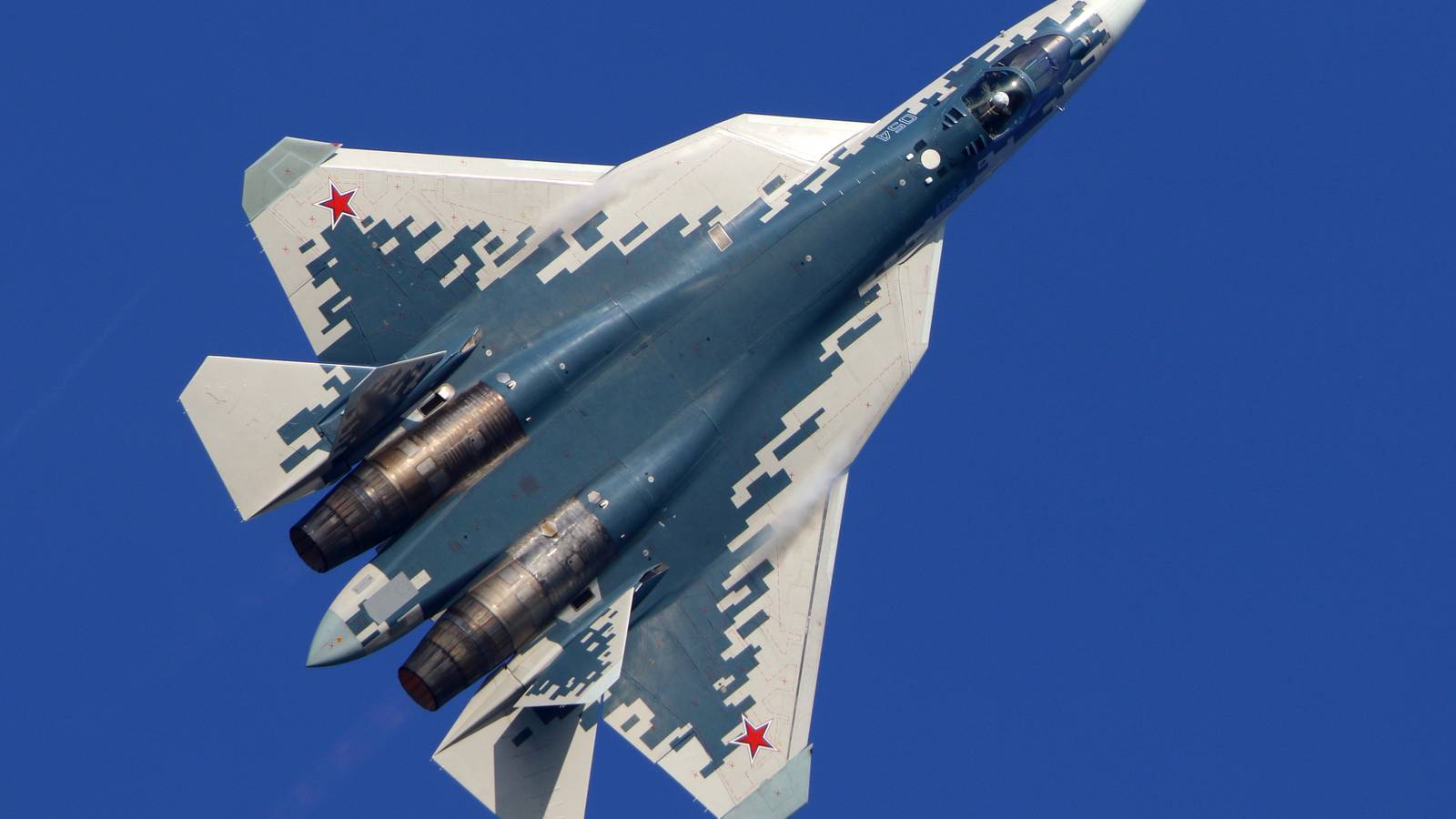
Russia's Elusive Su-57 Fleet: A Closer Look
By Decode Today News
Estimating the exact number of Sukhoi Su-57 Felon fighter jets in Russian service is complex due to non-public reporting. United Aircraft Corporation (UAC) typically announces deliveries to the Russian Air Force but rarely specifies batch sizes, which usually contain two aircraft but can vary. Additionally, Russia often does not report aircraft losses, though external channels sometimes do.
As of the end of 2025, a January 2026 Rusi estimate suggested Russia had around 20 Su-57s in service, excluding prototypes. Mid-2026 saw UAC disclose a single "substantial" batch delivered in February, estimated to include two to four fighter jets. The Russian website RuAviation, at the time, estimated the total number of Su-57s in service as of early 2026 at approximately 30 aircraft.
However, the fleet has also faced losses. In April 2026, Ukraine reported hitting and damaging or destroying one or two Su-57s at the Shagol airfield in Russia's Chelyabinsk region, though this strike lacks independent verification. In early August 2026, another Su-57 crashed outside Moscow, with its cause — friendly fire or technical malfunction — remaining unclear.
Considering these factors, a reasonable estimate for the Russian Air Force's Su-57 fleet size as of August 2026 is 25 Felons, plus or minus up to five. This places Russia's operational fifth-generation fleet in the range of 20 to 30 aircraft.
Understanding the Mechanics of Russia's Defense Strategy
The slow production and limited operational deployment of the Su-57 reflect underlying strategic and industrial priorities. Russia's emphasis on the Su-57 appears to be more on maturation and system integration than on large-scale production. Over the last five years, Russia's production focus has largely been on its more mature Flanker family aircraft, including the Su-30SM2, Su-35S, and Su-34. These older generation fighters continue to form the backbone of its air-superiority fleet, replacing aging models like the Su-27s.
The Su-57 program itself is believed to remain immature. It has been used cautiously in the Ukraine conflict, typically at stand-off ranges rather than in deep penetration missions requiring true fifth-generation stealth capabilities. Reports suggest past deliveries of Su-57s have lacked key systems, and Western sanctions may be impeding the integration of new missiles, engines, and the functionality of bomb bay doors, impacting the aircraft's advertised capabilities and overall enterprise integration.
Russia's planned procurement, finalized in 2019, targets only 76 Su-57s to be delivered by 2028. This modest target is comparable to the planned fleets of several "middle powers," indicating a different scale of ambition compared to leading military aerospace nations.
Norway's Air Superiority: A Model of F-35 Integration
In stark contrast to Russia's Su-57 program, Norway has rapidly progressed with its F-35 procurement. In April 2025, Lockheed Martin confirmed that Norway had completed its program of record for 52 F-35As, making it the first F-35 partner nation to achieve this milestone. This significant achievement means that Norway, a Scandinavian country with a population of approximately 5.5 million, now operates roughly twice as many fifth-generation fighter jets as Russia.
The successful and timely completion of Norway's F-35 program of record highlights effective acquisition and deployment strategies, demonstrating the cost efficiency and operational readiness that can be achieved through international partnerships and standardized platforms. These F-35s provide Norway with advanced air superiority capabilities, significantly enhancing its defense posture in the region.
European & Allied Nations Outpace Russia in Fifth-Gen Fleets
Norway is not an isolated case. Several other European and allied nations have rapidly expanded their F-35 fleets, collectively eclipsing Russia's Su-57 numbers:
- The Netherlands is nearing the completion of its program of record for 58 F-35As, having received around 50 jets. This number alone also roughly doubles Russia's current Su-57 count.
- The United Kingdom currently operates 47 F-35s (after one loss) and plans to place an order for 27 more, bringing its total to 74 jets. The UK Defence Journal reported in 2026 that Britain's long-term F-35 program remains unchanged at 138 jets. The UK is also a key partner in the development of the next-generation GCAP/Tempest fighter.
- Italy has increased its F-35 program of record to 115 jets and hosts one of only two F-35 final assembly and checkout facilities outside the United States, underscoring its deep integration into the F-35 global supply chain. Italy also operates up to 47 F-35s currently.
- Denmark has received 23 F-35s from an initial order of 27 aircraft, with plans to increase procurement further.
Overall, European countries have collectively taken delivery of approximately 240 fifth-generation F-35 fighter jets, a portion of which remains in the United States for training purposes. This widespread adoption reflects a concerted effort by NATO allies to modernize their air forces with advanced, interoperable platforms.
Beyond Europe, Australia stands as a significant operator. While initially planning for 100 F-35As, Australia decided to cap its procurement at three squadrons comprising 72 jets. This makes Australia the largest F-35 operator outside the United States and the third-largest operator of fifth-generation fighter jets globally, after the US and China. With 72 F-35s, Australia could field up to three times the number of fifth-generation fighters compared to Russia's Su-57 fleet.
The Global Landscape: US and China Dominate Fifth-Generation Power
When viewed against the backdrop of global military aviation, Russia's fifth-generation fighter capabilities appear significantly limited. The United States remains the undisputed leader, with plans to procure a total of 2,456 F-35s across its Air Force, Marine Corps, and Navy. Combining approximately 500 F-35s for the Air Force, 250 for the Marines, and over 70 for the Navy, alongside roughly 185 F-22 Raptors, the U.S. likely operates around 1,000 fifth-generation fighter jets.
China has also made substantial progress. OSINT China watchers identified the 300th J-20 Mighty Dragon in 2024, and a China-watcher, @Rupprecht_A, suggested there are now "well over 500 J-20s" in service, supplemented by a number of J-35s. This places China's fifth-generation fleet at approximately 20 times the size of Russia's, while the United States maintains a fleet roughly 40 times larger than Russia's estimated Su-57 count.
This immense imbalance in operational fifth-generation aircraft is unlikely to change soon. While China is publicly flying prototypes of its next-generation J-36 and J-50, and the US is developing the F-47 and F/A-XX, along with the UK, Italy, and Japan collaborating on the GCAP/Tempest, there are no significant public reports of progress on Russia's PAK DP (MiG-41) next-generation fighter program, with its funding status unclear. Russia continues to prioritize existing Flanker-family aircraft production and the gradual maturation of its Su-57 program, a strategy that underscores its current technological and production constraints in the high-stakes realm of advanced air power.


