The Only GameCube That Played DVDs: A Collector's Dream
The Panasonic Q, a unique hybrid console, stands as the only GameCube that offered built-in DVD and CD playback, a feature conspicuously absent from standard Nintendo models. This Japan-exclusive device, launched in December 2001, has since transcended its modest initial sales to become a highly coveted collector's item, often commanding prices north of $1,000 in today's global market.
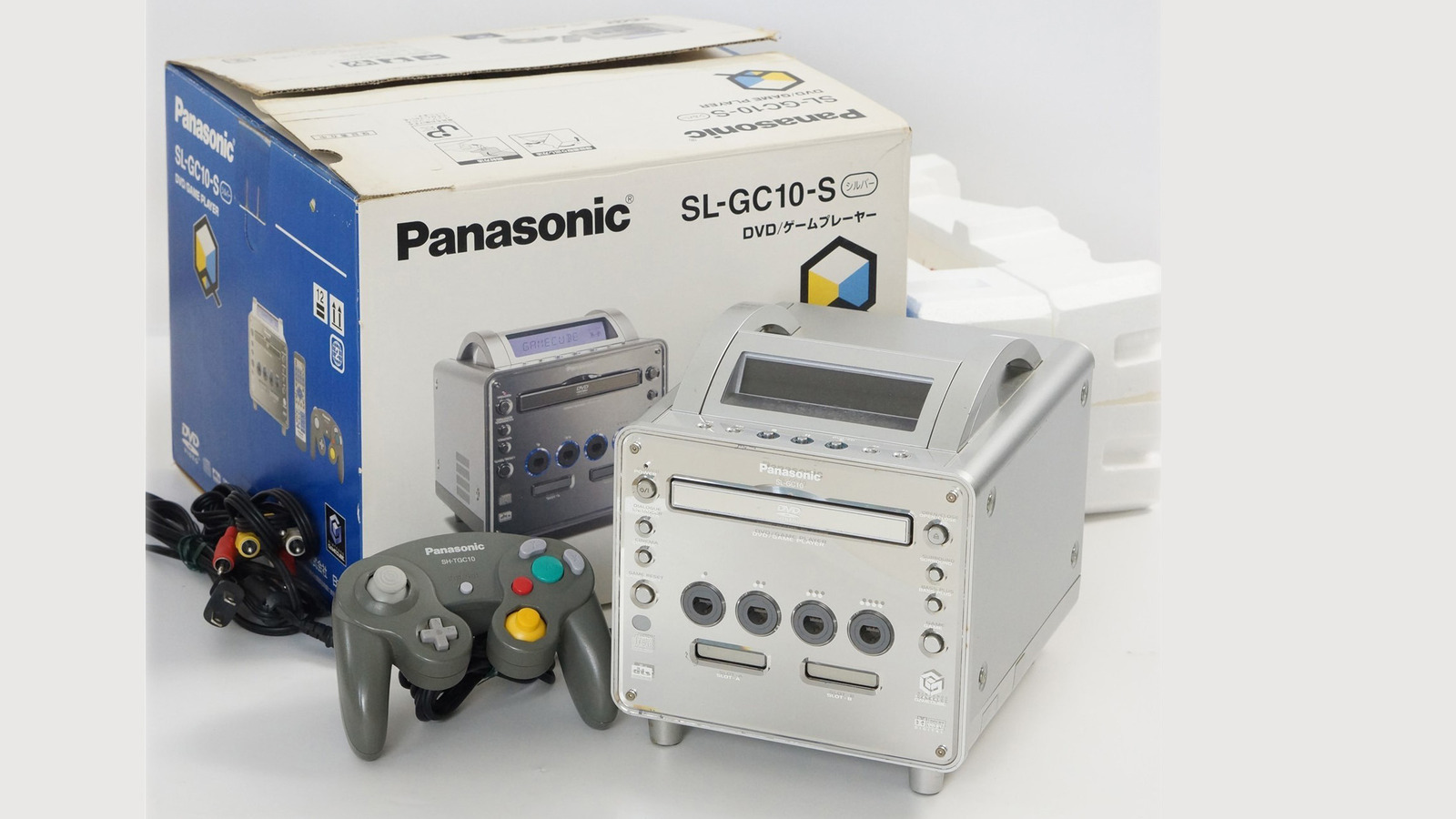
Its existence was a direct response to prevailing consumer demand and the competitive landscape of the early 2000s console market. While Nintendo's GameCube boasted strong gaming capabilities, it lacked a crucial component that its primary rival, Sony's PlayStation 2 (PS2), had famously integrated: a built-in DVD player. This strategic omission by Nintendo created a significant market pressure point, which Panasonic, then under its parent company Matsushita, sought to address through this distinctive collaboration.
The Genesis of a Hybrid: Market Dynamics and Design Philosophy
By Decode Today News
The pairing of Panasonic branding with Nintendo's gaming technology stemmed from an existing synergistic relationship. Matsushita, Panasonic's predecessor, had played a pivotal role in designing the GameCube's proprietary optical miniDVD format. This deep technical collaboration likely paved the way for Nintendo's decision to "roll the dice" and allow Panasonic to fill the "gaping DVD hole" in its console strategy, as source reports indicate.
When the Panasonic SL-GC 10, universally known as the Panasonic Q, debuted three months after the GameCube's Japanese launch, its design immediately set it apart. Eschewing the traditional toy-like aesthetic of Nintendo consoles, the Q adopted the sophisticated look of a premium home-theater appliance. It featured a reflective front panel, a backlit LCD display, and ports that emitted an elegant blue glow. This design ethos captured the quintessential consumer electronics design trends of 2001, positioning it as a lifestyle device rather than solely a gaming machine.
Understanding the Mechanics of The Only GameCube That Played CDs and DVDs
The Panasonic Q was, in essence, a bizarre mashup of two distinct functionalities sharing a single chassis. Its motorized disc tray could seamlessly accept GameCube game discs, standard DVDs, and audio CDs. Panasonic took the home theater aspect seriously, integrating advanced audio and video features designed for optimal media consumption. These included a Cinema mode for picture processing, along with robust audio capabilities such as Dolby Digital and DTS (Digital Theater Systems) for surround sound. Additional enhancements like Dialogue Enhancer and Bass Plus aimed to provide an immersive audio experience for movies and music.
However, this duality came with a significant caveat: the home theater features were largely bifurcated from the game console's operation. Game audio remained limited to the GameCube's standard analog connections, meaning the advanced Dolby Digital or DTS capabilities did not enhance gaming experiences like Super Mario Sunshine or Metroid Prime. Furthermore, switching between game and DVD modes was not automatic. Users had to manually press a hardware button, which effectively powered down one side of the system and restarted the other. This operational friction underscored that the Q was less a truly integrated hybrid and more two distinct machines coexisting within the same enclosure.
Key Features and Specifications of the Panasonic Q
To further reinforce its dual identity, the Panasonic Q came bundled with Panasonic-branded accessories. This included a gray GameCube controller bearing the Panasonic logo for gaming, and a matching gray remote control specifically for DVD player functionalities. These accessories mirrored the product's fundamental duality, offering a cohesive experience for both gaming and media playback, despite the internal operational separation.
In terms of its core gaming capabilities, the Q's hardware was virtually identical to a standard GameCube, aside from its external industrial design. It featured the same controller ports, memory card slots, and maintained full compatibility with the entire GameCube game library. Crucially, however, unmodified models were region-locked to Japan, reflecting its exclusive market release.
One notable trade-off stemming from its unique design was its incompatibility with the standard GameCube Game Boy Player accessory. This optional add-on, which allowed users to play Game Boy, Game Boy Color, and Game Boy Advance titles, was designed to lodge underneath Nintendo's system. Due to the Q's distinct base, Panasonic had to release a specifically modified version of the Game Boy Player to fit its unconventional console.
- Release Date: December 2001 (Japan-only)
- Original Price: ¥39,800 (approximately $313 USD at launch)
- Key Functionality: GameCube games, DVD, and audio CD playback
- Home Theater Features: Cinema mode, Dolby Digital, DTS, Dialogue Enhancer, Bass Plus
- Gaming Compatibility: Full GameCube library, region-locked to Japan
- Unique Design: Reflective front panel, backlit LCD, blue glowing ports
- Accessories: Panasonic-branded GameCube controller and remote control
- Collector's Valuation (Today): Loose units $1,200-$1,300; complete-in-box over $2,000
From Market Struggle to Collector's Gem: The Investment Yield of Scarcity
Despite the considerable effort invested in its design and features, the Panasonic Q struggled significantly to find a substantial audience. The primary deterrent was its relatively high price point. Launching in Japan at ¥39,800, roughly $313 USD at the time, it represented a considerable investment for consumers, particularly for such an "oddball product." While this price matched the PS2's Japanese launch price, Sony's console had arrived nearly two years earlier, had already established a massive user base, and critically, had made its integrated DVD player a central and seamless selling point.
The PS2's market dominance and superior user experience in media switching – without requiring a system reboot – severely undercut the Panasonic Q's value proposition. Consequently, the Q never achieved widespread consumer adoption, nor did it ever launch outside of Japan, although numerous "modded imported units" did make their way overseas. This limited production run and geographical exclusivity are the direct drivers of its current highly desirable collectible status.
Today, the Panasonic Q has found a vibrant second life as a niche collector's item, demonstrating a remarkable appreciation in market valuation. Due to its initial scarcity and the passage of time, very few units remain in pristine condition. When they do appear on platforms like eBay, they command a significant price premium. Loose consoles, without original packaging or paperwork, generally sell in the $1,200 to $1,300 range. For models complete with their original packaging and accompanying documentation, prices can easily surpass $2,000. This represents a substantial investment yield for original owners who held onto their consoles, turning a commercially underwhelming product into an unanticipated financial asset.
The Panasonic Q's trajectory is a compelling narrative in consumer electronics history: a product that was not a commercial success in its original market, yet has become significantly more successful as a highly valued collector's item in the 2020s. Its strange story underscores how factors like rarity, unique design, and historical context can profoundly influence market valuation and consumer demand, transforming an industrial curiosity into a prized possession for enthusiasts globally.


