Decode Today News delivers breaking news on AI, tech, business, politics, and world events — updated daily.
breaking news, AI news, technology news, India news, world news, business news #decodetodaynews
Why Electric Cars Cost More to Insure – And What's Being Done About It
By Decode Today News
Why electric cars cost more to insure - and what's being done about it Business
The shift to electric vehicles (EVs) is accelerating globally, but a persistent concern for many prospective buyers and current owners remains the significantly higher cost of insurance. While EVs promise a greener future and lower running costs, an inherent complexity in their design and repair often translates into premiums that can be 10-25% higher than their petrol or diesel counterparts. However, the automotive and insurance industries are actively collaborating to address these challenges, with encouraging signs of progress.
The Hidden Costs of EV Repairs: A Featured Snippet Summary
Electric vehicles often cost more to insure primarily due to their intricate design, which prioritizes weight reduction through integrated components that are difficult and expensive to repair individually. Batteries, constituting up to 40% of an EV's value, can lead to write-offs from even minor damage if full replacement is required. A shortage of specialized parts and technicians further inflates repair times and costs. To counter this, organizations like Thatcham Research are working with manufacturers to redesign components for easier repairability, pushing for modular battery packs and more resilient charging port placements, with newer EV models already showing a reduction in repair cost disparity.
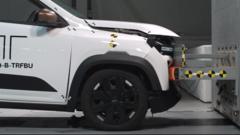
The stark reality of EV repair costs was recently laid bare in a cavernous crash and safety testing laboratory outside Newbury. Under high-intensity lights, a small white Dacia Spring EV underwent a low-speed impact test, replicating a common 6mph car park bump. On the surface, the damage appeared minor, with no torn metal or flying glass. Yet, beneath the slightly bent bonnet, a different story unfolded.
"This is all one big unit, meaning we can't just replace the front charge port. We have to replace the charger itself, the inverter, and some of the cabling," explained Sean Hoad, a senior test engineer at Thatcham Research. The organization, which conducts tests on behalf of the insurance industry, estimates that repairing this hidden damage alone would cost around £4,000. Considering other potential damages, such a minor prang would likely result in the car being written off, a decision many insurers are increasingly forced to make.
This scenario highlights a core reason for elevated EV insurance premiums. On average, Thatcham Research data indicates that EVs cost 30% more to repair and take 14% longer to fix than petrol or diesel models. This disparity directly feeds into the higher insurance prices consumers face.
The Engineering Behind the Expense
A significant factor contributing to these costs stems from the design philosophy behind many electric vehicles. Dan Harrowell, a principal advanced technologies engineer, points to the industry's focus on weight reduction. "To save some weight, there's a lot of integration of components. They're glued together, rather than using fixings, which is great to reduce weight, but not great for repair, because you have to replace whole systems rather than individual components." This 'all-in-one' approach means that what might be a simple, inexpensive fix in a conventional car becomes a complex, costly replacement of multiple interconnected parts in an EV.
Another critical element is the battery pack, which forms the heart of an electric vehicle. These high-voltage units represent approximately 40% of the car's overall value. In a nearby workshop, Harrowell demonstrated how even minor scratches and scrapes on the protective casing of a battery underneath a nearly-new EV could trigger a costly repair. Even if the core cells remain unharmed, if the entire battery assembly is supplied as a single unit, a full replacement becomes necessary. "Damage to the battery is much less common, but the sheer value of it means any damage at all, if it involves a replacement, risks writing off the vehicle," Harrowell noted. Surprisingly, industry sources suggest that insurers themselves have shown some resistance to adopting ideas for making batteries easier to repair, a point of ongoing negotiation.
Beyond design, practical challenges also inflate repair bills. Stuart Masson, editor of The Car Expert, highlights that while EVs "have fewer components than petrol or diesel cars, a lot of those components that they do have are quite expensive." Furthermore, a shortage of specialized parts and technicians means "the cars have to wait longer in the workshop, which means the insurance company has to give you a loan car for longer, which drives up the cost of repairs, which drives up the cost of insurance and premiums for everybody."
The influx of new EV manufacturers, particularly from China, has also introduced complexities. With lower labor rates in their home markets, there has historically been less incentive for these companies to design vehicles for minimal repair work. This contrasts sharply with the higher labor costs in markets like Europe, where simpler repair processes are crucial. Thatcham Research has been actively collaborating with these manufacturers to help them "understand the difference in our market," Harrowell stated.
Market Context and Consumer Impact
Despite these insurance challenges, electric vehicle sales have seen a significant surge. According to the Society of Motor Manufacturers and Traders (SMMT), almost one in every three new cars sold in the UK in June were EVs. Ian Plummer, chief customer officer of Autotrader, attributes this demand to "intensifying competition and rising consumer interest in plug-in cars."
However, Plummer also cautions that "the wider context remains fragile, with ongoing uncertainty around policy, incentives, and wider external pressures." High insurance costs are undoubtedly one of those "niggling concerns" that could deter potential buyers. Steve Fowler, co-founder of car review website Carblah, emphasized the urgency, insisting, "It's absolutely crucial electric vehicles become cheaper to insure." He believes that making EVs easier to repair and more affordable to insure will significantly boost their adoption, despite their already competitive overall ownership costs.
Pioneering Solutions for a Sustainable Future
The good news is that the industry is not static. Thatcham Research is at the forefront of efforts to make EVs more economical to repair, and consequently, cheaper to insure. Their work involves developing a comprehensive blueprint for manufacturers, complete with recommendations aimed at simplifying repairs, reducing costs, and preventing unnecessary write-offs.
These recommendations include practical design changes, such as relocating vulnerable components like charging ports to make them less susceptible to damage in minor accidents. Another key area is the redesign of parts like battery casings, making them modular and replaceable, so the entire, expensive battery unit doesn't need to be discarded after a minor incident affecting only the casing.
Manufacturers are beginning to respond positively to these initiatives. Renault, which owns Dacia and is a major EV producer under its own brand, confirmed it is actively exploring ways to reduce repair costs. This includes "working on ways to make repairs to battery packs more technically feasible, while respecting safety protocols...as well as satisfying the requirements of insurers."
Encouragingly, progress is already evident across the sector. Data suggests that the most recent EV models entering the market have average repair costs that are only 18% higher than their conventional counterparts, a marked improvement from the overall 30% average across all EVs. This positive trend is expected to translate into more affordable insurance premiums over time, ultimately helping to accelerate the adoption of electric cars.
Frequently Asked Questions About EV Insurance
How much more expensive is EV insurance?
On average, insuring an electric vehicle can cost 10-25% more than insuring a comparable petrol or diesel car, although this varies significantly by make and model. This increase primarily stems from higher repair costs and longer repair times.
What causes EVs to be written off more often?
Electric vehicles are more prone to being written off due to the high cost of replacing integrated components (like charging ports, inverters, and cabling) that are designed to save weight but are difficult to repair individually. Additionally, the battery pack, which makes up about 40% of the car's value, can necessitate a write-off even for minor casing damage if the entire unit needs replacement.
Are EV insurance costs expected to fall?
Yes, the industry is working towards reducing EV insurance costs. Organizations like Thatcham Research are collaborating with manufacturers to redesign vehicles for easier and cheaper repairs, including modular battery packs and less vulnerable component placement. Evidence suggests newer EV models already have lower repair cost disparities, indicating a positive trend for future premiums.
Driving Towards a Greener, More Affordable Future
The journey toward widespread electric vehicle adoption is not without its speed bumps, and the issue of insurance costs has been a notable one. However, the collaborative efforts between safety research organizations, insurers, and manufacturers are demonstrating a clear path forward. By addressing the fundamental design and repair challenges, the industry is paving the way for a future where EVs are not only environmentally superior but also financially accessible and manageable for a broader global audience. As progress continues, the promise of cheaper insurance will be a powerful incentive, accelerating the transition to a sustainable automotive landscape.
Decode Today News delivers breaking news on AI, tech, business, politics, and world events — updated daily.
breaking news, AI news, technology news, India news, world news, business news #decodetodaynews