Unlock Max Speed: What's the Fastest Your iPhone and iPad Can Truly Charge?
Unlock Max Speed: What's the Fastest Your iPhone and iPad Can Truly Charge?
By Decode Today News
Many Apple device owners may be unknowingly shortchanging their charging experience, potentially wasting hours waiting for their iPhone or iPad to power up. While Apple's latest devices are capable of impressive charging speeds, the company's approach to including (or not including) charging accessories often leaves users with outdated or underpowered solutions, forcing them to navigate confusing specifications to achieve optimal performance.
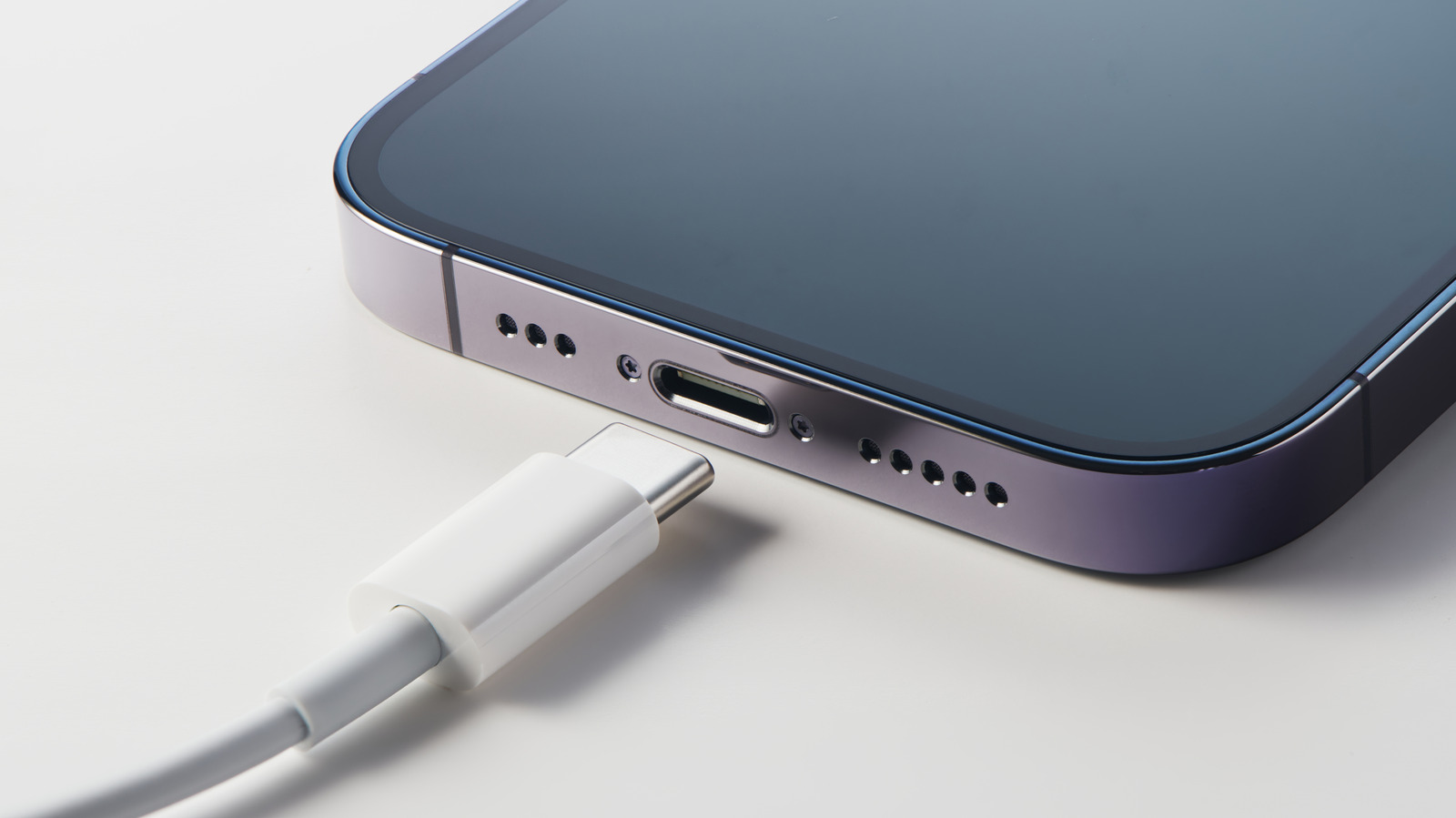
Your iPhone and iPad are designed to charge much faster than you might realize. Newer iPhone 17 models can hit speeds of up to 40W, while the latest M5 iPad Pro can accept up to 60W. However, Apple often omits fast chargers from the box, shipping only slow 20W units with iPads and no charger at all with iPhones. Understanding these maximum speeds and investing in compatible fast chargers is key to dramatically reducing charge times.
Getting the most out of your iPhone or iPad's battery involves more than just monitoring app power consumption. The speed at which you charge your device can significantly impact convenience and, over time, even battery longevity. A slower charger might offer a marginal benefit for battery aging, but it also means you might only gain a few percentage points of power during a quick coffee break. In contrast, a fast charger can provide enough juice for a long commute, making a substantial difference when you only have minutes to plug in before heading out the door.
The challenge lies in deciphering what those maximum charging speeds actually are. Unlike some competitors, Apple is often inconsistent about clearly listing detailed battery specifications on its consumer-facing product sheets. This lack of transparency, coupled with the company's decision to no longer include a charging brick with many new iPhones, means many users are likely relying on slow, outdated chargers for their cutting-edge devices.
To confidently identify your device's fastest charging speed and ensure your charger is up to the task, it helps to understand the fundamental measurements involved in battery technology.
Understanding Battery Capacity and Charging Speed
The battery capacity of a mobile device is measured in milliamp-hours (mAh). This metric represents the total amount of power a battery can deliver in an hour before needing a recharge. For instance, a 1,000mAh battery theoretically provides 1,000 milliamps of current for exactly one hour. In practical use, a smartphone battery's power delivery varies based on its current activity, and device efficiency plays a role. As a general guide, a large modern smartphone typically features around 5,000mAh, while tablets often boast capacities closer to 10,000mAh.
For example, the latest iPhone 17 Pro Max, Apple's largest smartphone, is equipped with a 5,088mAh battery, while the base model iPhone 17 utilizes a 3,692mAh cell. On the tablet side, the base model iPad 11th Generation has been measured at 7,698mAh, and the robust 13-inch M5 iPad Pro packs a substantial 10,290mAh battery into its sleek design.
Charging speeds, on the other hand, are measured in watts (W). Generally, larger devices tend to have larger, often multi-cell batteries. Their increased size provides more internal space to dissipate heat and, in some cases, accommodate larger cooling systems. This allows them to handle higher charging rates. This principle explains why a MacBook charger can output a massive 140W, while an iPhone charger operates at a much lower wattage, and AirPods charge at single-digit wattages.
However, advancements in charging technologies, particularly USB Power Delivery (USB-PD), are making it increasingly feasible to charge even smaller devices like smartphones at significantly higher rates. Some recent Android phones, such as the OnePlus 15, can achieve charging speeds as high as 120W, setting a benchmark for rapid power delivery.
Unpacking iPhone and iPad Top Charging Speeds
While Apple's iPhones and iPads haven't seen the dramatic leaps in charging speeds observed in some competitor devices, they have certainly improved over the years. As of the newest iPhone 17 series, models like the iPhone 17, 17 Pro, and 17 Pro Max are all capable of charging at speeds up to 40W. The iPhone Air, designed for its ultra-thin profile, has a maximum charging speed of 20W, a design trade-off.
The crucial point for iPhone users is that Apple no longer includes a charger in the box with new iPhones. This means that to leverage these top speeds, customers must purchase a compatible charger separately. Many users might still be holding onto older charging bricks, perhaps the 5W unit that shipped with the iPhone 11 or even the 18W charger included with the iPhone 11 Pro. Using these older chargers with a newer iPhone 17 will result in an incredibly slow charging experience, far below the device's potential.
For iPads, the situation is slightly different but still suboptimal for many. The base model iPad, released in 2025, can charge at a respectable 45W, aligning with competing tablets from manufacturers like Samsung. The cutting-edge M5 iPad Pro pushes this further, accepting up to 60W for rapid power replenishment. Despite these capabilities, Apple continues to ship all iPads with a modest 20W charger. While a charger is included, it effectively creates "e-waste" by being significantly underpowered for the device's actual capabilities, leading many unsuspecting owners to spend hours longer charging their tablets than necessary.
Optimizing Your Charging Experience
For those looking to fully utilize the fast-charging capabilities of their iPhone or iPad, investing in a high-wattage charger is essential. While Apple offers its own fast chargers, they are far from the only option available. The market for USB-PD compatible chargers has expanded significantly, with reputable brands like Anker, Ugreen, and Satechi offering excellent alternatives. When selecting a new charging brick, the most important factor is to ensure its maximum power output in watts is at least equal to or greater than your specific iPhone or iPad's top charging speed.
Choosing the right charger is not just about speed; it's about efficiency and convenience. A properly matched charger can minimize the time your device spends tethered to an outlet, giving you more freedom and ensuring your device is ready when you need it most. (Internal link opportunity: Best Fast Chargers Buying Guide)
Frequently Asked Questions About iPhone and iPad Charging
How do I find out my iPhone or iPad's maximum charging speed?
Apple typically does not explicitly list maximum charging speeds in watts on consumer spec sheets. However, independent testing and reports indicate that current models like the iPhone 17 series can charge up to 40W (iPhone Air at 20W), the base iPad (2025) at 45W, and the M5 iPad Pro at 60W. You'll need a charger capable of delivering at least these wattages to achieve maximum speed.
Will fast charging damage my iPhone or iPad battery?
Modern iPhone and iPad batteries are designed with sophisticated management systems that safely handle fast charging. These systems regulate power delivery to prevent overheating and overcharging. While some argue that extremely slow charging might marginally extend battery lifespan, the difference is often negligible for daily use, and the convenience of fast charging usually outweighs any theoretical minor benefit.
What kind of charger should I buy for my Apple device?
Look for a charger that supports USB Power Delivery (USB-PD) and has a wattage output equal to or greater than your device's maximum charging speed. For instance, if you have an iPhone 17, a 40W (or higher) USB-PD charger would be ideal. For an M5 iPad Pro, a 60W (or higher) USB-PD charger is recommended. Reputable third-party brands like Anker, Ugreen, and Satechi offer reliable options. (Internal link opportunity: Smartphone Battery Health Tips)
The Bigger Picture for Your Device
In an era where every minute counts, understanding and optimizing your device's charging capabilities is no longer a niche concern but a practical necessity. Apple's strategy of separating the device from its optimal charging solution places the onus on the consumer to make informed choices. By knowing the difference between milliamp-hours and watts, and by understanding your specific iPhone or iPad's potential, you can unlock a vastly improved charging experience. This means less time tethered to an outlet and more time enjoying the seamless functionality of your premium devices, ultimately enhancing your daily productivity and digital lifestyle. (Internal link opportunity: Future of Charging Technology)


