Resistance and revenge - Iran wanted to send a message with its farewell to Khamenei
The streets of Tehran recently bore witness to a monumental political spectacle, as Iran concluded three days of public mourning for its slain Supreme Leader. This carefully orchestrated farewell served as a powerful declaration, steeped in themes of resistance and revenge, intended for both domestic consumption and a global audience. The elaborate funeral procession, marking the end of an era for the Islamic Republic, highlighted profound political messaging while simultaneously revealing the deep internal divisions simmering within the nation.
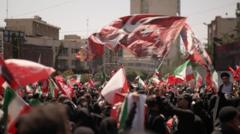
The massive funeral cortège, carrying the coffins of Ayatollah Ali Khamenei and four family members, traversed a 10-kilometer route through the capital. Millions of mourners, in one of the largest public gatherings in recent memory, slowed and often halted the procession, creating an indelible image of national grief and solidarity. Yet, beneath the surface of this unified display, lay a complex narrative of a nation grappling with immense economic hardship, internal dissent, and the profound implications of a leadership transition following a devastating loss to Israeli-American airstrikes.
A Nation's Mourning and a Global Message
By Decode Today News
Iran's recent funeral ceremonies for its Supreme Leader, Ayatollah Ali Khamenei, along with four family members, transformed into a highly choreographed political event. The procession, attended by millions, featured overt messaging of "resistance and revenge" against adversaries like the United States and Israel. This display aimed to project an image of unwavering unity and resolve, despite underlying domestic challenges such as rampant inflation and public discontent. The events also signaled a new chapter for Iran, as it navigates the transition to a third Supreme Leader amidst ongoing regional tensions and the need for economic relief through diplomatic negotiations.
The scale of Monday's procession was staggering. Aerial footage captured Tehran's main arteries choked with loyalists, their faces etched with grief, as they chanted familiar slogans of "death to America" and "death to Israel." The vibrant red of religious flags, symbolizing blood and martyrdom, stood out against a sea of black attire worn by the bereaved, amplifying calls for retribution. This visual tableau was explicitly designed to project strength and defiance. Posters prominently featuring former US President Donald Trump, singled out as a primary target, were held high, clearly visible to the hundreds of foreign journalists granted rare access to cover the events.
Iranian messaging applications further guided government supporters to use slogans like "Our revenge is inevitable" and "They will pay. Hard." One grey-haired man named Mojtaba, directly addressing foreign media, declared, "Soon, very soon you will see signs of revenge at the top of the White House, and soon the colour of the White House will be the colour of my red flag." This direct challenge underscored the gravity of the message Iran sought to convey to Washington and the world.
The Road to the Holy Sites: Framing a Legacy
The commemorations, initiated in Tehran, were not confined to the capital. They moved to sacred sites for Shia Muslims, including Qom, south of Tehran, and then extended to the holy cities of Najaf and Karbala in neighboring Iraq. The final burial was scheduled for Thursday at the sprawling Imam Reza Shrine in Mashhad, the Ayatollah's birthplace and Iran's holiest city. This extensive itinerary across revered locations was no accident.
Mohammad Eslami, a research fellow at Tehran University, observed that "The funeral proceedings are designed to frame him as more than a national leader but a transcendent religious and political figure whose authority extended across the Muslim world, and particularly Shia Islam." This strategic framing aimed to solidify the late leader's spiritual and political standing beyond Iran's borders, appealing to the broader Shia world and bolstering the legitimacy of the Islamic Republic's revolutionary ideals.
However, the official narrative faced a harsher assessment from some quarters. Karim Sadjadpour, author of "Reading Khamenei: the World View of Iran's Most Powerful Leader," offered a critical perspective: "The revolution he preserved was for a world which no longer exists." This view points to a potential disconnect between the revolutionary fervor championed by the regime and the evolving realities and aspirations of a younger generation within Iran.
Beneath the Surface: Dissent and Economic Woes
While millions participated in the mourning, a significant number of Iranians chose to stay away. Their absence highlighted the deep-seated frustrations stemming from two wars in less than a year, a spiraling inflation rate hovering around 80%, and the lingering pain of anti-government protests that gripped the nation just months prior. For many, the security crackdown that followed these protests, which killed thousands, was a direct consequence of the late leader's command.
"Of course I'm not going to the funeral," one man shared outside a "mookeb," a rest station offering free food and water. "Many people don't have work and are so unhappy," he explained, pointing to the economic despair that affects a large segment of the population. Even within the massive crowds of loyalists, alternative voices emerged. Two young Iranian women, clad in black cloaks, discreetly whispered that the "real voices of revolution" had been heard in the recent protests on those very same streets, suggesting a persistent undercurrent of dissatisfaction and a desire for change.
A government official acknowledged the complexity, noting that while "some of these calls are just ritualistic," the "anger is real among hardline critics within the system who oppose the new deal with the United States which killed our leader." This candid admission reveals a struggle for consensus even among those within the ruling establishment, particularly concerning the strategic direction of foreign policy and the pursuit of economic relief through negotiations.
A New Era and an Uncertain Path Ahead
The flatbed truck, adorned with intricate latticework and Arabic Islamic script, carried five caskets, painted in the green, red, and white of Iran's flag. The smallest of these was for Khamenei's 14-month-old granddaughter, Zara. All five individuals, including the Supreme Leader himself, were killed by Israeli-American air strikes on February 28, in the first hours of the conflict. This tragic loss underscores the brutal realities of regional tensions and the personal cost borne by Iran's leadership.
Iran now enters a new era with its third Supreme Leader, 56-year-old Mojtaba Khamanei. His absence from public view since the air strikes, which severely injured him in addition to killing his father, was notably conspicuous. The presence of his three brothers at the open-air Grand Musalla mosque compound, where their father lay in state, further highlighted his secluded recovery. Iranian officials have voiced concerns about Israel's continuing threats to assassinate him, a fear echoed by citizens like one woman who traveled four hours with her family to join the procession, insisting, "He's in my heart and I hope he is safe from Trump and Netanyahu."
The new leadership faces an immediate and daunting challenge: to address a dire financial situation. Having endured weeks of war, Iran's leaders must now continue negotiations if they hope to secure badly needed relief through the easing of sanctions and the unfreezing of assets. This economic imperative will undoubtedly shape the course of their foreign policy and domestic agenda.
Amidst the profound changes, the organizers of what they termed the "event of the century" have maximized other powerful symbols. The colossal statue of a clenched fist, now towering over Enqelab or Revolution Square, stands as a potent "fist of defiance." It sends an unequivocal message to perceived enemies both outside and inside Iran: the Islamic Republic cannot be defeated, and its resolve remains unshaken.
Frequently Asked Questions About Iran's Succession and Stance
Who was being mourned in the recent funeral?
The recent funeral ceremonies in Iran were for its Supreme Leader, Ayatollah Ali Khamenei, and four of his family members, including his 14-month-old granddaughter Zara. All five were killed by Israeli-American air strikes on February 28.
What was the primary message Iran sought to convey?
Iran explicitly aimed to convey messages of "resistance and revenge" against the United States and Israel. This was amplified through public slogans, banners targeting specific figures like Donald Trump, and official rhetoric intended to project unwavering defiance and national unity.
What challenges does Iran's new leadership face?
The incoming leadership under Mojtaba Khamanei faces significant challenges, including a dire financial situation exacerbated by sanctions and ongoing regional conflicts. They are tasked with navigating complex international negotiations to secure economic relief and ensure stability amidst threats to the new Supreme Leader's safety.
How has the public reacted to these events?
Public reaction has been mixed. While millions of loyalists participated in the massive mourning ceremonies, displaying grief and solidarity, many others stayed away. Their absence underscored widespread unhappiness over economic hardship, inflation, and the government's response to recent anti-government protests.
The Bigger Picture
The farewell to Ayatollah Ali Khamenei marks a pivotal moment for Iran, ushering in a new era defined by both continuity and profound uncertainty. The spectacle of mourning, while projecting national unity and a steadfast commitment to revolutionary ideals of resistance and revenge, cannot fully mask the deep internal divisions and economic pressures facing the nation. As Mojtaba Khamanei assumes the mantle of Supreme Leader, albeit unseen and recovering from injuries, his leadership will be tested by the dual demands of domestic reform and complex international relations. The path forward for Iran, with its iconic "fist of defiance" towering over its capital, will undoubtedly be shaped by its response to external pressures and its ability to reconcile the varying aspirations of its own people.


