Pentagon Releases New UFO Files as China's Tianwen-2 Reaches Asteroid Target, Marking a Week of Global Scientific Leaps
Pentagon Releases New UFO Files as China's Tianwen-2 Reaches Asteroid Target, Marking a Week of Global Scientific Leaps
By Decode Today News
The world of science and discovery has delivered a bustling week of news, from the release of previously classified UFO documents by the Pentagon to a significant milestone in China's ambitious deep space exploration program. These developments underscore ongoing human curiosity about the unknown and our relentless drive to push the boundaries of technological achievement. Amidst these revelations, the passing of aviation legend Wally Funk reminds us of the trailblazers who paved the way for current endeavors.
UFO Transparency and China's Asteroid Mission Headline Key Science Updates
The U.S. Department of Defense has continued its commitment to transparency by releasing a fourth batch of declassified files related to Unidentified Anomalous Phenomena (UAPs), commonly known as UFOs, making decades of reports accessible to the public. Concurrently, China's Tianwen-2 spacecraft has successfully reached its target asteroid, 2016HO3, sending back its first images as it prepares for an intricate sample return mission. These events, alongside other notable scientific breakthroughs and the tribute to aviation pioneer Wally Funk, highlight a dynamic week in global scientific pursuits.
The United States Department of Defense has once again opened its archives, releasing a new collection of declassified documents concerning Unidentified Anomalous Phenomena (UAPs). This latest batch, made public on Friday, continues a rolling initiative that began in May, aimed at providing greater transparency around the government's knowledge of these unexplained occurrences. Available on a public database, these files offer a fascinating glimpse into decades of sightings and investigations.
The recently unsealed documents originate from multiple federal agencies, including NASA, the Department of Energy, the CIA, the Department of Defense (historically referred to as the Department of War), and the FBI. They span many years, containing a diverse array of materials such as scans of paper documents detailing firsthand accounts of sightings.
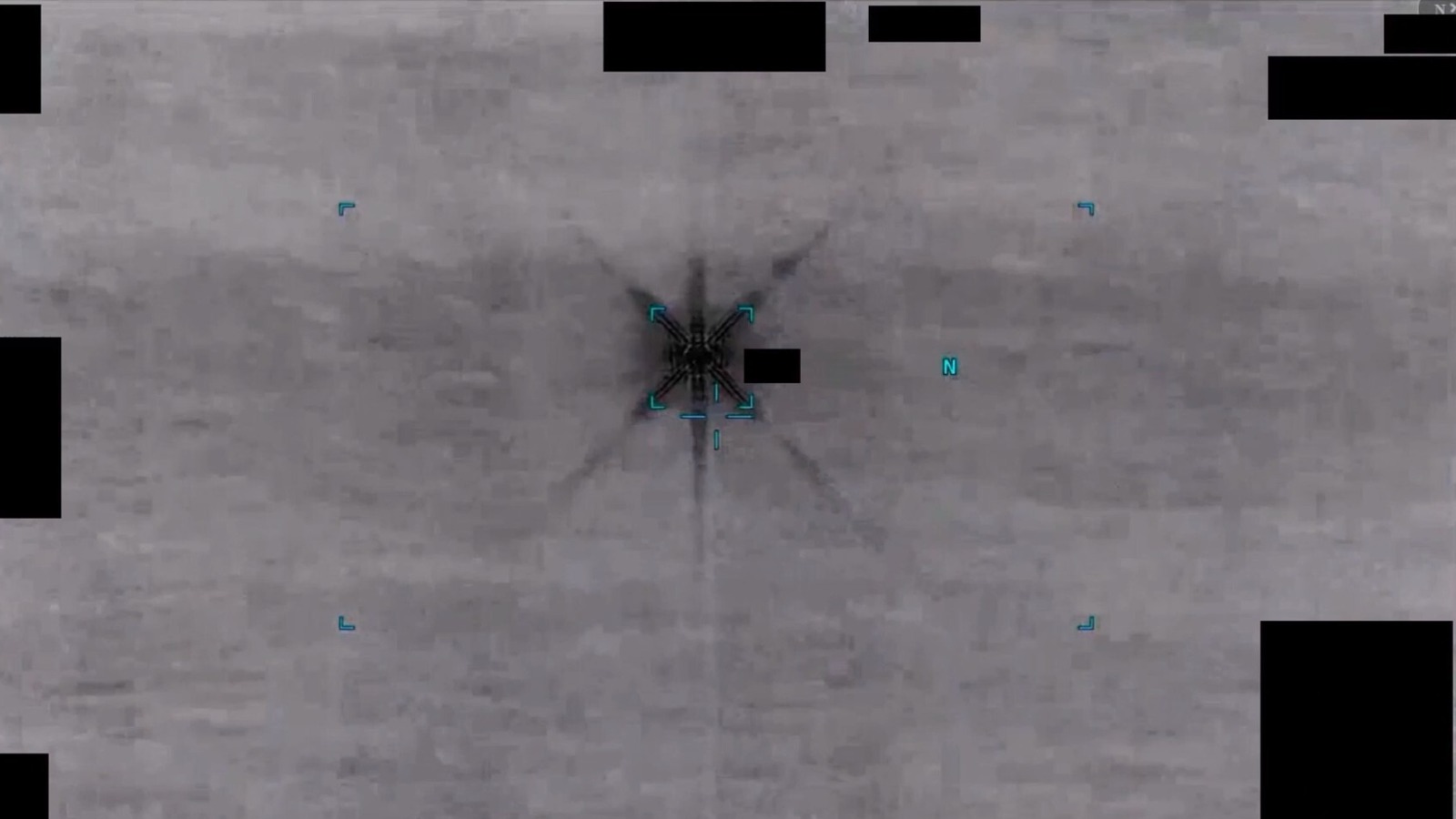
In some instances, these reports are accompanied by illustrations and even photographs, offering visual context to the phenomena described. The fourth release also includes a slew of videos, further enriching the public's access to this enigmatic subject matter. Regardless of one's personal theories regarding the origins of UAPs, the sheer volume and nature of the released content prove to be compelling.
The administration has reiterated its dedication to openness, promising to continue declassifying and uploading documents on an ongoing basis.
This commitment to transparency is further solidified by the recent announcement that the Office of the Director of National Intelligence (ODNI) is establishing a dedicated panel to rigorously study UAPs and assess their potential implications for national security. This crucial panel will be led by Avi Loeb, a theoretical physicist renowned for his long-standing efforts to search for signs of extraterrestrial life. Loeb has previously made some widely discussed, and at times controversial, claims about potential evidence of alien existence, bringing a distinct perspective to the UAP investigation.
China's Ambitious Asteroid Sample Return Mission
While the Pentagon delves into aerial mysteries, **China** has marked a tangible triumph in its space exploration endeavors. This week, the China National Space Administration (CNSA) announced that its Tianwen-2 spacecraft has successfully reached its near-Earth asteroid target. Launched last spring, the probe's arrival at asteroid 2016HO3, also known as Kamo'oalewa, represents a significant step in the nation's ambitious plans to retrieve samples from deep space.
On Monday, the CNSA shared the first captivating image of asteroid 2016HO3, captured by Tianwen-2 from an impressive proximity of just 12.4 miles (20 kilometers). This close approach allows for detailed observations crucial for the next phases of the mission.
The spacecraft is slated to remain in the asteroid's vicinity for several months, meticulously mapping its surface and preparing for a landing operation. The ultimate goal is to collect a precious sample from the asteroid's surface, which Tianwen-2 is expected to deliver back to Earth in late 2027.
This upcoming attempt by **China** to grab material from an asteroid's surface follows a series of successful sample return missions executed by other global powers in recent years, notably the United States and Japan.
These earlier missions have yielded invaluable insights into the conditions that prevailed in the early solar system, offering clues about the formation of planets and the origins of life. Tianwen-2's success would cement **China's** growing prowess in complex deep-space operations.
Asteroid 2016HO3 itself is a fascinating object, classified as a quasi-satellite. As explained by Paul Chodas, the long-time manager of NASA's Center for Near-Earth Object (NEO) Studies at the Jet Propulsion Lab, when the object was first identified in 2016, it "loops around our planet, but never ventures very far away as we both go around the sun." This unique orbital dance is expected to keep 2016HO3 in sync with Earth for a few hundred more years before it eventually drifts away.
The asteroid is remarkably small, with an estimated diameter in the ballpark of 100 feet. However, the precise observations now being made by Tianwen-2 are anticipated to provide more accurate measurements very soon. Following its departure from 2016HO3 next year, the resourceful spacecraft will embark on a secondary mission, journeying to the main-belt comet 311P, further expanding its scientific scope.
Remembering a Trailblazer and Other Scientific Happenings
The week also brought news of the passing of Wally Funk at the age of 87. A true trailblazer, Funk was a pioneering aviator and one of the aspiring astronauts in the Mercury 13 program, an initiative that saw the first group of American women undergo the same rigorous astronaut training as their male counterparts in the 1960s. She also held the distinction of being the first female inspector for the Federal Aviation Administration (FAA) and, briefly, the oldest person to travel to space.
Her remarkable life and accomplishments leave an enduring legacy in aviation and space history.
Beyond these major stories, several other intriguing science tidbits emerged:
* **Mysterious Metal Spheres:** Reports surfaced of unusual metal balls, believed to be from space, appearing on Australia's beaches, sparking curiosity and scientific investigation.
* **DIY Astrophotography:** An enthusiast who captured an impressive photo of Jupiter using a Game Boy Camera connected to a giant telescope published a detailed DIY tutorial, inspiring amateur astronomers worldwide.
* **China's Rocket Recovery:** **China** achieved another significant space milestone by becoming only the second country in the world to successfully recover a rocket booster, a crucial step in reusable rocket technology.
Controversial Space Mirror Approval: The Federal Communications Commission (FCC) granted approval for a sun-reflecting space mirror, a project that has drawn widespread criticism from astronomers concerned about its potential impact on sky observations.
* **NASA's Land Transfer:** NASA transferred ownership of a Maryland woodland to the US Fish and Wildlife Service, highlighting ongoing efforts in environmental conservation and land management.
Frequently Asked Questions About Recent Scientific News
What is in the new batch of UFO files released by the Pentagon?
The latest release of declassified UAP (UFO) files from the Pentagon includes reports from NASA, the Department of Energy, the CIA, the Department of Defense, and the FBI, spanning decades. These documents contain firsthand accounts of sightings, some with illustrations and photos, alongside a variety of videos. They are accessible on a public database.
What is China's Tianwen-2 mission aiming to achieve?
**China's** Tianwen-2 mission aims to collect a sample from the near-Earth asteroid 2016HO3 (Kamo'oalewa) and return it to Earth by late 2027. The spacecraft has already reached the asteroid and sent back its first images. After completing its asteroid mission, it will proceed to study the main-belt comet 311P.
Who was Wally Funk and what was her significance?
Wally Funk was a pioneering aviator, one of the "Mercury 13" women who underwent astronaut training in the 1960s, and the first female FAA inspector. She briefly held the record as the oldest person to go to space. Her death at 87 marks the passing of a significant figure in aviation and space history.
Why is the Pentagon releasing these UFO documents?
The U.S. administration has stated its commitment to bringing transparency around the government's knowledge of UAPs. These releases are part of an ongoing effort to make declassified documents publicly accessible and an Office of the Director of National Intelligence panel has been established to study UAPs and their national security risks.
The Bigger Picture in Scientific Discovery
The confluence of these stories illustrates a period of intense activity and progress across the scientific landscape. From the continuous unveiling of UAP documents, feeding public fascination and prompting official inquiry into national security implications, to **China's** latest strides in deep space exploration, humanity's quest for understanding the universe remains relentless. The Tianwen-2 mission, with its ambitious sample return from a quasi-satellite, represents not just a technological feat for **China** but also a global contribution to our knowledge of the early solar system. As new discoveries emerge and old mysteries are revisited with fresh scrutiny, the coming months promise even more insights into our world and beyond, driving innovation and shaping our collective future.


