Mystery Deepens as China Stays Silent on Beijing Skyscraper Plane Crash
Mystery Deepens as China Stays Silent on Beijing Skyscraper Plane Crash
By Decode Today News
Beijing is grappling with an extraordinary and largely unexplained incident: a small plane crashed into its tallest skyscraper, the 109-storey CITIC Tower, killing the pilot and injuring 13 others. The event, which occurred four days ago, has been met with an unprecedented information blackout from Chinese authorities, fueling intense global speculation about what happened and the implications for the country's tightly controlled airspace and information environment.
Key Details of the Beijing Plane Crash and Information Blackout
- Incident: A small, single-engine Aurora SA60L plane crashed into the side of the 109-storey CITIC Tower in Beijing.
- Casualties: The pilot, the sole occupant of the aircraft, was killed. Thirteen other individuals sustained injuries.
- Official Response: Only a 60-word report in the state-owned Beijing Daily has been published officially, providing minimal details.
- Censorship: Dramatic footage of the crash has been scrubbed from the internet, and even unrelated photos and memes of the CITIC Tower have been removed from Chinese social media platforms.
- Security Concerns: The incident occurred just a few kilometers from Zhongnanhai, the Communist Party's headquarters, raising significant questions about Beijing's strict airspace controls.
- Industry Impact: At least three aviation firms have reported being instructed to suspend light aircraft operations and to refrain from discussing the incident publicly.
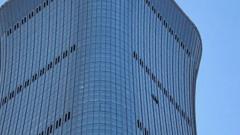
The collision left visible holes on the side of the skyscraper, a prominent fixture in Beijing's skyline often referred to as "China Zun" due to its distinctive shape resembling a traditional Chinese wine vessel. These damage points have since been boarded up, further obscuring the visual evidence of the crash.
The severe lack of official information stands in stark contrast to the gravity of the event, particularly given its location. The CITIC Tower is not only the capital's tallest building but also sits in a metropolitan area known for having some of the world's most stringent airspace regulations. The incident's proximity to Zhongnanhai, the heavily guarded compound where China's top leaders reside and work, has amplified concerns and sparked a wave of international commentary.
Unraveling the Information Vacuum
China's government is known for its robust censorship apparatus, frequently suppressing discussions critical of the Communist Party, its leaders, or sensitive political issues. However, the scope of the current information blackout extends unusually far. Beyond removing crash footage and related discussions, authorities have also purged seemingly innocuous images and cultural references to the CITIC Tower from social media. The building is a popular landmark, seen by many as a symbol of good fortune, often shared by young people wishing for success.
Manya Koetse, who publishes the Eye on Digital China newsletter, suggests that the swift and thorough censorship might stem from the Beijing leadership itself being "still not exactly sure what happened." Koetse describes the incident as "highly unusual," noting that it directly challenges perceptions of government competence and could undermine "important party narratives" surrounding stability and control.
The directive for silence extends to the aviation industry. Aviation firms that confirmed to the BBC they had been told to ground light aircraft operations were unwilling to elaborate further. A representative from a flight training institute in Beijing explicitly stated, "We were told to not speak about it. Please ask others." Another firm in Chengdu ended a call abruptly when asked to specify which authority issued the instruction, underscoring the pervasive fear of discussing the matter.
A Major Security Lapse in a Heavily Guarded Capital
Beijing enforces a permanent no-fly zone covering roughly 100 square kilometers (39 square miles) over its political core, encompassing Tiananmen Square and Zhongnanhai. This area is considered among the most secure airspaces globally. The very fact that a small aircraft could penetrate this highly sensitive region has been widely described as a profound security failure.
China analyst Bill Bishop characterized the incident as a "massive security breach." Writing on X, he speculated on the chilling possibility that the crash, had it occurred mere seconds later, "could have been at Zhongnanhai," labeling such a scenario an "earthquake in Beijing's security system."
The incident also follows recent moves by Beijing to tighten drone regulations, citing security concerns. Drones now require registration before entering or exiting the capital. Raymond Kuo, vice-president of research at the Chicago Council of Global Affairs, emphasized the gravity of the situation: "The fact that a small plane, considerably larger than most drones, was able to fly across much of the city and get quite close to Zhongnanhai is both politically embarrassing and a major security lapse."
Kuo highlighted several potential causes, including pilot error or mechanical failure, but did not rule out the possibility that the crash could have been "potentially intentional." The aircraft involved was identified by flight tracking service Flightradar24 as a two-seat, single-engine Aurora SA60L, manufactured by Chinese company Sunward Aircraft. Measuring 6.9 meters long with an 8.6-meter wingspan, it is typically used for touring, aerial photography, and recreational purposes.
Global Echoes and Historical Parallels
Outside China, the Beijing crash has evoked somber recollections for some. A Reddit user noted, "This was exactly the same news alert I received when a plane hit the first tower during 9/11," drawing a parallel to the initial reports of the 2001 September 11 attacks in New York.
Chong Ja Ian, a non-resident scholar at Carnegie China, offered a different historical comparison: the May 1987 incident where German amateur pilot Mathias Rust landed his light aircraft in Moscow's Red Square during the Cold War. Chong explained, "His flight and landing highlighted serious gaps in the Soviet air defence system. That incident led to the removal of several high-ranking officers responsible for air defence and security." Similarly, Chong suggests that the Beijing crash could lead to the removal of officials responsible for security, underscoring that "a small plane hitting CITIC Tower means that a drone or missile might be able to as well. This is a bit of an embarrassment to the security services responsible for Beijing."
The global attention on this incident is a testament to the ongoing interest in how China manages information, especially concerning events that could reflect poorly on its leadership or security apparatus. The silence from Beijing not only leaves a factual void but also invites extensive speculation, impacting international perceptions of its governance and transparency.
Frequently Asked Questions About the Beijing Plane Crash
What exactly happened in Beijing?
A small, single-engine Aurora SA60L plane crashed into the 109-storey CITIC Tower in Beijing. The pilot, who was the only person on board, was killed, and 13 others were injured. The incident occurred four days ago, and significant details remain undisclosed by Chinese authorities.
Why is China not providing more information?
Chinese authorities have issued only a brief, 60-word official statement and have aggressively censored any discussions, footage, or even unrelated images of the skyscraper across their internet platforms. Experts suggest the leadership may be unsure of the exact circumstances or are trying to control a narrative that challenges government competence and security.
What are the security implications of this incident?
The crash is considered a major security breach, given Beijing's extremely strict airspace controls and the incident's proximity to Zhongnanhai, the Communist Party's headquarters. It raises serious questions about the effectiveness of China's air defense systems and could lead to official repercussions for those responsible for security.
What kind of plane was involved in the crash?
The aircraft was identified as an Aurora SA60L, a two-seat, single-engine model manufactured by the Chinese company Sunward Aircraft. It is typically used for recreational purposes such as touring and aerial photography.
The Broader Implications
The Beijing skyscraper crash is more than just an aviation accident; it's a stark illustration of China's unique approach to information control in times of crisis. The rapid and extensive censorship, coupled with the official silence, projects an image of a leadership struggling to manage a politically sensitive event. While the immediate cause of the crash — whether pilot error, mechanical failure, or something more sinister — remains officially unconfirmed, the incident has undeniably exposed potential vulnerabilities in what is considered one of the world's most secure capital cities.
As the international community watches for any further details, the long-term impact on China's domestic security apparatus and its global standing in terms of transparency will be significant. The event serves as a potent reminder of the challenges inherent in a system where information is meticulously managed, often leaving critical questions unanswered and fueling a cycle of speculation both at home and abroad.


