Lawmakers Criticize Trump Over Resumption of Iran War
President Donald Trump has formally notified Congress that the U.S.-Iran war has resumed, marking a significant escalation as Washington and Tehran trade fresh strikes over the vital Strait of Hormuz. The letter, dated July 10 and confirmed by a White House official on Tuesday, appears to be interpreted by the Trump Administration as triggering a new 60-day window for military action against Iran without needing congressional approval.
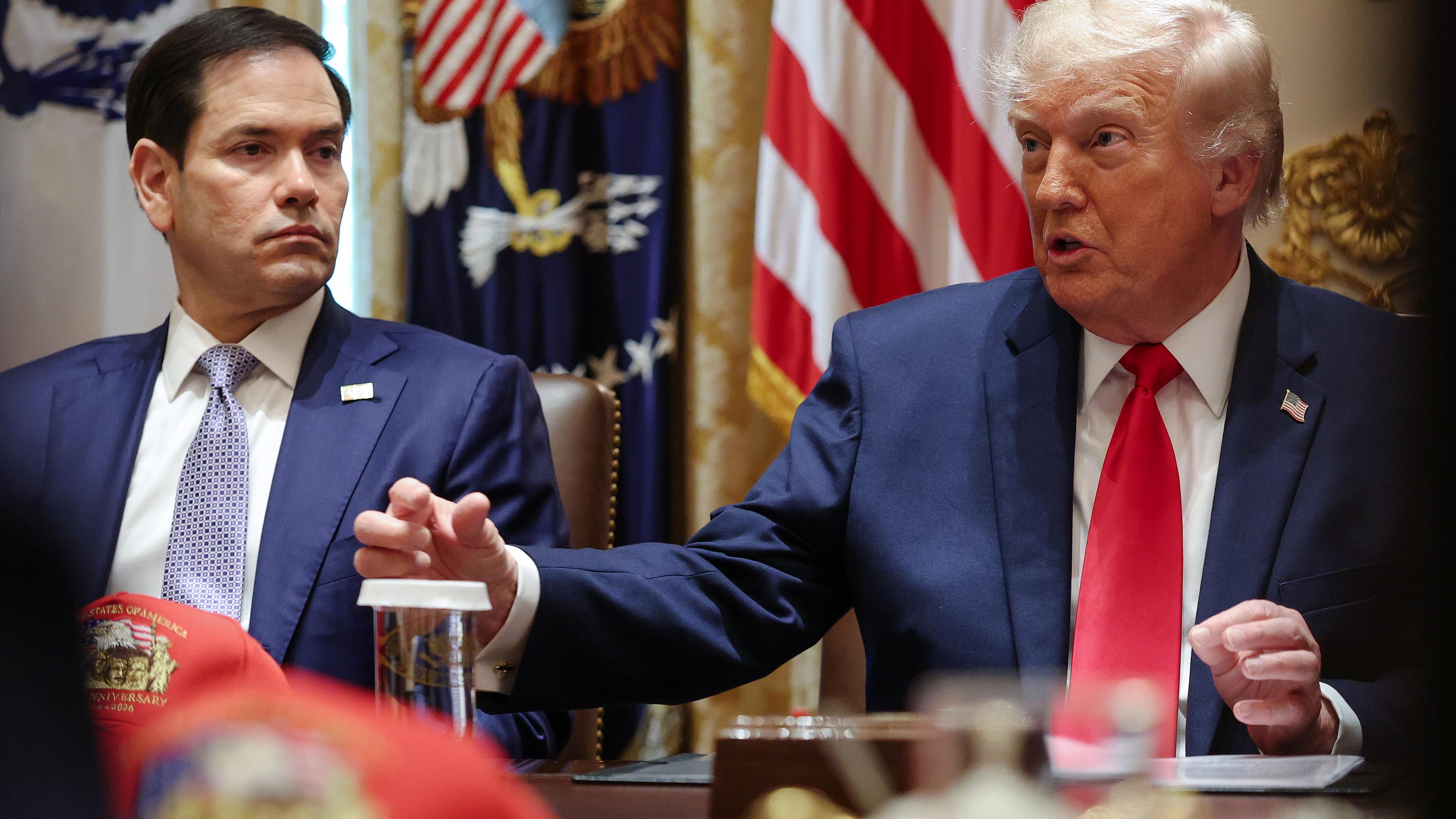
However, this resumption of hostilities and the perceived circumvention of legislative oversight have drawn sharp criticism from Democratic lawmakers. They argue that the return to active conflict, despite an interim cease-fire agreement signed on June 17, contradicts prior legislative efforts. Both the House of Representatives and the Senate previously passed War Powers Act resolutions aimed at restricting the President from continuing the conflict.
Congressional Opposition Mounts Over Renewed Hostilities
By Decode Today News
Democratic lawmakers have vociferously denounced the President's actions. On Monday, Sen. Adam Schiff of California called for Congress to "reassert its war powers authority." Schiff, who filed a new War Powers Resolution following the collapse of the cease-fire, stated, "We were promised the war would be over for months. And now in a matter of days, we've gone from a bad U.S.-Iran deal to more strikes, another blockade, and added turmoil that will only drive prices higher."
The resolution co-sponsors included Democratic Senators Tim Kaine of Virginia, Andy Kim of New Jersey, Jeff Merkley of Oregon, and Chris Van Hollen of Maryland. Schiff emphatically rejected the administration's interpretation of executive power, asserting, "Any assertion by the Trump Administration that he gets 60 more days to act without Congress has no foundation in law," and implored for a "new vote to end this war."
Senate Minority Leader Chuck Schumer echoed these sentiments, strongly criticizing the Trump Administration's return to active hostilities. "Donald Trump's so-called 'understanding' with Iran fell apart faster than the ink could dry," Schumer argued, adding, "The House and Senate both voted to remove our forces from harm’s way and end this war now. Trump must comply. Enough is enough. End the war."
Addressing the Senate floor on Monday, Schumer characterized the administration's approach as a "rinse and repeat" strategy for the Iran war that "isn’t a strategy, it’s a recipe for utter disaster." He highlighted the mounting cost of the conflict amidst an affordability crisis, noting, "We keep moving backward. Gas prices stay high, casualties increase, costs increase. It’s incredible what a fiasco this war is."
Sen. Chris Murphy of Connecticut also pointed to the economic impact, observing that "gas prices are spiking again." Murphy warned that "Trump has no moves to make. His spiraling incompetence has boxed America in. It's only going to get worse." He also criticized the decision to kill former Supreme Leader Ali Khamenei, arguing it allowed "more dangerous hardliners to replace him."
Rep. Teresa Leger Fernández of New Mexico expressed similar concerns, stating, "Trump is telling Congress the United States is at war again—and claiming another 60 days to wage it without congressional approval. He cannot end a war on paper to dodge the law, then restart the clock when it suits him. No more lies. No more endless wars."
Later on Tuesday, Democratic Senators demonstrated their objection by blocking an annual defense policy bill. The National Defense Authorization Act failed to advance with a 50-46 vote, falling short of the required 60 votes. Lawmakers largely voted along party lines, with Senate Majority Leader John Thune changing his vote from "yea" to "nay" to retain the option of reintroducing the motion at a later date.
Understanding the Mechanics of War Powers
The War Powers Act, officially the War Powers Resolution of 1973, is a federal law intended to check the U.S. President's power to commit the United States to an armed conflict without the consent of the U.S. Congress. It requires the President to notify Congress within 48 hours of committing armed forces to military action and forbids armed forces from remaining for more than 60 days, with a further 30-day withdrawal period, without congressional authorization for the use of military force (AUMF) or a declaration of war. Congressional efforts to pass resolutions to restrict the President's actions, as seen in this context, underscore the legislative branch's attempt to assert its constitutional role in matters of war and peace, particularly when executive actions might lead to prolonged engagements or new conflicts without explicit legislative approval. The dispute highlights a recurring tension between presidential prerogatives and congressional oversight concerning foreign policy and military intervention, affecting geopolitical risk and international relations.
Strait of Hormuz Blockade and Toll Controversy
The renewed hostilities intensified as President Trump declared on Monday that the U.S. should control the Strait of Hormuz, a critical maritime passage through which approximately one-fifth of global oil production typically flows. "We are going to keep the Strait. We will probably run it," Trump revealed during a phone interview. "We'll become the guardian of the Strait. Maybe we'll call it the ‘guardian angel’ of the Strait." He suggested that the U.S. would ideally be "reimbursed" for this guardianship by "other" nations.
Soon after, Trump announced the reinstatement of a U.S. naval blockade against Iran, coupled with a plan to charge a 20% fee on all cargo shipped through the Strait. This fee, he stated, would cover "any and all costs necessary to do the job of providing safety and security to this very volatile section of the world." This news followed months of calls from the U.S. and its allies for a full, toll-free reopening of the vital waterway.
Trump's announcement to "run" the Strait and impose a fee sparked immediate criticism across both political aisles. Republican Sen. John Cornyn of Texas questioned the legality, telling reporters, "I recall Secretary [Marco] Rubio saying that would not be proper for any country…. Am I wrong?" Cornyn appeared to reference June remarks by Secretary of State Rubio, who had stated, "It’s an international waterway. No country is allowed to charge tolls or fees on an international waterway. That’s existing international law."
Democratic Sen. Kim also voiced concern over the plan's impact on this crucial trade passage, whose disruption has historically rocked global energy markets. "Trump's inconsistent action over the Strait of Hormuz is not a negotiating tactic—it's expensive for Americans and a threat to the global economy," Kim stated. He warned that "A staggering 20% fee will drive up the cost of daily goods, from fertilizer for our farms to toys for our kids," impacting consumer demand and operating margins for businesses reliant on global supply chains.
Reversal on Strait Fees and Investment Deals
In a swift turnaround, President Trump walked back his plans to charge a 20% fee for U.S. "guardianship" of the Strait on Tuesday. Instead, he announced intentions to replace the fee with "trade and investment Deals that the various Gulf states will be making into the United States."
Following a bilateral meeting with Iraq's Prime Minister Ali al-Zaidi, Trump explained the reversal by stating he had received calls from various countries, kings, and emirs who were keen to invest "billions and billions of dollars" into the U.S. "I liked that, actually, because I don’t think anybody should be able to charge a fee for the Strait," Trump told reporters in the Oval Office. While specifics of any deals were not provided, Trump mentioned Saudi Arabia, Qatar, the UAE, Bahrain, and Kuwait as countries that "would love" to invest money into the U.S.
Responding to this policy shift, Senate Minority Leader Schumer remarked that Trump "has no clue what he’s doing in Iran," underscoring perceived inconsistencies in the administration's foreign policy and its potential impact on market valuation and investment yield.
Economic Toll of Renewed Conflict
The economic repercussions of the ongoing conflict are a major concern for lawmakers. The Joint Economic Committee Democrats estimate that Americans have collectively paid an additional $56.4 billion for gas since the start of the Iran war.
"As President Trump declares that he’s ended his cease-fire with Iran, gas costs have already started rising again, at a time when Americans continue to face the squeeze of higher costs overall from Trump’s war, tariffs, and other actions. Yet President Trump says he doesn’t even think about the financial situation of Americans," stated U.S. Sen. Maggie Hassan of New Hampshire, a ranking member of the committee. The increase in energy costs highlights a significant burden on consumer budgets and raises questions about cost efficiency in daily life.
According to the AAA, the national average price for U.S. gas reached $3.85 per gallon on Tuesday. This marks a substantial increase from the $2.98 per gallon national average for regular gasoline on February 26, prior to the onset of the Iran war. This surge in fuel prices has direct implications for household budgets and broader economic stability, reflecting the geopolitical risk premium embedded in energy commodities.
Key Developments in the U.S.-Iran Conflict
- July 10: President Trump notifies Congress of the U.S.-Iran war resumption.
- June 17: Interim cease-fire agreement signed.
- Last Month: House and Senate pass War Powers Act resolutions to restrict the President.
- Monday: Sen. Adam Schiff files new War Powers Resolution, calling for Congress to reassert authority.
- Monday: President Trump announces U.S. control of the Strait of Hormuz and plans for a 20% cargo fee.
- Tuesday: Senate Democrats block annual defense policy bill (National Defense Authorization Act) in protest.
- Tuesday: President Trump walks back Strait of Hormuz fee, proposing "trade and investment Deals" instead.
- Current: Joint Economic Committee Democrats estimate $56.4 billion in additional gas costs for Americans since the war began.
- Current: National average gas price reaches $3.85 per gallon, up from $2.98 pre-war.


