Decode Today News delivers breaking news on AI, tech, business, politics, and world events — updated daily.
breaking news, AI news, technology news, India news, world news, business news #decodetodaynews
Invisible infrared (IR) technology, a staple since the 1980s, continues to play a critical role in almost every television remote control sold today, even as advanced Bluetooth connectivity becomes commonplace. This enduring presence highlights key considerations in consumer electronics regarding cost efficiency, legacy compatibility, and user experience. Despite the advent of sophisticated features like voice control and air gestures offered by Bluetooth, the fundamental strengths of IR technology ensure its continued relevance in a rapidly evolving tech landscape.
The Evolution of Remote Control Technology
By Decode Today News
Infrared tech is decades old – why does almost every TV remote use it? Technology
The history of TV remote controls began well before wireless connectivity became standard. In 1950, **Zenith Radio Corporation** introduced the **Lazy Bones**, the very first remote control, which necessitated a physical cable connection to the television. This early innovation, while rudimentary by today's standards, marked the initial step toward enhancing user convenience. Five years later, in 1955, Zenith unveiled the **Flash-Matic**, pioneering the first truly wireless solution. This device operated by emitting a beam of visible light to activate four distinct photocells strategically positioned on the television's front panel, a remarkable leap forward at the time.
By the 1980s, infrared (IR) technology emerged as the industry standard, quickly becoming synonymous with television control. For more than four decades, this technology has maintained its dominance, demonstrating remarkable resilience against newer communication protocols. Its widespread adoption established a universal compatibility that has deeply integrated IR into the fabric of home entertainment systems.
Understanding the Mechanics of Tech
Infrared remotes function through a straightforward yet effective mechanism. They transmit quick pulses of invisible light using a light-emitting diode (LED). This infrared signal is then detected and decoded by an IR receiver embedded within the television, which subsequently processes the intended command. For consumers curious about this technology, a simple test reveals its operation: pointing a smartphone camera at the front of an active TV remote while pressing a button often allows one to visibly perceive the infrared LED flashing, a phenomenon outside the spectrum of human vision. This visual confirmation underscores the physical basis of the technology.
The Enduring Strengths of Infrared
Several factors contribute to IR's persistent inclusion in modern remote controls, even those boasting Bluetooth capabilities. These reasons primarily revolve around economic viability and pervasive compatibility, critical considerations for manufacturers balancing innovation with market realities.
Cost Efficiency: One of IR's most compelling advantages is its incredibly low implementation cost. After decades of mass production and its status as a fundamental component in TV remotes, the manufacturing cost for IR transmitters and receivers is negligible. This extreme cost efficiency directly impacts the operating margin for consumer electronics companies and helps maintain accessible price points for end-users, influencing overall consumer demand.
Broad Compatibility: The sheer volume of televisions, soundbars, and other entertainment equipment designed around the IR standard constitutes a vast ecosystem. Abandoning such a widely adopted technology would present significant challenges for enterprise integration and legacy system support. The ability for a single remote to control a myriad of devices, regardless of age, reinforces IR's value in a diverse home entertainment setup.
Bluetooth's Ascent and IR's Crucial Role
Modern televisions increasingly ship with Bluetooth-enabled remotes, offering a suite of advanced features such as voice control, air gestures, and the ability to control the TV without a direct line of sight. Bluetooth's capacity for bidirectional communication also facilitates more complex interactions and enables devices like Android phones to function as remote controls. However, a significant revelation from the industry indicates that even these advanced Bluetooth remotes nearly always incorporate an IR transmitter.
The reason for this dual-technology approach lies in fundamental operational requirements. A Bluetooth remote must be actively paired with the TV to function. When setting up a new smart TV, users invariably encounter a stage where the remote needs pairing. Before this pairing process is completed, the remote relies on infrared to communicate basic commands.
Furthermore, IR plays a crucial role in managing the TV's power status. When a television is in standby mode, its Bluetooth module might not be fully active or discoverable. In such scenarios, the IR signal is utilized to turn the TV on. Conversely, it is also frequently used to power the TV off. This critical function ensures reliability for the most fundamental user interactions.
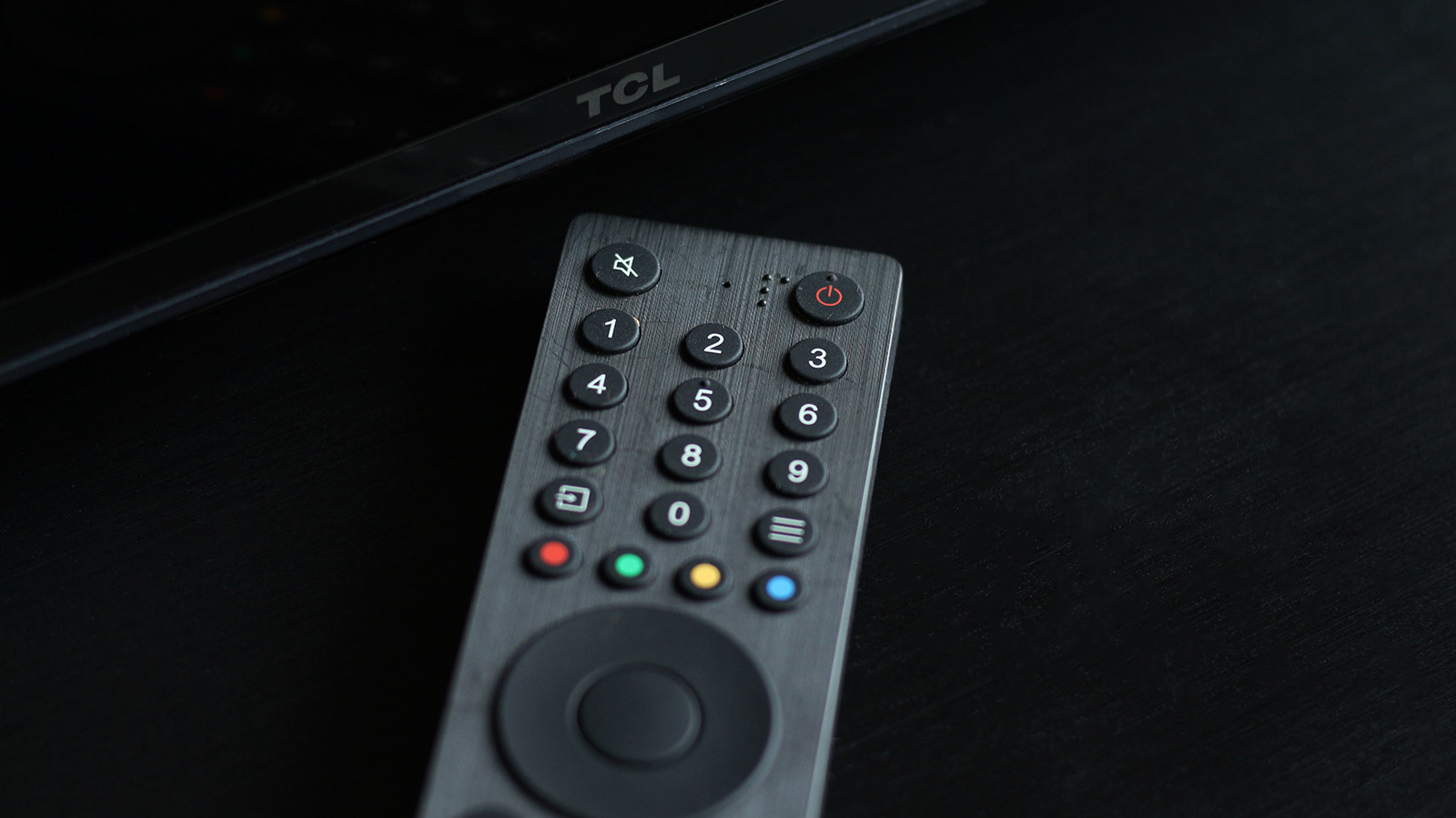
An illustrative test conducted on a **TCL smart TV**, which includes a Bluetooth remote, confirmed this operational dynamic. The remote exclusively used an infrared signal for the two core operations: powering the TV on and turning it back off. All other commands, such as navigating the interface with D-pad controls or adjusting volume, were transmitted via Bluetooth. Intriguingly, when the remote was intentionally unpaired from the TV's Bluetooth settings, it automatically reverted to using infrared for all command signals, underscoring IR's role as a robust fallback mechanism.
Key Differences and Coexistence
The contrasting functionalities of infrared and Bluetooth remotes highlight their complementary nature rather than a complete replacement. The key distinctions can be summarized as follows:
Feature
Infrared (IR)
Bluetooth
Line of Sight
Required
Not Required
Cost (Implementation)
Very Low
Higher (but decreasing)
Pairing
Not Required
Required
Standby Function
Active (for power on/off)
Often Inactive (for power on)
Features
Basic commands
Voice control, air gestures, advanced navigation
Battery Efficiency
High (but less relevant with Bluetooth prevalence)
Moderate
While infrared technology boasts efficiency in battery consumption, this advantage carries less weight today given that most TV remotes primarily default to Bluetooth for everyday operation, thereby consuming more power for advanced features. Ultimately, infrared has firmly secured its place as a reliable aid for initial pairing and as an indispensable fallback system, ensuring that basic control remains functional under almost any circumstance. This strategic coexistence allows modern remotes to offer the best of both worlds: the advanced capabilities and convenience of Bluetooth, backed by the robust and cost-effective reliability of infrared. Its continued prevalence underscores a pragmatic approach to consumer technology, where established, efficient solutions persist alongside newer innovations to ensure optimal user experience and operational reliability.
Decode Today News delivers breaking news on AI, tech, business, politics, and world events — updated daily.
breaking news, AI news, technology news, India news, world news, business news #decodetodaynews