Decode Today News delivers breaking news on AI, tech, business, politics, and world events — updated daily.
breaking news, AI news, technology news, India news, world news, business news #decodetodaynews
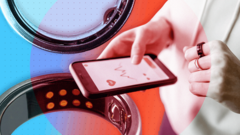
A 34-year-old solicitor from the West Midlands, Ravika, experienced an unusual alert from her Oura ring during a birthday holiday with her husband. Her fitness tracker flagged a "poor" health score, indicating an elevated heart rate, increased body temperature, and a significant drop in heart rate variability (HRV), despite her feeling perfectly fine. When these biometric data points remained unchanged for a week, Ravika researched online and discovered a growing community of women whose fitness trackers had provided early signs of pregnancy. It was another week before Ravika's at-home pregnancy test returned a positive result, confirming what her wearable device had already suggested.
This phenomenon highlights a significant shift in personal health monitoring, where sophisticated wearables are offering insights into physiological changes far earlier than traditional methods. While a missed period typically signals the possibility of pregnancy – the approximate timeframe when most standard tests can detect hormonal changes – fitness trackers are demonstrating the ability to spot these shifts weeks in advance. Hundreds of women are now reporting similar experiences online, leveraging the continuous data collection of devices like smart rings, smart watches, and chest-mounted trackers.
The popularity of these devices has surged, particularly in the UK. According to YouGov research, 36% of British adults owned and actively used a fitness tracker in January 2026, nearly double the proportion recorded in July 2019. This growing consumer demand underscores a broader trend towards proactive, data-driven health management. In the competitive smart ring market, Finnish-US company Oura holds the highest sales, competing with other notable players such as India-based Ultrahuman and Hong Kong-based RingConn.
Understanding the Mechanics of Fitness Trackers and Early Pregnancy Detection
By Decode Today News
My fitness tracker knew I was pregnant before I did Business
The predictive power of these devices largely stems from their ability to monitor key physiological markers. One of the most crucial signs of early pregnancy is a sustained change in body temperature. In a typical menstrual cycle, a woman's body temperature usually elevates after ovulation and then drops sharply just before her period begins. However, in early pregnancy, this elevated temperature often persists, providing a distinct signal that temperature-monitoring fitness trackers can readily detect.
Beyond temperature, other biometric data points play a role. Ravika's Oura ring, for instance, also noted an increased heart rate and decreased heart rate variability (HRV). These metrics, when analyzed by the device's algorithms, contribute to a comprehensive "health score" that can indicate subtle, yet significant, changes in the body's state, often signaling that the body is "under significant strain" as Ravika's phone notification indicated. This sophisticated data analytics capability allows the trackers to identify patterns indicative of pregnancy long before hormonal changes are substantial enough for chemical tests.
Beyond Pregnancy: Predicting Miscarriage Signals
The capabilities of these fitness trackers extend beyond merely detecting early pregnancy; some women report that their devices have also predicted miscarriages. Ravika, after her initial positive test, experienced cramping and received a notification that her body was under strain. She went to the doctor and faced an agonizing 10-day wait for further testing to confirm a healthy pregnancy. During this period, she found herself obsessively checking her tracker stats at 4 AM every night, clinging to hope. "The stats... became an 'obsession' - but for me it really did feel like a life or death situation," she shared.
Sadly, Ravika did miscarry. Her experience, and that of others, highlights the dual-edged nature of such detailed biometric data. Sofia, 32, had two pregnancies that she lost, both detected through a significant drop in her Oura ring's temperature data. "When I did have the miscarriage, I kind of was already mentally prepared because of the data I saw," Sofia recounted. The same pattern occurred with her second loss. During a break from trying to conceive, she received a "minor signs of strain" notification and noticed her temperature was again elevated, leading to a third, healthy pregnancy. Yet, the anxiety persisted, causing her to check her app constantly until she eventually took the ring off for her entire first trimester.
The Double-Edged Sword: Benefits Versus Anxiety
While the prospect of early detection offers profound benefits for individuals planning pregnancies, medical experts caution against over-reliance on these devices. Dr. Stuart Lavery, a consultant of reproductive medicine at University College Hospital in London, acknowledged the understandable desire to use this technology for greater understanding and early detection, given its "profound impact" on life. However, he cautioned, "we might be running before we can walk. We probably need a lot more data on the reliability, we need a lot more research... otherwise what happens is your levels of anxiety will just skyrocket." He stressed that while more people will undoubtedly adopt wearable technology, it should come with "quite a big health warning about how much we can rely on them for accuracy."
The anxiety reported by users like Ravika and Sofia underscores this concern. When asked about this, Dr. Chris Curry, Oura's clinical director of women's health, noted that "with or without biometric tracking, pregnancy can be an uncertain time where many women, particularly those pregnant for the first time, are in the dark about the range of what's normal." Oura "encourages members to take a break from the app experience" if they feel overwhelmed, while the ring continues to collect data. Dr. Curry reiterated that "the ring is a support tool, not a replacement for your care team."
Redefining Personal Health Monitoring
The experiences of women like Ravika and Sofia illuminate both the transformative potential and the psychological challenges of integrating advanced fitness trackers into deeply personal health journeys.
Key takeaways from this emerging trend include:
Early Detection: Fitness trackers can provide physiological indicators of pregnancy weeks before traditional tests.
Miscarriage Prediction: Device data may also signal impending miscarriages through changes like temperature drops.
Increased Anxiety: Constant monitoring of biometric data can significantly heighten anxiety, especially during uncertain periods like early pregnancy.
Technological Advancement: The market for smart rings and other wearables is rapidly growing, with companies like Oura leading in sales.
Expert Caution: Medical professionals advise caution, emphasizing the need for more research into reliability and the potential for increased user anxiety.
Ravika, despite her miscarriage, is hoping to try conceiving again soon. Her experience has prompted her to rethink wearing her tracker in future pregnancies. "I didn't really see myself as being an anxious person, but... I think going forward if it came to a point where I had an inkling that I was pregnant and my stats were low, as soon as that positive pregnancy test was there, I do think it would be the best thing for me to take the ring off." This evolving consumer behavior suggests a future where individuals must carefully balance the allure of data-driven insights with the imperative to protect their mental well-being.
Decode Today News delivers breaking news on AI, tech, business, politics, and world events — updated daily.
breaking news, AI news, technology news, India news, world news, business news #decodetodaynews