Claude Reflect: Monitor AI Usage, Boost Focus
Navigating Digital Wellness with Claude's Reflect Dashboard
By Decode Today News
Anthropic has recently launched its new Reflect dashboard for the Claude chatbot, offering users a comprehensive tool to monitor their engagement and foster a more intentional relationship with the advanced AI. Designed as a hybrid of popular digital well-being platforms like Spotify Wrapped and Apple Screen Time, Reflect integrates directly into Claude's settings menu, enabling individuals to gain insights into their AI interactions and proactively manage their usage patterns.
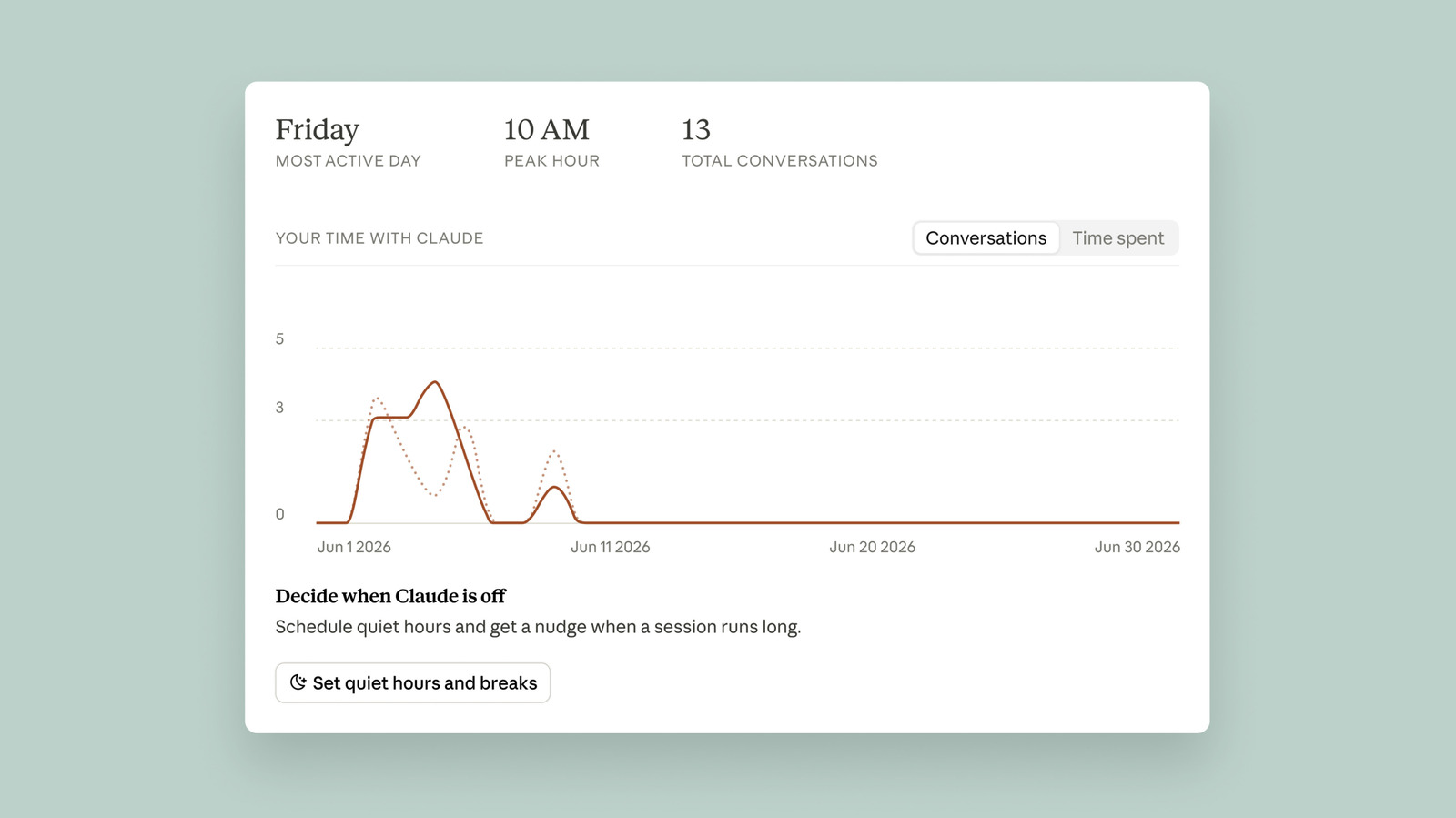
The introduction of Reflect addresses the growing need for digital wellness tools within the burgeoning AI landscape, empowering users to leverage Claude's productivity benefits without succumbing to potential overuse. This strategic enhancement in user experience underscores Anthropic's commitment to responsible AI development and consumer demand for balanced technology integration.
Understanding the Mechanics of Claude's Reflect Dashboard
The Reflect dashboard provides a nuanced view of user interaction with the Claude AI. While it doesn't currently display the exact duration of time spent, it offers crucial summaries and management features. According to Ryn Linthicum, Anthropic's head of wellbeing policy, the capability to measure precise usage time was not an internal system when development of Reflect began, with the "Time spent" tab currently marked "coming soon."
Despite this, the dashboard delivers robust functionalities centered on usage management and AI fluency. These features are designed to help users establish healthier digital habits and optimize their interaction with Claude, enhancing overall productivity and reducing potential digital fatigue. The dashboard provides transparent data insights, allowing for a more informed approach to AI engagement, a critical aspect of modern technology adoption.
Accessing Your Digital Well-being Report
Generating your first Reflect report is a straightforward process, providing immediate insights into your past interactions with Claude. This initial step is vital for understanding your baseline usage and identifying areas where digital boundaries might be beneficial.
To access the dashboard and view your personalized usage summary, follow these simple steps:
- Open your preferred web browser.
- Navigate directly to claude.ai.
- Once loaded, Claude will automatically generate your initial Reflect report.
By default, the report will present a summary of your activity over the last month. However, for a broader perspective on your AI engagement, users have the flexibility to adjust the reporting period. A toggle at the top of the dashboard allows you to view usage summaries for the last three, six, or even 12 months, providing a longitudinal analysis of your interaction patterns.
This historical data can be particularly valuable for identifying long-term trends in AI usage, informing decisions about personalized digital wellness strategies. The accessibility of this information supports the broader goal of fostering thoughtful technology consumption among users globally.
Empowering Users with Usage Management Tools
Reflect's core strength lies in its ability to empower users with proactive tools for managing their engagement with Claude. These features are essential for maintaining a healthy balance between leveraging AI for productivity and preventing potential overuse, contributing to a better quality of life and sustained digital well-being.
Setting Proactive Break Reminders
One of the key features of the Reflect dashboard is the ability to set personalized break reminders. These reminders serve as gentle nudges from the Claude chatbot, encouraging users to step away and reset after a predefined period of continuous engagement. The customization options allow for a tailored approach to digital breaks, aligning with individual work styles and attention spans.
Users can configure these reminders to activate after increments of:
- 15 minutes
- 30 minutes
- 45 minutes
- Every few hours
While these nudges are designed to promote healthier usage, it is ultimately up to the individual to honor them, as they can be freely dismissed. The flexibility to adjust break reminders is available within the "Time and focus" section of Claude's settings menu, ensuring users can adapt their digital boundaries as needed. This feature underscores the principle of user autonomy in digital wellness frameworks, aligning with modern consumer demand for customizable control over technology.
Implementing Strategic Quiet Hours
In addition to break reminders, Reflect offers the capability to set "quiet hours," a feature designed to create intentional periods of disengagement from the Claude chatbot. This functionality is particularly useful for establishing boundaries during critical times, such as evenings, weekends, or periods dedicated to non-screen activities.
A significant advantage of Reflect's quiet hours is the granular control it provides. Users can set different quiet hour schedules for each day of the week, independently tailoring their digital availability to match varying daily routines. For example:
- On a Monday, a user might set quiet hours from 5 PM to 8 PM, coinciding with family dinner or personal time.
- On a Saturday, to encourage a digital detox, quiet hours could be established from 12 PM to 4 PM, facilitating outdoor activities or social engagements.
Similar to break reminders, the effectiveness of quiet hours relies on the user's commitment to respecting these self-imposed limits. This element of personal responsibility is central to the concept of digital well-being, where tools act as facilitators rather than strict enforcers. Such features are vital for managing the impact of AI infrastructure on daily routines, fostering better work-life integration.
Enhancing AI Fluency and Productivity
Beyond managing usage, the Reflect dashboard also offers features aimed at optimizing how users interact with Claude, ultimately boosting productivity and user satisfaction. The "AI fluency" section, located toward the bottom of the interface, is a testament to Anthropic's focus on intelligent user experience design.
This section leverages insights from your usage patterns to generate personalized recommendations, guiding you towards more efficient and effective utilization of the chatbot. For instance, if Claude's analytics detect that you frequently re-establish similar contexts or repeat information when initiating new prompts, it might suggest using its "Projects" feature.
The "Projects" feature allows users to group related prompts and conversations, eliminating the need to re-type or re-explain background information repeatedly. This streamlines the interaction process, saving time and mental effort, and represents a significant enhancement in cost efficiency for enterprise integration where context persistence is crucial.
Embracing these AI-generated tips can lead to a smarter, more seamless interaction with Claude, transforming a powerful tool into an even more indispensable asset for research, content generation, and complex problem-solving. It’s a prime example of how data-driven insights can refine consumer demand for AI services, making them more intuitive and beneficial.
Navigating the Future of AI Interaction
The introduction of Claude's Reflect dashboard signifies a crucial step in the evolution of AI tools – moving beyond mere functionality to embrace comprehensive digital well-being. By integrating features akin to mainstream screen time management applications, Anthropic positions Claude not just as a powerful AI, but as a responsible one that supports its users' overall health and productivity.
As AI infrastructure continues its rapid expansion, tools like Reflect will become increasingly vital. They address growing concerns about over-reliance on technology and the importance of maintaining human agency in the digital age. The commitment to providing transparent usage data and empowering users with self-management capabilities sets a precedent for future AI development, emphasizing ethical design and user-centric innovation.
Ultimately, Reflect is more than just a dashboard; it's a statement about responsible technology and the future of human-AI collaboration, fostering a mindful approach to digital living. This aligns with a broader industry trend focusing on cybersecurity risk, compliance security, and overall user trust in advanced technological platforms.


