Rights Groups Allege Israeli War Crime in Journalist's Death
Two prominent human rights organizations, Human Rights Watch (HRW) and Amnesty International, have asserted that an Israeli attack in southern Lebanon on April 22 that resulted in the death of al-Akhbar newspaper reporter Amal Khalil and serious injury to freelance camera operator Zeinab Faraj constitutes an apparent war crime. Both groups have called for an independent investigation into the incident.
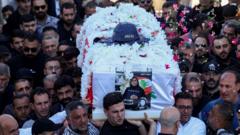
The organizations, in separate reports, concluded that the journalists were deliberately targeted while reporting in the town of al-Tiri. They have urged Lebanon to accept the jurisdiction of the International Criminal Court to ensure accountability. Conversely, the Israeli military has denied targeting the journalists, informing the BBC that its three strikes were aimed at two operatives of the armed group Hezbollah.
Independent Investigations and Mounting Evidence
By Decode Today News
Despite the Israeli military's denial, Ramzi Kaiss, Lebanon researcher at Human Rights Watch (HRW), stated, "The Israeli military says it does not target journalists, but the facts and evidence show that it has repeatedly done so. Amal Khalil and Zeinab Faraj are the latest victims in a long series of such attacks." This sentiment underscores a broader concern regarding the safety of journalists in conflict zones, a matter of significant international humanitarian law.
Both HRW and Amnesty International conducted detailed reviews of available evidence, including photo and video documentation from the events in al-Tiri, along with witness testimony from the wounded Faraj and first responders. They also examined media reports and a critical message from the Lebanese Red Cross sent to the Israeli military during the attack. The findings of these investigations led the groups to conclude that Israeli forces "knew or should have known" that the women were civilians, making deliberate attacks on them a prohibited act under international law.
Chronology of the Alleged Attack
Based on HRW's reconstruction, the incident unfolded as a series of strikes:
Initial Strike (approx. 14:30 local time): An Israeli strike hit a car traveling ahead of Khalil and Faraj, killing two men known to them, Ali Bazzi and Mohammed al-Hourani. This forced the journalists to abandon their vehicle and seek shelter near a neighboring building.
Request for Aid: Khalil and Faraj immediately called the Lebanese Red Cross for assistance. By 15:00, the UN peacekeeping force in Lebanon (Unifil) transmitted a request from the Lebanese Red Cross to the Israeli military, seeking access to the site to rescue the journalists.
Second Strike (between 15:21 and 15:42): The journalists' parked car was hit, injuring Khalil, according to HRW. She and Faraj then sought deeper refuge inside the nearby building.
Third Strike (approx. 16:25): The building providing shelter to the journalists was destroyed by a third Israeli strike.
Throughout this sequence of events, Israeli quadcopter drones reportedly monitored Faraj and Khalil. Faraj recounted to Amnesty that the drones came "extremely close, coming through the broken roof. Less than a meter away." She described feeling immense fear, thinking the drones might explode, even though they did not carry visible explosives. The constant hovering of the drones was perceived as a deliberate act of provocation and fear induction.
Phone records reviewed by the rights groups confirm that Khalil remained in contact with first responders and family members as the attacks progressed, highlighting the journalists' civilian status and their distress during the unfolding events. This consistent contact further strengthens the argument that their presence and predicament were known or should have been known to the Israeli forces.
Intervention and Aftermath
A Lebanese Red Cross team was eventually able to enter al-Tiri after 17:00. However, as paramedics began rescue efforts, they came under fire from a drone-delivered stun grenade, forcing them to retreat without recovering Khalil. Witnesses corroborated this account to HRW. Photographs reviewed by the group also depicted damage to the Lebanese Red Cross ambulance consistent with small-arms fire, indicating a direct attack on humanitarian workers.
A report from Tebnin Governmental Hospital indicated that Khalil was most likely still alive when paramedics were forced to withdraw at around 17:53. The report states her death occurred around 19:00 due to cardiac arrest, noting a head injury that caused severe bleeding. Her body was finally recovered by rescue workers at approximately 23:00.
The Israeli military stated that the strikes resulting in Khalil's death and Faraj's injury were "part of a series of events" in which two Hezbollah operatives were killed, expressing regret for "any harm caused to journalists." While acknowledging an internal review, the military did not respond to follow-up questions from the BBC regarding the specific purpose of the second and third strikes that directly impacted the journalists.
Understanding International Humanitarian Law and War Crimes
International humanitarian law (IHL), often referred to as the law of armed conflict, establishes rules that seek to limit the effects of armed conflict for humanitarian reasons. A fundamental principle of IHL is the distinction between combatants and civilians. Deliberate attacks on civilians and civilian objects are strictly prohibited and constitute war crimes. Furthermore, medical personnel and humanitarian aid workers, along with their vehicles and facilities, are protected under IHL and must not be targeted.
Heba Morayef, Amnesty's Middle East director, emphasized the gravity of the alleged actions, stating, "There can be no justification for targeting civilians who sought shelter in search of safety." Adding to this, Ramzi Kaiss of HRW remarked, "Israeli forces' continued killing of journalists shows a brazen willingness to commit atrocities without any fear of consequences."
The Committee to Protect Journalists reports a concerning rise in casualties, with 27 journalists and media workers killed this year. This tragic figure includes nine in Lebanon and seven across Israel, the occupied West Bank, and Gaza, highlighting the extreme dangers faced by those reporting from conflict zones.
Lebanese authorities have consistently accused Israel of targeting journalists in air strikes, with previous incidents also leading to the deaths of media personnel. These recurring incidents underscore the urgent need for adherence to international law and robust, independent investigations to ensure accountability and protect the vital role of journalists in documenting conflict.


