Decode Today News delivers breaking news on AI, tech, business, politics, and world events — updated daily.
breaking news, AI news, technology news, India news, world news, business news #decodetodaynews
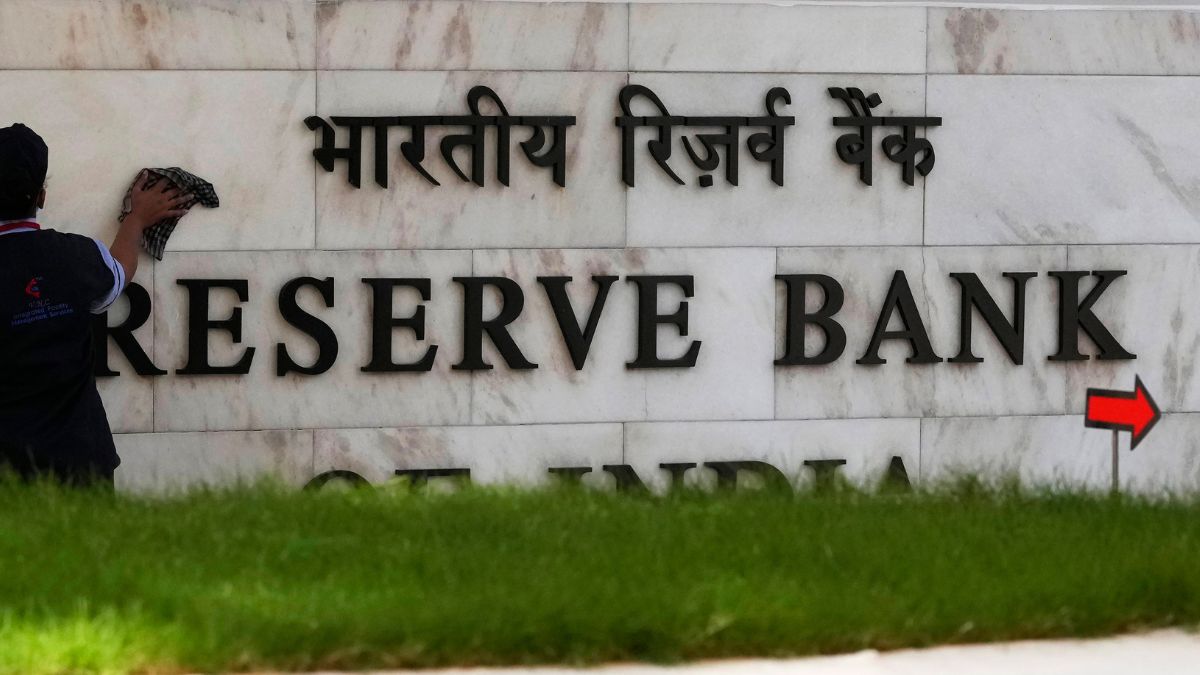
The Reserve Bank of India (RBI) has issued significant new directives, the "Amendment Directions 2026", aimed at enhancing transparency and ensuring fairness in bank deposit interest rates across various financial institutions. These crucial changes, which amend the 2025 "Interest Rate on Deposits" directions, will take effect on October 1, 2026, impacting how commercial banks, small finance banks, regional rural banks, payments banks, local area banks, and urban co-operative banks manage and display their deposit offerings.
The RBI's mandate centers on two primary objectives: providing banks with greater, albeit controlled, flexibility in pricing large rupee deposits, and ensuring that interest rates are consistently and transparently disclosed. This move is poised to bolster consumer confidence and improve the overall integrity of the financial system, aligning deposit pricing with clear, publicly available schedules.
RBI Mandates Stricter Transparency for Deposit Rates
By Decode Today News
EXPLAINER | What the RBI’s new banking ‘Amendment Directions 2026’ mean for you Decode Today
A core tenet of the new "Amendment Directions 2026" is the insistence on exact conformity between a bank's publicly displayed interest rate schedule and the actual rates paid to depositors. The RBI has made it clear that there will be no more "special" rates that deviate from what is advertised on bank websites. This applies uniformly to all six categories of banks specified in the directions, as stated by the apex bank.
For instance, the amended directions for commercial banks explicitly state that "interest rates on deposits, including bulk deposits, have to be strictly as per the schedule disclosed on the bank’s website." Similar phrasing was utilized for regional rural banks, urban co-operative banks, local area banks, and small finance banks. Even for payments banks, the clause emphasizes that "interest rates payable on deposits shall be strictly as per the schedule disclosed in advance on the website," reinforcing a universal standard for clear disclosure. This strict adherence ensures that the advertised investment yield is precisely what customers receive, removing ambiguity and strengthening compliance security within the banking sector.
Ensuring Uniformity Across Branches and Customers
Beyond simply matching advertised rates, the RBI has also tightened rules to prevent discrimination in interest rate offerings. The "Amendment Directions 2026" stipulate that interest rates cannot vary from branch to branch or person to person for the same type of deposit made on the same day. This rule applies to commercial banks, regional rural banks, urban co-operative banks, small finance banks, and local area banks.
The amended clause underscores that "the interest rates offered on deposits, including bulk deposits, must be uniform across all branches and all customers, and there must be no discrimination between one deposit and another deposit of similar amount accepted on the same date at any of the bank’s offices." This means if two customers place the same amount in the same type of deposit at the same bank on the same day, they are guaranteed to receive the identical interest rate, irrespective of which branch they visit or their personal relationship with the bank. This measure significantly enhances fairness and predictability for consumer demand in deposit products.
New Daily Disclosure Rules for Bulk Deposits
A particularly impactful change for institutional and high-net-worth depositors involves the daily disclosure of bulk deposit rates. For most bank categories – specifically commercial banks, small finance banks, regional rural banks, local area banks, and urban co-operative banks – the RBI has introduced a stringent timing rule.
The amended clause requires that "interest rates on bulk deposits must be disclosed on the bank’s website at 10 am each business day, with a grace time of 10 minutes, i.e., latest by 10.10 am." This operational change means that by 10.10 am every working day, banks must publish their current bulk deposit rates. This provision ensures that large depositors have access to the official, real-time rates before committing funds, fostering greater market transparency. Notably, this specific 10 am timing requirement was not included in the amendments for payments banks, which only need to ensure their rates match the website schedule without the daily timing mandate.
Understanding the Mechanics of RBI's Deposit Rate Reforms
The "Amendment Directions 2026" are a comprehensive overhaul designed to infuse greater integrity into India's banking system. The underlying concept is to balance necessary operational flexibility for banks with robust consumer protections. By standardizing disclosure and ensuring rate uniformity, the RBI aims to create a level playing field for all depositors, while also enabling banks to manage their liquidity effectively. This initiative represents a significant step towards modernizing the framework governing deposit rates, ensuring that the Rbi continues to safeguard financial stability and consumer interests.
Limited Flexibility for Bulk Deposits Based on LCR Framework
While promoting strict transparency, the RBI has also granted limited flexibility to commercial banks and small finance banks regarding bulk deposits. This flexibility allows them to offer differential interest rates based on the "stickiness" or "riskiness" of these deposits, as assessed under the Liquidity Coverage Ratio (LCR) framework.
According to new sub-paragraphs (10(4) for commercial banks and 9(4) for small finance banks) within the domestic rupee deposits section, banks "may offer differential interest rates on bulk deposits by considering the differential run-off rates applicable to deposits or unsecured wholesale funding under the LCR framework." This allows banks to align the pricing of large deposits with their liquidity risk treatment, as detailed in the Asset Liability Management Directions of 2025. A similar clause (27(3)(iv) for commercial banks and 26(3)(iv) for SFBs) extends this LCR-based differential pricing to bulk deposits from non-residents.
The LCR "run-off rate" is a technical metric that indicates how quickly a deposit is likely to be withdrawn during a stress scenario. Essentially, if a bulk deposit is classified as more stable from an LCR perspective, banks can offer a different rate compared to a more volatile bulk deposit. However, within each LCR-determined category, the general rules of transparency and non-discrimination must still be rigorously followed. This approach allows for nuanced risk management by banks without compromising on fundamental fairness, optimizing cost efficiency in liquidity management.
Key Impacts for Stakeholders
The "Second Amendment Directions, 2026" (or "Amendment Directions, 2026" for payments banks) will bring about tangible changes for various participants in the financial ecosystem.
For Retail Customers: The primary benefits will be enhanced transparency and fairness. Banks are now compelled to post interest rate schedules clearly on their websites and strictly adhere to those published rates. Retail customers can expect consistency, with no room for differential treatment based on branch, relationship, or negotiation for similar deposits within the same category and amount bracket. This strengthens consumer trust and promotes informed decision-making regarding their investment yield.
For Bulk Depositors (Companies, Institutions, HNWIs): These entities will gain from increased visibility. The requirement for daily publication of bulk deposit rates by 10.10 am (for relevant bank types) provides clear, official rates before funds are placed. They will know that the rate received must precisely match the published schedule for that day and deposit category. For commercial and small finance banks, if a bulk deposit falls into a "stable" LCR bucket, it might attract a different rate than one in a "riskier" bucket, but consistent treatment is still mandated within each bucket.
For Banks (Operational Perspective): Operationally, banks must ensure robust enterprise integration between their public-facing disclosures and internal systems. Treasury and Asset Liability Management (ALM) teams in commercial and small finance banks gain a crucial tool to align the pricing of large deposits with their LCR liquidity risk treatment. This means deposits considered more stable from an LCR perspective can be priced differently from more volatile ones, all within stringent regulatory guardrails. This necessitates advanced data management and compliance frameworks to maintain compliance security.
These comprehensive amendments represent a pivotal moment in India's banking regulation, aiming to forge a more transparent, equitable, and resilient financial landscape.
Decode Today News delivers breaking news on AI, tech, business, politics, and world events — updated daily.
breaking news, AI news, technology news, India news, world news, business news #decodetodaynews