Passenger British Airways Mayday: Fear in Flight
British Airways Flight Issues Mayday Over Heathrow, Passenger Describes Cabin Fear
By Decode Today News
Understanding the Mechanics of the British Airways Mayday Incident
The technical details revealed by the BEA underscore the gravity of the situation. A data system failure is a significant event in modern aviation, as aircraft heavily rely on integrated systems for navigation, flight control, and critical sensor information. When such a failure leads to a stall warning, it indicates that the airflow over the wings may be insufficient to generate lift, posing a direct threat to the aircraft's ability to remain airborne. The crew's decision to engage "alternate law" mode is a standard, yet serious, procedure in response to certain system failures. In normal flight, an Airbus A320 operates under "normal law," which provides extensive automated protections, preventing the pilot from exceeding certain flight parameters. "Alternate law," however, reduces these automated safeguards, requiring more direct pilot input and control. This shift places a greater demand on the flight crew's manual piloting skills and situational awareness, especially during a high-stress scenario like an approach to a busy airport. The subsequent mayday call highlights the crew's assessment of an immediate threat, emphasizing the breakdown in typical operational integrity and aviation safety protocols.Passenger Reactions and Post-Landing Observations
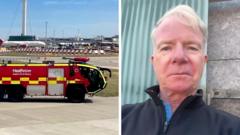
Edward Killiwick's account paints a vivid picture of the fear gripping the cabin. "I was definitely scared. After the violent manoeuvre I thought, there is definitely something very badly wrong here. I did think we could crash. I did think it was a possibility, and I think everyone else did," he recalled. The palpable tension culminated in one woman "completely lost it and started screaming 'I don't want to die,'" an incident Killiwick and his partner had to help manage. Upon landing, the relief was evident, albeit muted. Killiwick observed several fire trucks and a police car on the tarmac, a clear sign of the emergency response coordination in anticipation of a potential incident. Despite the safe touchdown, the cabin remained unusually quiet. "There was a few people that did clap, but not that many because I think everyone was just relieved to be on the ground," he said. "Everyone was very, very quiet. There was almost no conversation. That's the eerie thing. Julie, my partner, did shed a few tears when we landed." The lack of communication from the flight deck post-landing, while perhaps understandable given the crew's immediate tasks, contributed to the solemn atmosphere. The incident highlights crucial aspects of modern air travel, including:- Systemic Failure Analysis: The investigation by AAIB and BEA will focus on the root cause of the data system failure and stall warnings.
- Crew Training and Response: The crew's actions, including activating alternate law and issuing a mayday, will be thoroughly reviewed to ensure adherence to emergency procedures and best practices in human-machine interface management.
- Passenger Communication: The perceived lack of information during critical moments often amplifies passenger anxiety, an area frequently examined in post-incident reviews.
- Emergency Response Coordination: The presence of fire trucks and police units demonstrates effective ground-based emergency response coordination.


