How 90-Second Outage Crippled UK Rail Network
Brief Power Outage Ignites Widespread UK Rail Chaos
By Decode Today News
A mere 90-second power outage at a critical Network Rail operations center in Manchester recently plunged large swathes of Britain's railway system into chaos, leaving commuters facing extensive disruption. This incident, while brief in duration, has ignited significant questions regarding the resilience of modern rail infrastructure and the operational integrity of centralized control systems, according to Network Rail officials.
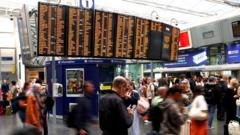
The core of the problem originated at Network Rail's operating center in Manchester, a facility responsible for managing crucial train movements across significant portions of the North West of England. Despite the power cut being resolved in just over a minute, its ripple effects quickly paralyzed services, leading to widespread delays and cancellations as systems struggled to recover.
Unpacking the Operational Failure and System Response
The unexpected power failure swiftly impacted signaling systems, which are effectively the "traffic lights" of the railway, dictating train movements and ensuring safety. When these systems faltered, trains were compelled to stop, necessitating a comprehensive reboot of affected controls across the network. According to Network Rail's North-West Route Director, Chris Wright, the actual system interruption was even shorter than 90 seconds. However, the real issue emerged with crucial communications infrastructure.
"We didn't experience a 90-second interruption," Wright told the BBC, explaining that some of Network Rail's communications systems "did not respond how we would have expected, and then needed reconfiguring and replacing." This unexpected failure of communications systems, rather than the raw power outage duration, proved to be the catalyst for the subsequent operational paralysis. Engineers are now working urgently to understand why these vital systems failed to respond as anticipated, leading to an extensive investigation by the publicly-owned body responsible for Britain's railway infrastructure.
The complexity of modern rail operations means that even minor technical glitches can have cascading effects. The outage caused physical damage to some signaling control components, which required time-consuming replacement, exacerbating the recovery process. The sheer volume of trains and crew members left out of position across the North West and beyond significantly amplified the operational challenge, underscoring the delicate balance of enterprise integration within the rail network.
Understanding the Mechanics of How 90-second power outage
The widespread impact of such a short power failure stems from the intricate, interconnected nature of contemporary rail control. At its heart, Network Rail operates through a network of strategically located Rail Operating Centres (ROCs), which are designed as high-tech hubs centralizing control over vast sections of the railway. Manchester's ROC, opened in 2014, is one of 12 such centers across Great Britain, replacing a former structure of hundreds of localized signal boxes. This centralization strategy aims for enhanced efficiency and technological advancement but introduces a critical vulnerability: a single point of failure at one ROC can have disproportionately broad consequences.
When the power at the Manchester ROC faltered, even momentarily, the control systems responsible for signaling and train movements across its jurisdiction experienced a hard stop. While backup power systems are in place for such critical infrastructure, the subsequent failure of communications systems to "respond as expected" suggests a complex interaction of hardware and software vulnerabilities. Rebooting these sophisticated systems is not instantaneous; it involves a sequence of diagnostic checks, data synchronization, and re-establishment of network integrity. Any physical damage to components, as experienced in this incident, introduces a further layer of complexity, demanding physical repairs and part replacements before full functionality can be restored.
This incident highlights a significant cybersecurity risk management challenge inherent in highly integrated, centralized systems. While this specific event was a power cut, the dependencies exposed demonstrate how a disruption at a central hub can ripple through an entire operational ecosystem, affecting not just immediate control but also the communication pathways essential for coordinated recovery.
Centralization Strategy Under Scrutiny
The operational model of consolidating control into fewer, larger ROCs has been a strategic move for Network Rail, intended to streamline management and boost cost efficiency. However, rail experts are now questioning the inherent resilience of this approach. Rail writer Christian Wolmar articulated this concern, stating that the problem created is that "if one thing goes wrong, it can wipe out, as we saw, quite a lot of the network."
Wolmar further suggested that Network Rail must critically assess not only system resilience but also "whether the centralisation of all the signalling and communications into a very small number of places is the right thing to do." This debate touches upon fundamental principles of network architecture, weighing the benefits of economies of scale against the potential for catastrophic single points of failure. As organizations increasingly rely on centralized digital infrastructure, this incident serves as a stark reminder of the importance of distributed resilience and robust fallback mechanisms.
Funding Pressures and Future Reliability Concerns
The incident also casts a spotlight on broader funding pressures and staffing levels within Network Rail. Rail engineer and writer Gareth Dennis drew a direct link between the outage and ongoing financial constraints faced by the organization. Dennis raised critical questions, including whether staff are "suitably resourced" and if there are "enough staff to be ensuring that things like those checks of that supply are happening?" These questions point to potential compliance security gaps stemming from operational austerity.
Network Rail operates on five-year funding settlements from the UK government. The latest settlement, covering the 2024-29 period, committed £44.1 billion, representing a £3 billion increase from the preceding five years. However, even with this increase, the budget is under severe strain due to escalating costs from inflation and the growing frequency of extreme weather events impacting infrastructure. Former Network Rail chief executive Andrew Haines had previously acknowledged the constrained budget, noting that funding would "need to go further than ever before."
The broader context also involves the UK government's current rail policy, which aims to nationalize remaining passenger rail operators and consolidate both train services and infrastructure under a new entity called Great British Railways. Network Rail is eventually expected to be abolished as a separate body, with some joint management teams already being formed. The long-term question of taxpayer investment in both passenger services and infrastructure remains a significant challenge amidst squeezed government budgets.
Key Implications and Takeaways
This 90-second power outage, despite its brevity, has exposed critical vulnerabilities within Britain's centralized rail infrastructure and raised pressing questions for stakeholders across the transport sector. Network Rail has apologized to customers and assured that engineers are working diligently to "build additional resilience into our signalling systems to ensure that this doesn't happen again."
However, the incident is unlikely to instill confidence in passengers who have contended with a myriad of issues in recent years, including poor operator performance, strikes, and rising ticket prices (despite regulated fares being frozen in England this year). Disturbingly, Network Rail itself projects that its infrastructure is likely to become less reliable in the future, underscoring the urgent need for strategic investment and operational oversight.
Key takeaways from this incident include:
- Centralization Risks: While aiming for efficiency, consolidating critical controls into a few hubs significantly amplifies the impact of single-point failures.
- Communications System Vulnerability: The primary failure was not merely the power cut, but the unexpected response and subsequent re-configuration needs of critical communications systems.
- Resilience Investment Gap: Questions remain regarding the adequacy of current resilience measures, staffing levels, and ongoing funding in the face of rising operational demands and external pressures.
- Passenger Confidence Erosion: The incident adds to a growing list of disruptions, further eroding public trust in rail service reliability and operational integrity.
- Future Infrastructure Reliability: Network Rail's own forecast of less reliable infrastructure highlights a systemic challenge demanding immediate attention and strategic capital investment.


