Decode Today News delivers breaking news on AI, tech, business, politics, and world events — updated daily.
breaking news, AI news, technology news, India news, world news, business news #decodetodaynews
Ukrainian drone attacks are severely impacting Russia's economy and banking sector, with online retail giant Wildberries suffering significant losses that may force the Kremlin and state-controlled bank VTB to provide critical financial support. On day 1,617 of the conflict, the Ukrainian President's office also moved to initiate criminal proceedings against Belarusian dictator Alexander Lukashenko for alleged war crimes.
Ukraine war briefing: Wildberries attacks shake Russian economy and banking Decode Today
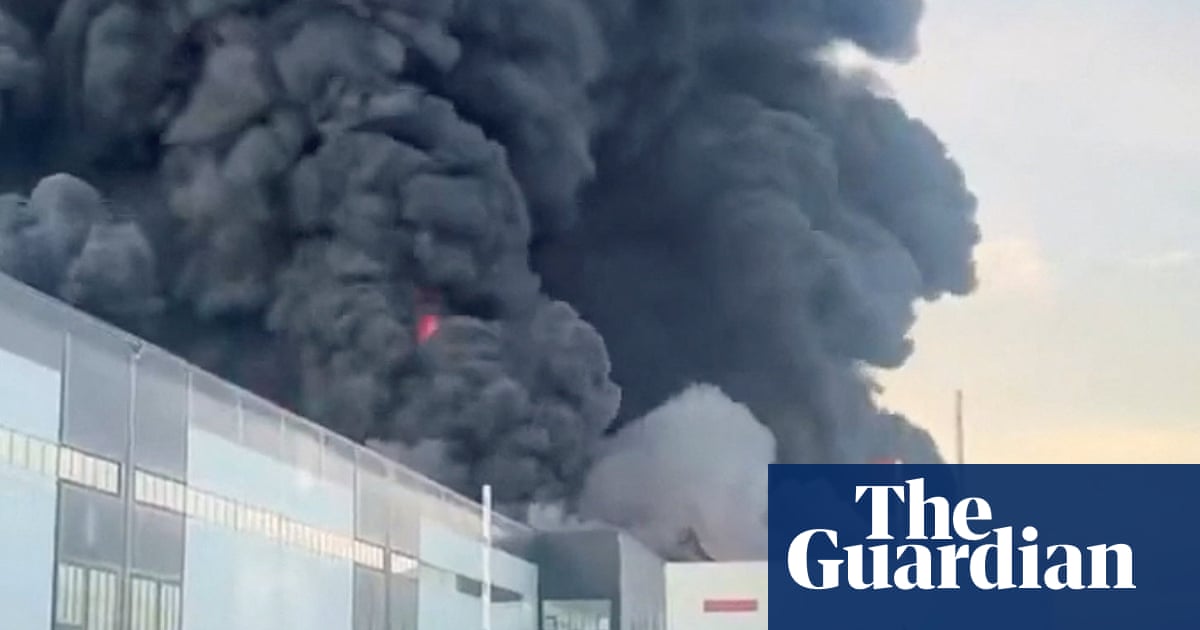
The Kremlin has acknowledged that it may be compelled to provide assistance to Wildberries, often referred to as "Russia's Amazon," following extensive damage from Ukrainian drone strikes. These attacks have reportedly destroyed 10% of Wildberries' warehousing capacity and a substantial amount of its stored inventory. Kyiv asserts that it is targeting Wildberries due to its integral role in supplying Moscow's military efforts.
According to a senior industry source speaking to Reuters, Wildberries is facing a "difficult situation" and is likely to require government backing, most probably channeled through state-controlled banks, to sustain its operational capabilities. This highlights a critical vulnerability in Russia's economic infrastructure, as major private enterprises become targets in the broader conflict.
Understanding the Mechanics of War's Economic Impact
Modern warfare extends beyond traditional battlefields, increasingly targeting an adversary's economic arteries to disrupt logistical capabilities and financial stability. The attacks on Wildberries exemplify this strategy, aiming to impede Russia's ability to maintain its military and exert internal pressure by undermining key industries. This approach leverages the interconnectedness of global supply chains and digital commerce to create widespread disruption.
Denys Shtilerman, co-founder and chief designer at Ukraine's leading arms producer Fire Point, elaborated on the strategic rationale. In an interview with Ukrainian journalist Dmitry Gordon on July 27, Shtilerman identified Wildberries as being targeted partly due to its significant partnership with state-controlled bank VTB. He described Wildberries as the largest borrower in Russia, cautioning that its potential demise could trigger a ripple effect, leading to the collapse of numerous banks, including VTB itself. This underscores the systemic financial risk that the attacks pose to Russia's banking sector and broader economic stability.
Kremlin Scrambles to Support Online Retailer
Wildberries, alongside its competitor Ozon, is pivotal to the Russian government's strategy for stimulating economic growth. This push comes at a time when Moscow is grappling with mounting budget pressures exacerbated by escalating military expenditures and a general economic slowdown. The attacks on Wildberries thus strike at the heart of Russia's economic resilience.
Kremlin spokesperson Dmitry Peskov publicly praised Wildberries for its efforts in assisting third-party sellers whose goods were stored in the damaged warehouses. These sellers have been vocally demanding support. One prominent seller, Marina Gorshkova, used her Instagram platform, reaching 1.3 million followers, to appeal directly to "the country's leadership" for assistance, noting that a million registered users on Wildberries required help.
In response to the human toll, Wildberries announced it had disbursed 40 million roubles (US$508,582) to the families of individuals killed or injured in the Ukrainian drone assaults on its facilities. This immediate payout, while significant, pales in comparison to the broader economic cost efficiency challenges posed by large-scale infrastructure damage.
Kyiv Seeks Prosecution of Lukashenko for War Crimes
In a parallel development, Volodymyr Zelenskyy's office has formally requested Ukraine's top prosecutor to explore initiating criminal proceedings against Alexander Lukashenko, the Belarusian dictator. This request was revealed in a letter made public on Tuesday. Lukashenko's government permitted Russian President Vladimir Putin to use Belarus as a staging ground for the full-scale invasion of Ukraine in February 2022.
The Ukrainian president's office specified that an exiled opposition group, the Belarus Democratic Forum, urged Kyiv to prosecute Lukashenko for "war crimes, genocide, and state terror." Lukashenko's administration did not respond to Reuters' request for comment on the matter.
While there is currently no immediate prospect of Lukashenko appearing before a Ukrainian court, Dmitry Bolkunets, secretary general of the Belarus Democratic Forum, believes such a prosecution would "significantly increase the personal legal and security risks faced by Lukashenko" and represent an act of historical justice. Bolkunets added that it "could have a profound impact inside Belarus, because Lukashenko would take it very personally and be deeply concerned about the consequences." The emphasis here is on leveraging international legal mechanisms to raise the stakes for leaders involved in the conflict, affecting their long-term compliance security and freedom of movement.
Diplomatic Tensions After Caspian Sea Incident
Ukraine and Iran's foreign ministers held discussions on Tuesday, with Kyiv stating its desire to prevent an "escalation" following a Ukrainian attack on an Iranian vessel in the Caspian Sea. Ukrainian President Volodymyr Zelenskyy had previously confirmed on Saturday that Kyiv conducted long-range strikes in the Caspian Sea against vessels involved in transporting military cargo linked to Iran.
Andriy Sybiga, Ukraine's foreign minister, conveyed to his Iranian counterpart, Abbas Araghchi, that "all of Ukraine’s actions are aimed solely at defending our country from Russian aggression and never intended to target civilian vessels or people." Araghchi, however, claimed that Sybiga assured him the attack was "unintentional and Ukraine seeks no escalation." Despite this, Ukraine did not publicly characterize the attack as unintentional. Sybiga stressed to Iran the imperative to "end any support for Russia’s war against Ukraine," referencing the significant damage and casualties Ukraine endures from Russian attacks utilizing Shahed drones, which are either acquired from Iran or manufactured based on its designs. This complex diplomatic exchange highlights the intricate web of geopolitical strategy at play.
US Strengthens Support, Sanctions Against Russia
During a meeting at the White House, President Zelenskyy held talks with former President Donald Trump. Zelenskyy reported discussing "licences for producing interceptors for the Patriots and other ideas that could help." He also met with officials from Lockheed Martin, a key producer of Patriot interceptors, confirming that teams are working towards "co-production as quickly as possible" to enhance Ukraine's defense technology capabilities. Zelenskyy further stated that diplomatic avenues were explored with Trump, emphasizing the importance of "stepping up the diplomatic process" given the ongoing absence of peace talks with Russia. Notably, Trump's envoys, Steve Witkoff and Jared Kushner, have agreed to visit Ukraine for the first time, sources familiar with the conversations told Reuters.
Simultaneously, the US Senate advanced a sweeping bill on Tuesday that would impose stricter sanctions on Russia. This legislation aims to penalize countries that continue to purchase Russian oil, gas, and other exports. The bill progressed with a bipartisan procedural vote of 86-12, taken shortly after a funeral for Senator Lindsey Graham of South Carolina, who was the chief negotiator for the bill. President Zelenskyy had met with senators directly before this crucial vote.
The proposed legislation includes specific exceptions for countries that import less than 15% of their natural gas from Russia and are actively working to reduce these imports. While broadly supported, some Democrats have expressed hesitation, fearing that the bill could grant Trump additional powers to impose tariffs indiscriminately on other countries and sectors, potentially impacting global trade policy.
Key Developments in the Ukraine War
Wildberries Under Siege: Ukrainian drone attacks have destroyed 10% of the Russian e-commerce giant's warehouse capacity, forcing the Kremlin to consider financial aid, potentially through VTB bank.
Economic Vulnerability: Wildberries, identified as Russia's largest borrower, is crucial for economic growth, and its collapse could destabilize numerous Russian banks, including VTB.
Lukashenko Targeted: Ukraine's president's office is exploring criminal proceedings against Belarusian dictator Alexander Lukashenko for war crimes, genocide, and "state terror" related to the invasion.
Caspian Sea Tensions: A Ukrainian attack on an Iranian vessel prompted diplomatic talks, with Kyiv seeking to avoid escalation while urging Iran to cease support for Russia's war.
US Bolsters Aid & Sanctions: Zelenskyy met Trump to discuss co-production of Patriot interceptors, while the US Senate advanced a bipartisan bill to sanction countries buying Russian exports.
Decode Today News delivers breaking news on AI, tech, business, politics, and world events — updated daily.
breaking news, AI news, technology news, India news, world news, business news #decodetodaynews