Ukraine Strikes Russia's Key Black Sea Port, Hitting Grain Hubs
Major Ukrainian Strike Disrupts Russian Black Sea Operations and Grain Exports
By Decode Today News
A recent and significant Ukrainian drone and missile barrage on Russia's strategic port of Novorossiysk has reportedly inflicted damage upon two major grain export terminals and struck the last substantial Russian naval base on the Black Sea. The overnight attack, described as "massive" by reports, resulted in the deaths of three people, including an eight-year-old child, and injured 24 others, local officials confirmed. This development marks a critical escalation in the ongoing conflict, directly impacting Russia's military infrastructure and its vital role in global agricultural supply chains.
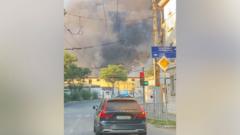
The severity of the assault prompted local authorities to declare an emergency situation in Novorossiysk. Throughout the night, repeated explosions reportedly resonated across the city as air defenses engaged incoming aerial objects. The extensive barrage of drones not only targeted areas around the port but also damaged crucial pipelines, leading to a suspension of the city's water supply, officials said. Additionally, regional Governor Veniamin Kondratyev reported that a man was killed by drone debris elsewhere in the Krasnodar region, with "several hundred drones" striking various locations and damaging dozens of buildings, including residential homes.
Assessing the Damage to Strategic Infrastructure
The targeting of Novorossiysk holds immense strategic implications for Russia. Most of Russia's Black Sea fleet is presently docked in Novorossiysk, one of Russia's largest ports, having been relocated there after its former home base of Sevastopol, in the Russia-occupied Crimean peninsula, became increasingly vulnerable to Ukrainian attacks. Ukrainian President Volodymyr Zelensky explicitly stated that Kyiv launched rockets, jet, and naval drones in a "unique operation" to strike the Russian base, asserting that "The occupying fleet and all the infrastructure that supports it will not be safe as long as Russian aggression continues," in a post on social media. Ukraine's military later claimed that four Russian warships, including two frigates, were hit, though Russia has not commented on these specific claims.
Beyond military assets, the damage to grain export terminals represents a significant blow to Russia's economic leverage. A major grain trading company confirmed to Russia's TASS news agency that its terminal had been hit, with another reporting similar damage to Reuters and Russian outlet RBK. The Russian agriculture ministry, responding to what it termed "current logistical constraints," announced on Wednesday that it was actively working to redirect cargo flows to alternative ports in the Baltic and Caspian Seas, as well as exploring land routes. This strategic shift underscores the immediate operational continuity challenges presented by the strike and the broader implications for supply chain resilience.
Global Implications for Grain Markets and Food Security
The disruption at Novorossiysk could have far-reaching consequences for global food supplies. Russia stands as the world's largest wheat exporter, and any impediment to its export capabilities can introduce significant market volatility. According to a Moscow-based analytics company, Russian grain exports for August could see a decline of more than half compared to the average for the same month over the last five years, largely attributed to the ongoing disruptions in the Black and Azov seas. This potential reduction raises serious concerns for international buyers, particularly those in North Africa, the Middle East, and parts of Asia, who heavily rely on Russian and Ukrainian grain.
Russian foreign ministry spokeswoman Maria Zakharova accused Ukraine of purposefully targeting Russian grain and agricultural infrastructure, which she claimed would result in a hike in global food prices and exacerbate existing grain shortages. Conversely, Zakharova also declared that Russia would persist in striking "facilities that [Ukraine's armed forces] use on the Black Sea to destabilise the navigation situation" until "the full elimination of threats to security projected to the Sea of Azov and the Black Sea." This rhetoric highlights the intense geopolitical risk premium being priced into agricultural commodities and the persistent threats to maritime security in the region.
Understanding Global Food Market Volatility
Concerns over how the conflict in Ukraine would affect global food supplies have been persistent since Russia's full-scale invasion in 2022. Together, Russia and Ukraine account for a substantial share of global grain trade. The fragility of this supply chain resilience was starkly demonstrated when the 2022 Black Sea Grain Initiative, designed to facilitate Ukrainian agricultural exports by lifting Russia's blockade, collapsed the following year after Moscow resumed attacks on vessels utilizing the maritime corridors to Odesa. This renewed aggression on shipping routes, including deadly Russian strikes on cargo ships and the port of Odesa, has aimed to deter foreign companies from trading with Ukraine. The Ukrainian Agribusiness Club (UCAB) reported a 23% decrease in exports in July, showcasing the direct impact on Ukraine's own export capacity and the ongoing challenges to cost efficiency in agricultural trade.
Ukraine, for its part, has demonstrably increased its capability for carrying out long-range strikes on Russian territory. Its recent attacks on vessels in the eastern Black Sea have already begun to disrupt Russia's own grain shipments, indicating a tit-for-tat dynamic in strategic infrastructure targeting. While Kyiv targets Russian strategic assets, Moscow continues its aerial offensive against Ukraine; at least 11 civilians were killed in Ukraine between Tuesday and Wednesday, with the majority perishing when Russia struck the southern city of Zaporizhzhia with ballistic missiles and glide bombs. These reciprocal attacks underscore the deeply intertwined nature of military strategy and economic impact in the conflict.
Key Takeaways from the Novorossiysk Attack
- Strategic Location: Novorossiysk serves as Russia's primary Black Sea naval base and a critical port for grain exports after fleet relocation from Sevastopol.
- Significant Damage: Two major grain export terminals and potentially four Russian warships (two frigates) reportedly hit during the "massive" Ukrainian drone and missile strike.
- Human Cost: Three fatalities and 24 injuries in Novorossiysk, alongside one additional death in the Krasnodar region due to drone debris.
- Economic Impact: Russia's agriculture ministry is redirecting cargo flows to alternative ports and land routes; a potential greater than 50% drop in August grain exports is anticipated.
- Global Food Security: The attack intensifies concerns over market volatility and global food prices, particularly for buyers in North Africa, the Middle East, and Asia.
- Escalating Conflict: Ukraine's "unique operation" against Russian strategic infrastructure is met with reciprocal Russian strikes on Ukrainian cities and civilian targets.
- Supply Chain Resilience: The incident highlights the vulnerabilities in global agricultural supply chains and the increasing geopolitical risk affecting international trade.


