Ukraine Accuses Russia of Using North Korean Missiles
Intense cross-border strikes have continued between Ukraine and Russia, with Ukrainian President Volodymyr Zelensky accusing Moscow of deploying ballistic missiles and soldiers supplied by North Korea. This development comes amid a significant escalation in hostilities, including deadly attacks on civilian and industrial infrastructure across both nations.
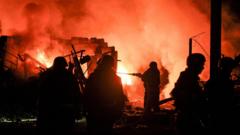
Recent strikes included a fatal assault on the southern Ukrainian city of Zaporizhzhia, which killed seven people and injured at least 24. Ukrainian officials stated these attacks involved ballistic missiles originating from Russia's ally, corroborating earlier claims about foreign military assistance. Concurrently, Ukrainian forces reportedly targeted warehouses belonging to Wildberries, Russia's largest online retailer, in the western Russian region of Voronezh. This retail giant, often dubbed "Russia's Amazon," has experienced repeated targeting in recent weeks, signaling a strategic focus on Russian logistics and supply chain integrity.
Zelensky Alleges North Korean Military Reinforcement
By Decode Today News
In a Monday evening video address, President Zelensky asserted that for the "first time," Russia is unable to conduct its conflict operations without "reinforcements from North Korea." Zelensky emphasized the gravity of this alleged reliance, stating, "The more North Korean strikes there are here in Ukraine, in Europe, the more their missiles and soldiers are used, the more they correct their shortcomings and blind spots." He warned that this situation poses a tangible danger to the rest of the world, although he did not present specific evidence to substantiate these recent comments.
This is not the initial instance where Zelensky and other senior Ukrainian and Western officials have voiced concerns about Russia receiving military aid from North Korea. Ukraine's military has previously reported that dozens of North Korean missiles have been fired into its territory since Moscow's full-scale invasion commenced in February 2022. The Ukrainian president also cautioned over the weekend that as many as 50,000 North Korean soldiers were purportedly being dispatched to fight alongside Russian forces.
Alleged North Korean Troop Deployments and Casualties
Specific intelligence cited in the source material suggests that approximately 11,000 North Korean soldiers were deployed to aid Moscow in pushing Ukrainian troops out of the western Russian region of Kursk, following a cross-border incursion in August 2024. Western officials, speaking to the BBC in January 2025, indicated that these North Korean troops had reportedly sustained nearly 40% casualties in the fighting within a mere three months, highlighting the intense operational environment and the significant human cost of these alleged deployments.
Escalation of Deep Strikes and Economic Impact
The recent intensification of hostilities includes significant deep strikes by both sides. A day prior to Zelensky's latest address, Ukrainian drone strikes on the Russian republic of Tatarstan, located over 1,100 km (680 miles) from the Ukrainian border, resulted in at least 13 fatalities, including one child, and injured 75 people. Ukraine's Armed Forces claimed to have successfully targeted the city's Tanevo oil refinery, a critical piece of energy infrastructure. Verified images circulating on social media showed large plumes of smoke and flames, accompanied by air raid sirens, confirming the impact of these strikes. The Uzbek consulate in Tatarstan confirmed that seven of those killed were citizens of Uzbekistan, underscoring the international dimension of the conflict's human toll.
President Zelensky lauded a successful air strike on a Russian petrochemical plant in western Siberia on Monday as a "very significant achievement" for the Ukrainian military. He pledged "more Ukrainian deep strikes, which should demonstrate to Russia and the Russians that peace is necessary," indicating a strategic shift towards disrupting Russia's economic and industrial capacity far behind the front lines.
Targeting Russian Commercial Logistics
The repeated targeting of Wildberries' facilities illustrates a broader strategy aimed at undermining Russian commercial infrastructure. Kyiv previously stated it was targeting logistics hubs utilized by Russians to procure military equipment, thereby disrupting supply chains to the Russian army. Ukrainian drone attacks in July on several retail warehouses belonging to Wildberries had already disrupted the operations of numerous small and medium-sized Russian businesses, highlighting the ripple effect on Russia's domestic economy and consumer demand. The recent fire and explosions at a Wildberries logistics center in the Voronezh region, which borders Ukraine, led to the evacuation of facilities, further impacting the company's operating margin and supply chain resilience.
Impact on Ukrainian Cities and Critical Infrastructure
Russian strikes have also continued to inflict damage and casualties across Ukraine. In Zaporizhzhia, the regional head, Ivan Fedorov, shared images of vehicles and buildings engulfed in flames, confirming the use of missiles and guided bombs. All seven casualties were employees of Ukraine's Zaporizhstal metallurgical plant, which subsequently halted all operations, affecting local industry and potentially global commodity markets. The capital, Kyiv, experienced air raid sirens twice overnight, with explosions heard on its outskirts causing fires. Local officials later reported damage to a children's hospital, although thankfully no injuries occurred as staff and patients had sought shelter.
In the north-eastern Ukrainian city of Sumy, a Russian drone strike injured two women, with a subsequent attack using gliding bombs reportedly killing one person, according to regional head Serhii Kryvosheienko. Furthermore, strikes on electrical substations in Kherson and Kharkiv led to widespread power outages, impacting critical infrastructure security and the daily lives of residents. Ukrainian officials reported Russia fired 120 drones overnight, along with a range of different missiles. Notably, for the first time, they did not disclose the number of missiles fired or intercepted. This decision follows an Air Force statement on Monday urging media not to publish "sensationalized headlines" or "spread pessimism" regarding the ongoing shortage of air defense interceptors, underscoring challenges in maintaining air defense capabilities.
Understanding the Geopolitical Dynamics of Ukraine's Conflict
The ongoing conflict in Ukraine has evolved into a complex geopolitical chessboard, marked by shifting alliances, strategic targeting, and the alleged involvement of external actors. President Zelensky's claims regarding North Korean military assistance, if substantiated, would represent a significant escalation in international compliance concerns and highlight Russia's potential resource constraints. The deployment of advanced weaponry and potential troop movements from Pyongyang could alter the strategic calculus, influencing the international response and the flow of military aid to Ukraine.
The intensification of deep strikes by both sides reflects a strategy of targeting critical infrastructure, logistics networks, and industrial complexes to erode the adversary's capacity for sustained conflict. For Ukraine, these attacks aim to demonstrate resilience and the ability to project power far into Russian territory, thereby pressing for a resolution. For Russia, maintaining pressure on Ukrainian cities and infrastructure seeks to degrade the nation's defense capabilities and civilian morale. The focus on economic targets, such as Wildberries, also underscores the financial dimensions of modern warfare, where disrupting enterprise integration and supply chain efficiency becomes a key tactical objective.
Key Developments in Ukraine's Conflict
The past week has seen several critical incidents shape the narrative of the ongoing conflict:
- Zelensky's Allegations: President Zelensky accuses Russia of utilizing North Korean ballistic missiles and soldiers, citing a strategic dependence.
- Zaporizhzhia Attack: Russian ballistic missile strikes kill 7 employees at the Zaporizhstal metallurgical plant, injuring 24.
- Tatarstan Deep Strike: Ukrainian drones hit the Tanevo oil refinery, killing 13 and injuring 75, located over 1,100 km from the border.
- Wildberries Targeting: Ukrainian forces strike Wildberries warehouses in Voronezh, disrupting commercial logistics.
- North Korean Troops: Allegations of 11,000 North Korean soldiers deployed to Kursk, with reports of up to 40% casualties.
- Siberian Petrochemical Plant: Ukraine hails a successful deep strike on a Russian petrochemical facility in western Siberia.
- Air Defense Concerns: Ukraine's Air Force urges media caution amidst a reported shortage of air defense interceptors.
As the conflict continues, the implications of alleged international military assistance and the strategic targeting of economic and critical infrastructure will remain central to the geopolitical landscape, demanding continuous assessment from global observers and policymakers.


