Summer Office Attire: Decoding Shorts, Strappy Tops, and Sandals
Navigating Summer Professionalism: Shorts, Strappy Tops, and Sandals in the Workplace
By Decode Today News
As summer heatwaves become more frequent across the US, UK, and Canada, the perennial question of appropriate workplace attire intensifies. What to wear to remain cool and comfortable without compromising a professional image, especially concerning items like shorts, strappy tops, and sandals, is a surprisingly complex decision for many professionals.
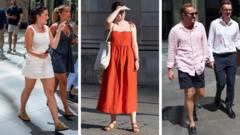
Public opinion is largely in favor of more flexible dress codes during hot weather. A recent poll by market research firm Ipsos revealed that a significant
The Evolving Stance on Shorts in the Office
The concept of men wearing shorts in the office, while gaining traction, has met with varied reactions. In Tokyo, for instance, an official encouragement for men to adopt shorts in the workplace led to public complaints regarding "hairy legs in the office," highlighting cultural and aesthetic differences in professional presentation.
Conor, a media professional, regularly wears shorts to his office during warm periods, advocating for comfort without sacrificing competence. "If you're able to do your job safely, professionally and appropriately, there's a lot to be said for letting people be comfortable," he argues, reflecting a growing
However, the definition of acceptable shorts is critical. Fashion designer Amanda Wakeley cautions that not all shorts are workplace-appropriate. She points out, "If you're asking yourself whether they're too short, they probably are," labeling shorts as "the trickiest item to get right in a professional environment." Wakeley recommends
Understanding Footwear: The Line Between Leisure and Professionalism
Footwear choices in summer can be particularly divisive, signaling a stark difference between casual leisure and professional readiness. Flip-flops, for instance, are almost universally deemed inappropriate for office settings.
Wakeley definitively classifies flip-flops as one of the few absolute "no" items in most offices. "They instantly signal leisure rather than professionalism and can make even the most polished outfit feel underdressed," she asserts. This sentiment is strongly supported by public opinion; Ipsos found that almost
Chambers reinforces this, recommending woven flats as a superior alternative even in extreme heat, citing their breathability and full foot coverage. Sandals, however, occupy a more nuanced position. Wakeley explains that
Navigating Bare Shoulders and Strappy Tops
The acceptability of bare shoulders and strappy tops in the workplace also presents a divided public and professional opinion. Ipsos data indicates that
Natasia, a teacher in London, shared her experience of being "regularly in the summer months to tell us off about our outfits" at a previous school, including being asked to cover up tattoos. She contends that having arms uncovered should be acceptable, especially in hot weather. While personal comfort is a significant factor driving
Experts offer solutions that balance comfort with decorum. Wakeley suggests that a
Understanding the Dynamics of Summer Dress Codes: Balancing Professionalism with Comfort
The underlying dynamics of summer dress codes reflect a crucial balance between an organization's need for a consistent professional image and employee welfare, especially given the projections of more severe and frequent heatwaves due to climate change. Employers, while entitled to set standards around clothing and appearance for legitimate reasons such as safety, branding, or maintaining a professional image, must ensure these standards are reasonable and justifiable.
Employment lawyer Sarah Tahamtani emphasizes that dress codes should be "
Employees who perceive a dress code request as unreasonable or inconsistently applied are encouraged to address the issue with a manager or HR. Clearly articulating how the rule impacts their comfort or ability to work safely can facilitate a productive dialogue and potentially lead to adjustments that benefit both the individual and the organization, contributing to overall
Key Styling Tips for Summer Office Attire
Experts agree that personal style does not need to be sacrificed when dressing for the office in summer. It is possible to inject personality while adhering to professional guidelines. Here are top tips from fashion designer Amanda Wakeley and stylist Clare Chambers:
- For shorts: Choose
tailored, longer styles that sit around the kneecap . Pair with a crisp shirt or lightweight blazer. - For footwear: Avoid flip-flops. Opt for
woven flats or refined leather sandals that are clean and well-maintained. Consider if sandals look like part of a considered outfit rather than poolside wear. - For strappy tops: Wear a
well-cut camisole or strappy top layered under a linen overshirt, lightweight jacket, or tailored co-ord . - Bra etiquette: If wearing a strappy top, ensure a
strapless bra is used to avoid visible straps. - Material choice: Consider
satin camisoles as a more polished alternative to basic cotton vests. - Trend alignment: Evaluate if a fashion trend, like socks and sandals or bandeau tops, truly aligns with the professional image you wish to project.
- Comfort is key: Prioritize clothes that allow you to do your job safely, professionally, and appropriately while remaining comfortable.
The evolving


