Nvidia Secures $500B for AI Infrastructure Boom
Nvidia, a leading chipmaker, has successfully secured $500 billion (£370bn) in capital from some of Wall Street's largest banks and investors to significantly expand artificial intelligence (AI) infrastructure. This landmark financing initiative, announced on Monday, involves key financial players including Apollo, BlackRock, Blackstone, Brookfield, Goldman Sachs, and KKR, signaling a pivotal shift as these investors are, for the first time, recognizing AI hardware and infrastructure—often referred to as "compute"—as a distinct and critical asset class.
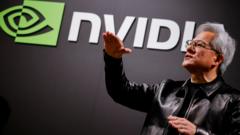
Jensen Huang, chief executive of Nvidia, underscored the strategic importance of this development, stating, "In AI, compute is revenue." He further elaborated on the company's ambition, explaining that Nvidia is "bringing the world's leading long-term capital providers together to independently underwrite AI infrastructure." This substantial capital injection is earmarked not only for Nvidia's proprietary projects but also for initiatives undertaken by its extensive network of partners, fueling the global demand for advanced AI capabilities.
Powering the AI Revolution: Data Centers and Chip Manufacturing
By Decode Today News
The newly secured financing will be channeled into critical infrastructure projects essential for the burgeoning AI industry. A primary focus will be the construction of state-of-the-art data centers. These facilities are designed to house, operate, and efficiently cool vast arrays of stacked computer chips that are indispensable for processing the immense volumes of data and complex actions required by modern AI systems. Beyond data centers, a significant portion of the funds will also support the establishment of new factories dedicated to manufacturing the specialized AI chips necessary to power these sophisticated systems, thereby increasing their availability to a diverse range of buyers worldwide.
The recognition of "compute" as an asset class signifies a profound evolution in investment strategy, reflecting its foundational role in the digital economy. Joe Bae and Scott Nuttall, co-chief executives of KKR, articulated this sentiment in a joint statement: "Compute has become a critical infrastructure asset." They emphasized the operational challenges inherent in such large-scale endeavors, noting, "As we've scaled our approach to digital infrastructure, we've learned that delivery, not ambition, is the hard part."
Understanding the Mechanics of AI Infrastructure Investment
The investment in AI infrastructure, or "compute," is driven by its indispensable role in virtually every major technology and AI company. Nvidia's graphics processing units (GPUs) are the backbone for powering a wide array of services, sophisticated AI platforms, and advanced AI chatbots across the industry. Companies like Google, Meta, Amazon, Microsoft, SpaceX, Tesla, OpenAI, and Anthropic are all heavy users of Nvidia's popular chips, underscoring the chipmaker's central position in the AI ecosystem.
The collective spending by these tech giants on AI projects and infrastructure has been staggering, exceeding $1 trillion in just the past three years, with expectations for significantly more investment in the coming period. This voracious demand for Nvidia's chips and related services has directly contributed to a dramatic surge in the company's stock market value, which has increased five-fold over the same three-year span. This market valuation growth highlights the enterprise integration and consumer demand for advanced AI solutions.
In a statement on Monday, CEO Huang reflected on Nvidia's foundational identity as a chip-maker, but also looked forward to its evolving role. He asserted, "Today, we are helping create a new class of productive, investable infrastructure: AI factories." This vision emphasizes not just the hardware, but the complete ecosystem required to scale AI capabilities globally. The ability to tap into this new funding mechanism from partnering banks and investors will undoubtedly enable Nvidia to finance a greater share of the ongoing AI boom, expanding its operational footprint and market reach.
Jim Zelter, president of Apollo, a significant lender managing over $1 trillion in assets, further reinforced the strategic importance of this shift. He remarked, "Modern compute has emerged as a scarce, mission-critical asset class." Zelter also projected its broader economic impact, adding that it is "positioned to drive significant long-term economic growth and productivity gains," pointing to the potential for substantial investment yield from these infrastructure projects.
Industry-Wide Commitment to AI Investment
The trend of major financial institutions investing heavily in AI infrastructure is not confined to Nvidia's latest deal. Other significant movements within the industry illustrate this burgeoning asset class:
- BlackRock's Strategic Deal with Meta: Last month, BlackRock finalized an individual agreement with Meta. This deal involves financing and taking a majority ownership stake in a data center located in Texas. This highlights direct investment into physical AI infrastructure assets.
- Anthropic's Infrastructure Expansion: AI company Anthropic recently entered into a significant financing agreement with Macquarie Asset Management and GIC, an investment bank based in Singapore. While the specific size of this deal was not disclosed, Anthropic indicated that more financing was imperative. The company cited the escalating popularity of its advanced chatbot, Claude, explaining that the "demand requires significant new compute," showcasing the direct link between consumer demand and the need for expanded AI infrastructure.
The sustained investment in AI infrastructure, driven by high consumer demand and enterprise integration needs, is reshaping global technology markets. The move to treat "compute" as an asset class reflects a mature understanding of AI's critical role in future economic growth, emphasizing cost efficiency, compliance security, and overall market valuation in an increasingly data-driven world.


