Goodwin Considers Defence Business Sale
Goodwin, a venerable British engineering firm headquartered in Stoke-on-Trent, announced on Friday that it is actively considering the divestment of a substantial part of its mechanical engineering division. This division is a critical supplier of components to major defence and nuclear programmes, both within the UK and internationally. Following the announcement, the company's shares, listed on the London Stock Exchange, surged by approximately 10% in morning trading.
The firm's board confirmed that it has initiated a strategic review, a structured process designed to "consider a range of potential options to maximise value for shareholders whilst ensuring continuity for all stakeholders, including customers, and the long-term prosperity of its businesses," the company said. These discussions are currently ongoing, and the board emphasized that there is "no certainty that a transaction will be entered into." Global financial advisory firm Rothschild & Co has been appointed to advise the board on this comprehensive strategic review.
The mechanical engineering division under consideration for sale encompasses several key entities, including Goodwin Steel Castings (GSC), Goodwin International (GI), Noreva, Easat, and Pumps. These operations are deeply integrated into high-stakes national security initiatives, contributing vital components to some of the most advanced military hardware programmes. The strategic importance of these entities is underscored by their role in supplying crucial parts for both UK and US frigate and submarine programmes, highlighting Goodwin's essential position within the international defence supply chain.
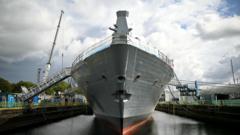
Among the flagship projects supported by Goodwin's mechanical engineering expertise is Britain's Dreadnought programme. This ambitious initiative is responsible for constructing the Royal Navy's next-generation nuclear deterrent submarines, vessels paramount to the UK's strategic defence capabilities. Concurrently, the company is a key supplier to the Type 26 frigate programme, which is developing a fleet of advanced anti-submarine warships for the Royal Navy, designed to protect maritime interests and project naval power globally. These programmes represent significant long-term commitments, providing a stable, high-value revenue stream for the company's defence-oriented operations.
Financially, Goodwin Steel Castings and Goodwin International have been significant drivers of the company's profitability. According to its latest annual report, these segments have "delivered a boost to the company's profits, having benefited from economies increasing their defence spending." This trend reflects a broader global increase in defence budgets, creating a buoyant market for specialized engineering firms like Goodwin. However, the company has also faced recent challenges. In March, it experienced a "big hit" when it lost two significant contracts and encountered order delays in the Middle East, as noted by Russ Mould, investment director for AJ Bell. Despite these setbacks, the overall interest in its defence arm remains robust.
A recent report in the Financial Times indicated that "several potential buyers that have records in defence had expressed interest in Goodwin in recent weeks." This interest suggests a strong market valuation for specialized defence suppliers, particularly those with a proven track record and integration into critical national programmes. The potential sale could involve a significant enterprise integration for any prospective buyer looking to expand its footprint in high-value, high-compliance defence manufacturing.
Understanding the Mechanics of Business Divestiture
By Decode Today News
A strategic review, such as the one commenced by Goodwin, is a fundamental corporate finance exercise designed to scrutinize a company's business portfolio and evaluate avenues for enhancing shareholder value. In the context of a potential divestiture, this process typically involves assessing how a particular division or asset contributes to the overall corporate strategy, its growth prospects, and its market valuation if sold separately. For a company like Goodwin, deeply embedded in complex defence contracts, any decision around a sale must meticulously balance the pursuit of increased investment yield for shareholders with the imperative of maintaining operational continuity and compliance security for critical government customers and other stakeholders.
Divestitures can be driven by various factors: the desire to streamline operations, focus on core competencies, raise capital for new investments, or unlock hidden value in segments that might be better valued as independent entities or as part of a larger, more specialized enterprise. In industries such as defence engineering, where long-term contracts, advanced technology, and rigorous certifications are paramount, the due diligence process for both buyer and seller is extensive. It often involves careful consideration of intellectual property, regulatory approvals, national security implications, and the potential impact on jobs and regional economies. The involvement of an advisory firm like Rothschild & Co underscores the complexity and strategic importance of such a transaction, aiming to navigate the intricacies of market dynamics and stakeholder expectations to achieve an optimal outcome.
Russ Mould of AJ Bell further elaborated on the broader implications of this development. He characterized Goodwin as a "major supplier to UK and US submarine programmes" and highlighted its recent benefits from "bumper defence spending across other parts of its business." Mould's analysis underscores the unique position of UK engineering firms in global niche markets. "The interest in Goodwin's defence arm is a reminder that the UK has a collection of engineering businesses which are global leaders in their respective niches," he observed. This perspective highlights the expertise and specialized capabilities that British engineering contributes to sophisticated global industries.
The potential sale raises questions about the long-term structure of the company. "What any sale would mean for the future of Goodwin as a standalone business remains an open question," Mould added, implying that the scope of the divestment could significantly redefine Goodwin's corporate identity and operating margin. However, he also predicted that the company is "likely to still derive a significant chunk of its revenue from military spending regardless," suggesting that defence will remain a core element of its business, even if some parts are divested. This indicates the profound and enduring link between Goodwin's engineering prowess and the defence sector.
Goodwin boasts a rich heritage, having been founded in 1883. For generations, the company has been majority owned and managed by the Goodwin family, a structure that often imbues a company with a distinct corporate culture and long-term vision. This family-led stewardship, combined with its public listing on the London Stock Exchange, creates a unique dynamic where traditional values meet the demands of modern capital markets and shareholder expectations.
Key Details of Goodwin's Strategic Review
- Company: Goodwin, a British engineering firm based in Stoke-on-Trent.
- Action: Considering the sale of a "substantial part" of its mechanical engineering division.
- Divisions Affected: Goodwin Steel Castings (GSC), Goodwin International (GI), Noreva, Easat, and Pumps.
- Rationale: To "maximise value for shareholders whilst ensuring continuity for all stakeholders."
- Key Defence Programmes Supplied:
- UK's Dreadnought programme (next-generation nuclear deterrent submarines).
- Royal Navy's Type 26 frigate programme (advanced anti-submarine warships).
- Broader UK and US frigate and submarine programmes.
- Financial Context: Recent profit boost from defence spending; faced contract losses and order delays in March.
- Market Reaction: Shares surged approximately 10% on the London Stock Exchange following the announcement.
- Advisory Role: Rothschild & Co is advising the board.
- Current Status: Discussions are ongoing; no certainty of a transaction.
The strategic review represents a pivotal moment for Goodwin, as it navigates the complexities of maximizing shareholder value within the highly specialized and regulated defence sector. While discussions are ongoing and a sale is not yet certain, the announcement has clearly resonated with investors, reflecting confidence in the inherent value of the company's defence-related assets and its critical role in national and international security programmes.


