Alexandrova Upsets No. 1 Sabalenka in Toronto Tennis Thriller
Alexandrova Delivers Stunning Upset Against World No. 1 Sabalenka
By Decode Today News
TORONTO – On a hot and humid Saturday night at the National Bank Open presented by Rogers, Ekaterina Alexandrova, the tournament's 16th seed, orchestrated a significant upset, defeating world No. 1 Aryna Sabalenka in a captivating three-set marathon. Alexandrova claimed victory 7-6 (3), 4-6, 6-4 in the Round of 16 match, showcasing remarkable composure against one of the hottest players in professional tennis.
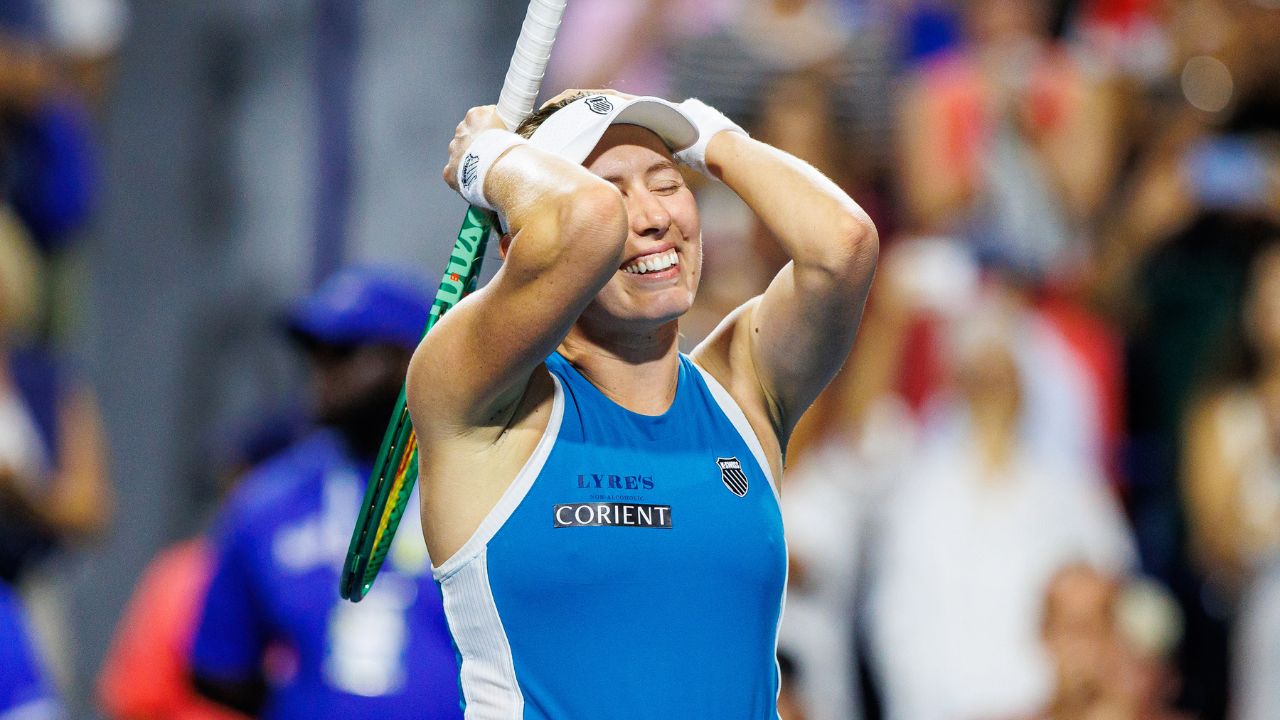
The highly anticipated clash was a roller-coaster of emotions and unpredictable plays, captivating a crowd that savored every moment. It was a contest defined by audacious shots and frustrating misplays, with the momentum swinging wildly on nearly every serve. For Alexandrova, ranked 19th globally, this high-risk approach was a deliberate strategy. “I knew it's going to be difficult match. I didn't have any expectations beside that,” Alexandrova stated, reflecting on her mindset. “I just went on the court, and I was trying to play as aggressive as I could, even if that cost me a lot of unforced mistakes.”
Unpredictable Dynamics and Strategic Aggression
The match was replete with unusual occurrences, including a rare lost tie-breaker for Sabalenka that sealed a dramatic first set. Both competitors struggled with consistency on their serves, recording seven double faults each, while Alexandrova edged out Sabalenka in aces (8-6). Despite breaking serve six times apiece, neither player could convert these opportunities into sustained momentum. A particularly striking moment saw Sabalenka, known for her power, mishit an easy net-front volley straight into the net during the second set – a shot that should have been a rally-ending winner.
While Sabalenka frequently expressed her frustration throughout the contest, Alexandrova maintained an unwavering focus. “Overall, I was playing just, like, every single ball, no matter what the score was,” she explained. “I wasn't trying to think, you know, that if it was my only chance or, like, what's going to happen next. So, no matter what the score was, I was just trying to play the same thing.”
The underlying strategic battle centered on harnessing power and precision. Sabalenka's sensational swing often delivers immense power, but it can come at the cost of accuracy. Alexandrova aimed to exploit this, focusing her aggression on returns. “I was trying to play more aggressive on the return because, I don't know, for me it felt like her serve, it's such a big weapon of hers,” Alexandrova elaborated. “If I would be able to create some pressure on the return, especially on the first one, it will create some kind of tension on the court, and it will help me, you know, to get extra few seconds, maybe less, you know, just to play the ball faster, so that she doesn't have that much time after the serve.” She acknowledged the inherent risk, noting, “Sometimes it was really working, but of course it cost me a lot of errors the same way.”
Fittingly, given the drama surrounding the service game, the match concluded with a Sabalenka double fault. This final error came immediately after she had delivered a blistering cross-court ace to stay alive at match point, encapsulating the unpredictable, roller-coaster nature of professional tennis.
Alexandrova, a 31-year-old veteran, did not underestimate her opponent. Describing Sabalenka, 28, she said, “She has an amazing serve, return. She can make amazing shots from both sides, the forehand and the backhand. She can play the drop shot and the volley. So, basically, she can do anything.” On this particular night, however, Alexandrova simply executed her game a bit better, securing a coveted spot in the quarter-finals.
Her next challenge will be against ninth-seeded Elina Svitolina, who advanced by swiftly dispatching Amanda Anisimova in straight sets, 6-2, 6-4, to conclude Saturday's action.
Mastering Mental Fortitude in High-Stakes Tennis
The ability to remain calm under pressure and adapt strategies mid-match proved crucial across several contests in Toronto. Alexandrova's steadfast approach against Sabalenka exemplified this, as did Iga Swiatek's gritty comeback earlier in the day.
World No. 1 Swiatek was the first to secure her quarter-final berth in Toronto, overcoming a challenging start against Marta Kostyuk with a 3-6, 6-1, 6-2 victory. The final score, however, belied the match's intensity. After cruising through her initial rounds with dominant straight-sets wins, Swiatek found herself down a set against a familiar foe. Kostyuk had previously ousted Swiatek in the Round of 16 at Roland Garros earlier this spring, though Swiatek had held a 3-0 career match lead against the Ukrainian, never having dropped a set to her prior to that. The crowd, audibly divided, cheered for both players, with alternating chants of "MAR-TA" and "I-GA."
Swiatek managed to shake off a sluggish first set by making strategic adjustments, particularly to her service game, and by taking more calculated risks to counter Kostyuk’s strong return pressure. “I knew I can play better. I knew I had some shots that I maybe should have played more brave in the first set,” Swiatek commented post-match. “In the second I came out, you know, being more brave and using the opportunities, like playing a bit faster and more heavy, and pushing Marta a little bit more.” This shift paid dividends, allowing Swiatek to seize control despite the pressure and heat, eventually closing out the win on her sixth match point. “Even though the scoreline was maybe not so close, but every point, like, we fought for every ball,” Swiatek noted, adding, “There weren't many free points.”
Rising Talents and Revenge Matches Define Quarter-Finals
Following Swiatek’s Centre Court victory, 15th-seeded Diana Shnaider continued the trend of upsets, defeating two-time tournament champion Jessica Pegula in straight sets, 6-3, 6-3. This win propelled Shnaider into the quarter-finals, where she is set to face Swiatek. Their match is anticipated to be another strategic showdown, given their recent history.
The Shnaider-Pegula encounter was described as a chess match, with both players employing creative net-front tactics, indicative of their familiarity. Pegula had bested Shnaider in the semifinals in D.C. just last month and also in the quarterfinals in Charleston in April. Shnaider's victory in Toronto marks her first career win against Pegula, and it came at a tournament where the American has found significant success, having been crowned champion of the 2024 National Bank Open and defending her title from Montreal the previous year. Shnaider, who reached the semi-final in 2024 only to be defeated by Pegula, is now looking to surpass that achievement. “Yeah, so far, so good,” Shnaider said, expressing her fondness for the city. “I love Toronto. I was looking forward to come back here. It's only my second time, but, yeah, definitely I like the courts here. I like the crowd, super supportive. So, yeah, some nice memories and I hope just to keep going.”
National Bank Open Quarter-Finalists (as of Saturday's action):
- Ekaterina Alexandrova (16) vs. Elina Svitolina (9)
- Iga Swiatek (1) vs. Diana Shnaider (15)
The stage is set for an enthralling series of quarter-final matches, promising more high-stakes tennis as the tournament progresses.


