Russia's Putin Promises Security as Ukraine Ramps Up Attacks
Russia's Putin Promises Security as Ukraine Ramps Up Attacks
By Decode Today News
Russian President Vladimir Putin has pledged to bolster national security and ensure the inviolability of Russia's borders, as Ukraine significantly intensifies its long-range drone attacks targeting key Russian infrastructure. The promise comes amid a growing wave of strikes reaching deep into Russian territory, hitting oil refineries and military logistics facilities.
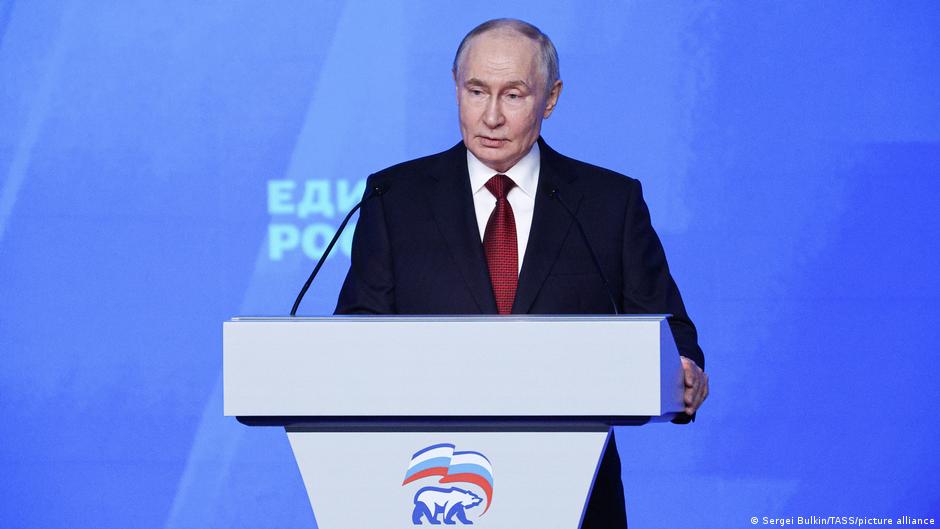
Putin Vows Enhanced Security Amid Escalating Ukrainian Strikes
During a United Russia party congress, President Vladimir Putin addressed increasing concerns over Ukrainian drone attacks, assuring citizens that his government would guarantee security and territorial integrity. He emphasized the need to strengthen Russia's air defense capabilities, particularly by accelerating the production of vital defense systems. These statements follow confirmed Ukrainian strikes on oil refineries in regions including Krasnodar and Yaroslavl, prompting a renewed focus on defensive measures as the conflict continues to escalate.
Speaking to members of his ruling United Russia party congress on Sunday, President Putin acknowledged the challenges faced by the nation. "Yes, we see the problems, we are aware of them and are responding to them, but we will certainly ensure the security of both the country and our citizens, as well as the inviolability of Russia's borders," Putin stated. He reaffirmed Russia's commitment to overcoming all contemporary challenges, specifically citing "terrorist attacks on our territory and infrastructure facilities."
Putin’s remarks arrive at a time when Ukraine has notably scaled up its offensive actions, employing long-range drones to strike Russian oil refineries, weapons factories, and critical logistics infrastructure. These operations are presented by Kyiv as a direct response to the ongoing Russian invasion of Ukraine, which commenced in February 2022.
Later the same Sunday, the Russian President underscored the urgency of fortifying Russia's air defense systems. "The first task is to quickly and significantly ramp up production of those air defense systems that are most needed," Putin asserted. Despite this call for enhanced defenses, he sought to downplay the operational impact of Ukrainian strikes on Russia's military campaign in Ukraine. Putin contended that "All the strikes, wherever they hit our infrastructure, absolutely do not affect the situation on the front, on the line of combat contact."
He also dismissed a proposal from Kyiv suggesting a mutual halt to long-range strikes as a preliminary step toward future peace negotiations. Putin characterized the offer as strategically motivated, remarking, "It is clear why this proposal is being made, because our counter-strikes deep into Ukrainian territory are much stronger, have greater impact and are, frankly, more destructive." He further suggested that Ukraine's drone campaign was intended as a diversionary tactic, aimed at drawing Russian attention away from its primary objectives of capturing the eastern Donbas region and parts of southern Ukraine.
Ukrainian Attacks Target Key Infrastructure Deep Inside Russia
Ukrainian President Volodymyr Zelenskyy confirmed new attacks on Russian territory, utilizing his official post on X on Sunday. He announced that Ukrainian forces had carried out fresh strikes on two oil refineries in Russia. These attacks coincided with Ukraine's celebration of Constitution Day, adding a symbolic layer to the continued military actions.
Zelenskyy reported that the Slavyansk oil refinery, situated in the southern Russian region of Krasnodar, had been hit. He noted its considerable distance from the front line, approximately 300 kilometers (186 miles). Veniamin Kondratyev, the Governor of the Krasnodar region, subsequently confirmed the attack, tragically reporting one fatality. In a further revelation, Zelenskyy stated that Ukrainian forces also "reached a refinery in the Yaroslavl region, approximately 700 kilometers from our border." The Yaroslavl region is located north of Moscow, indicating the growing range and ambition of Ukraine's drone capabilities.
Beyond these recent incidents, Ukraine’s drone campaign has increasingly focused on infrastructure targets within the Crimean Peninsula. Russia annexed Crimea from Ukraine in 2014, and the peninsula has since served as a crucial logistics hub for the Russian invasion. Ukrainian forces have launched strikes against bridges and refineries on the peninsula, which holds a geopolitically vital position on the Black Sea. These sustained attacks have led to tangible disruptions, including fuel shortages, intermittent power cuts, and significant travel disruptions between Crimea and mainland Russia.
The recent intensification of attacks builds on previous high-profile incidents. On June 18, Ukraine launched what was described as its largest drone attack on Moscow since the beginning of the war, striking a vital oil refinery. That particular incident resulted in the temporary suspension of flights at Moscow airports, with local residents reporting unusual phenomena such as "oil rain" from the skies, highlighting the immediate and visible impact of these deeper strikes.
Why These Developments Matter to Global Readers
The escalating exchange of long-range strikes between Russia and Ukraine carries significant implications beyond the immediate battlefields. For global readers, the targeting of oil refineries in Russia can impact international energy markets, potentially leading to increased volatility or price fluctuations for crude oil and refined products. The expansion of Ukraine's operational reach, demonstrated by strikes deep inside Russia, signals a shift in the conflict's dynamics, testing Russia's air defense capabilities and potentially influencing the broader geopolitical landscape.
Furthermore, the humanitarian cost remains a critical concern, as evidenced by the reported fatality in Krasnodar. The ongoing conflict continues to destabilize the region, affecting global supply chains, international relations, and the delicate balance of power in Eastern Europe. The calls for enhanced air defense and the dismissal of peace proposals underscore the hardened stances of both nations, suggesting a protracted and increasingly complex phase of the war.
Frequently Asked Questions
What prompted Russia's latest security assurances?
Russian President Vladimir Putin's recent assurances regarding national security and border integrity were made in direct response to an observed increase in long-range drone attacks by Ukraine against Russian territory and infrastructure.
What key Russian infrastructure has Ukraine targeted recently?
Recent Ukrainian drone attacks have targeted critical facilities such as oil refineries in the Krasnodar and Yaroslavl regions, as well as logistics infrastructure and bridges within the Crimean Peninsula.
How has Russia responded to these intensified strikes?
Russia, through President Putin, has pledged to bolster its air defense capabilities and accelerate the production of necessary defense systems. However, Putin has also downplayed the strategic impact of these strikes on the front lines and dismissed proposals for a mutual cessation of long-range attacks.
What is the strategic importance of Crimea in this conflict?
The Crimean Peninsula serves as a critical logistics and military hub for Russia's invasion of Ukraine, given its strategic location on the Black Sea. Attacks on its infrastructure aim to disrupt Russian supply lines and military operations.
The Broader Geopolitical Landscape
The latest pronouncements from President Putin and the confirmed Ukrainian strikes underscore a deepening phase in the conflict, characterized by a reciprocal escalation of long-range attacks. While Russia maintains that these strikes do not affect its military objectives on the front lines, the visible impact on its territory and infrastructure, coupled with the call for strengthened air defenses, suggests a growing challenge to its domestic security. Ukraine, by extending its reach deep into Russia, demonstrates its capability to retaliate and disrupt, aiming to pressure Moscow and divert its military resources.
The rejection of peace proposals linked to halting strikes highlights the entrenched positions of both sides, making a diplomatic resolution appear increasingly distant. As the conflict wears on, the emphasis on military solutions and defensive strengthening suggests that both nations are preparing for a sustained period of hostility, with potential ramifications for regional stability and international relations far beyond the immediate warring parties.


