Decode Today News delivers breaking news on AI, tech, business, politics, and world events — updated daily.
breaking news, AI news, technology news, India news, world news, business news #decodetodaynews
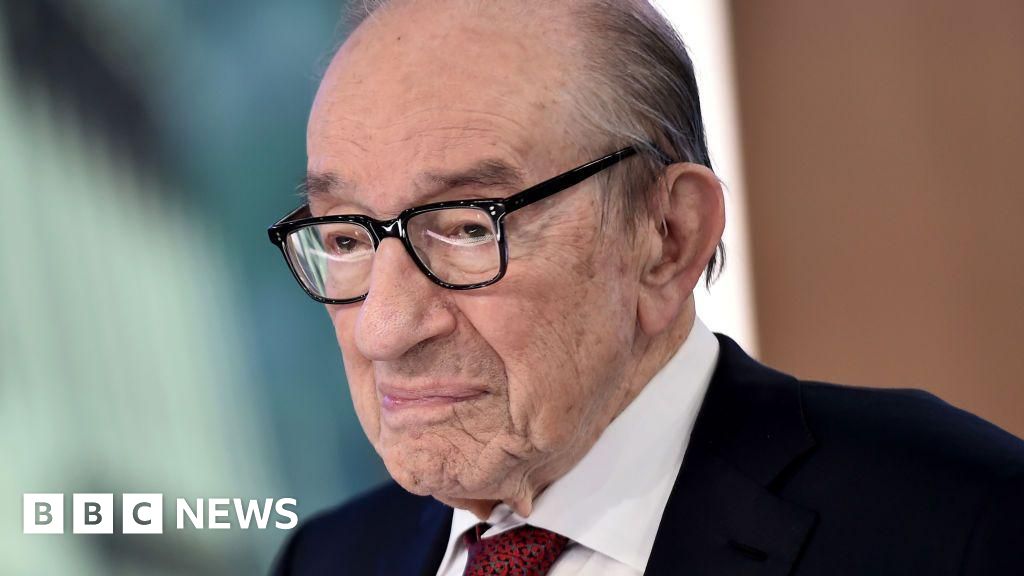
Alan Greenspan, Towering Figure in US Economy, Dies at 100
By Decode Today News
Alan Greenspan, architect of the modern American economy, dies aged 100 Decode Today
Alan Greenspan, the former chairman of the US Federal Reserve who for nearly two decades guided the American economy through periods of unprecedented growth and significant challenges, has died at the age of 100. His wife, NBC News correspondent Andrea Mitchell, confirmed his passing, stating he died from complications related to Parkinson's Disease.
Greenspan's Enduring Influence on Global Finance
Alan Greenspan, often hailed as the "architect of the modern American economy," served as the chairman of the US Federal Reserve from 1987 to 2006, a tenure spanning five presidential administrations. Described by his wife as "a giant of a man who helped shape the US economy for decades," Greenspan's policies and pronouncements held immense sway over global financial markets. During his leadership, the US experienced one of its longest sustained periods of economic growth, leading many to view him as a financial guru and a bulwark against economic downturns. However, his legacy is also marked by significant criticisms, particularly concerning his approach to deregulation and the role his policies may have played in the dot-com bubble and the 2008 sub-prime mortgage crisis.
Greenspan's arrival at the helm of the Federal Reserve in August 1987 thrust him into one of the most powerful positions in the world, often described as second only to the US presidency itself. Within months of his appointment, he faced his first major test: the October 1987 stock market crash, which wiped more than 30% off share prices. His astute handling of the crisis, including a swift statement of confidence in the underlying economy and the facilitation of cheap credit to keep banks afloat, earned him widespread praise. This approach, a precursor to what would later be termed "quantitative easing," became a recurring strategy throughout his tenure whenever markets faced upheaval.
His time at the Fed saw him navigate numerous economic challenges, including the savings and loan crisis of the 1980s, the first Gulf War, and the Mexican peso crisis. Presidents of both parties, from Ronald Reagan, who first appointed him, to George H.W. Bush and Bill Clinton, recognized his unique ability to steer the economy. Surprisingly, the Democratic President Bill Clinton asked the often-described "driest of monetarists" to remain in post, a decision rewarded by a golden era of economic growth in the late 1990s. Greenspan later lauded Clinton's "consistent, disciplined focus on long-term economic growth" in his memoir, contrasting it with what he saw as some Republican administrations' loss of control over public spending.
Greenspan's influence extended beyond American borders, profoundly impacting the global economy. When the "tiger economies" of Southeast Asia faced a spectacular fall in 1997, he responded by cutting US interest rates, signalling his belief in a recovery and aiding the broader world economy. Similarly, in the wake of the 9/11 attacks on America, he dramatically slashed interest rates to support the faltering US economy and even advised President George W. Bush to remove Saddam Hussein, fearing the Iraqi dictator could destabilize global energy markets.
Despite his immense success, Greenspan's tenure was not without controversy. Critics argue that his over-reliance on easy credit fueled speculative bubbles. The "dot-com bubble" of the late 1990s, where many overvalued tech companies failed, led Greenspan to famously coin the phrase "irrational exuberance" to describe the market's overheated state. While the Federal Reserve eventually raised interest rates, critics like Nobel laureate Paul Krugman contended that Greenspan waited too long, only acting after the bubble burst and then attempting to mitigate the damage.
The most significant shadow over Greenspan's legacy, however, emerged after his retirement in 2006. A year later, a downturn in the US housing market rapidly escalated into the sub-prime mortgage crisis, triggering the worst global economic downturn since the Great Depression. Many blamed Greenspan's policy of persistently low interest rates after 9/11 for fueling a sharp rise in house prices and encouraging irresponsible mortgage lending by banks. His philosophical antipathy to regulation and his perceived hands-off approach to the complex financial instruments like derivatives used by banks were also cited as contributing factors. In a candid moment during a 2008 testimony to Congress, Greenspan admitted a "flaw" in his long-held belief that the financial industry could be relied upon to "self-regulate," confessing, "I have found a flaw. I don't know how significant or permanent it is. But I have been very distressed by that fact."
Born in New York City on March 6, 1926, Greenspan's path to becoming the world's most influential central banker was unconventional. Raised single-handedly by his mother, he initially pursued a career in music, studying the clarinet at New York's renowned Julliard School. He toured the country with jazz bands, playing with luminaries like Stan Getz. This nomadic lifestyle, far from the world of finance, surprisingly offered him valuable practical insights into American business. While his bandmates indulged in leisure, Greenspan used his evenings to study economics and manage the band's accounts. At 19, he enrolled at New York University, where he became an ardent supporter of free-market principles, a philosophy cemented by his meeting with the right-wing novelist Ayn Rand in 1952. She dubbed him "the undertaker" for his preference for dark suits, but he embraced her belief in the efficiency of individual self-interest over collective welfare, writing in 1966 that "the welfare state" was a mechanism for confiscating wealth.
Beyond his professional life, Greenspan was known for his sharp intellect and a somewhat detached demeanor. Away from the intense pressures of the Fed, the "grey-looking banker" was an enthusiastic tennis player. His personal life saw an early, brief marriage to a Canadian artist, a relationship with TV star Barbara Walters, before he married Andrea Mitchell in 1997. Even into his late 90s, Greenspan remained a sought-after economic adviser and media pundit. He openly criticized President Trump's "populist approach" as a "shout of pain" unlikely to improve living standards, and condemned Brexit as the "worst outcome" for Britain. In 2023, fast approaching his centenary, he continued to offer his economic insights, warning on television that the Biden administration was raising interest rates too quickly.
Frequently Asked Questions About Alan Greenspan
What was Alan Greenspan's primary role in the US economy?
Alan Greenspan served as the chairman of the US Federal Reserve from 1987 to 2006, a period during which he was considered one of the most powerful figures in global finance. He was responsible for setting monetary policy, managing interest rates, and safeguarding the US economy.
How long did Alan Greenspan serve as Federal Reserve chairman?
Alan Greenspan served for an unprecedented five terms, totaling nearly 19 years, from August 1987 to January 2006.
What were some key economic events during his tenure?
During his time as Fed chairman, Greenspan navigated the 1987 stock market crash, the 1997 Asian financial crisis, the bursting of the dot-com bubble in 2000, and the economic aftermath of the 9/11 attacks.
What criticisms were leveled against Alan Greenspan's policies?
Critics often point to his philosophical opposition to regulation and his policy of low interest rates as factors that contributed to the dot-com bubble and, more significantly, the sub-prime mortgage crisis and the 2008 global financial downturn. He later acknowledged a "flaw" in his belief in the self-regulating nature of financial markets.
Did Alan Greenspan have any non-economic background?
Yes, before pursuing economics, Alan Greenspan was a talented musician. He studied clarinet at the Julliard School of Music and played in jazz bands, including with legendary saxophonist Stan Getz, touring the country.
The Enduring Legacy of a Central Banker
Alan Greenspan's long stewardship of the US economy will be remembered as a period of remarkable growth, during which GDP contracted only once. He was a figure who commanded immense respect and attention, his every public statement meticulously scrutinized by markets worldwide. While he received the Presidential Medal of Freedom and an honorary knighthood from Queen Elizabeth II, his reputation, for many critics, remains indelibly linked to his philosophical aversion to regulation and the two major market crashes that occurred during or immediately after his tenure. Yet, few individuals have shaped the modern American economy as profoundly as Alan Greenspan, leaving behind a complex legacy that continues to be debated and analyzed by economists and policymakers globally.
Decode Today News delivers breaking news on AI, tech, business, politics, and world events — updated daily.
breaking news, AI news, technology news, India news, world news, business news #decodetodaynews