Raspberry Pi Raises Profit Forecast as AI-Driven Demand Fuels Record Growth
Raspberry Pi Raises Profit Forecast as AI-Driven Demand Fuels Record Growth
By Decode Today News
Cambridge-based tech firm Raspberry Pi has significantly boosted its profit expectations, attributing the optimistic outlook to a surge in demand for its compact computers, driven predominantly by the escalating growth in the artificial intelligence (AI) sector. This development underscores the company's pivotal role in enabling accessible AI innovation and has sparked a considerable uplift in its market performance.
 Raspberry Pi Raises Profit Forecast as AI-Driven Demand Fuels Record Growth
The company announced it anticipates delivering adjusted earnings of at least $38 million (approximately £28.2 million) for the first half of 2026. This revised forecast has been met with enthusiasm in financial markets, with shares in Raspberry Pi climbing by as much as 25% in early trading on Friday. The boost propelled its market valuation to an impressive £2 billion, reflecting investor confidence in its strategic direction and product relevance in a rapidly evolving technological landscape.
Driving the AI Revolution with Affordable Hardware
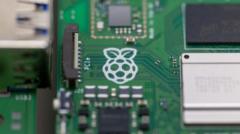
At the core of Raspberry Pi's accelerated success is its signature credit card-sized computer. These low-cost machines are increasingly being adopted for the creation of AI-powered devices, presenting a more economical alternative to conventional, often more specialized, hardware solutions. This affordability has broadened the entry point for developers and enthusiasts eager to experiment with and deploy AI applications, making sophisticated computational power more accessible globally.
The versatility of Raspberry Pi's compact design and processing capabilities allows for its integration into a wide array of AI-centric projects. From smart home devices that learn user preferences to small-scale robotic systems and localized data analysis, these computers offer a robust yet budget-friendly platform for bringing artificial intelligence into practical applications. This capability is proving vital as the global tech industry increasingly focuses on distributed intelligence and edge computing, where processing occurs closer to the data source rather than solely in centralized cloud servers.
The group confirmed that its recent strong performance is a direct reflection of "robust demand for its products." This sustained demand is projected to translate into substantial unit sales, with more than four million devices expected to be sold in the first half of the year alone. Such impressive figures put Raspberry Pi on a trajectory for its earnings for the entirety of 2026 to be "significantly ahead of current market expectations," signaling a period of sustained and exceptional growth that resonates across the technology sector.
Market Momentum and Investor Confidence
The remarkable surge in Raspberry Pi's share price and market value is a testament to the company's impressive trajectory since the beginning of the year. The value of its stock has more than tripled over this period, indicating a strong positive sentiment among investors who recognize the company's unique and pivotal position at the intersection of accessible computing and the booming AI market. This performance not only highlights Raspberry Pi's operational strengths but also its proven capacity to capitalize on emerging technological trends with agility and foresight.
For investors, the revised profit forecast and subsequent market reaction paint a clear picture of a company undergoing significant expansion and solidifying its market footprint. The substantial increase in market capitalization to approximately £2 billion underscores the financial viability of a business model centered on providing high-utility, yet affordable, hardware that supports cutting-edge applications. This increased valuation places Raspberry Pi as a key player to watch in the global tech ecosystem, particularly within the hardware segment that provides the essential building blocks for AI development and deployment.
The sustained investor confidence, evidenced by the tripling of stock value, suggests that the market views Raspberry Pi not just as a temporary beneficiary of the AI boom, but as a strategic long-term contributor to the advancement and democratization of artificial intelligence across various industries and consumer applications.
Evolving User Base: From Hobbyists to AI Innovators
For many years, Raspberry Pi devices have garnered immense popularity among hobbyists, educators, and professional programmers alike, establishing themselves as the most widely sold computers by a UK firm. Their open architecture, extensive community support, and sheer versatility made them a staple for everything from educational projects and home automation systems to custom electronics and personal computing endeavors. This strong foundation in diverse applications laid the groundwork for their next major evolution.
In a significant and highly impactful evolution of their utility, these low-cost machines are now being enthusiastically embraced by a burgeoning community of AI enthusiasts and developers. They are increasingly being deployed to host sophisticated AI assistants, such as OpenClaw, demonstrating their unexpected capacity to support complex artificial intelligence workloads. This transition from a flexible hobbyist tool to a platform for serious AI development showcases the profound adaptability and enduring relevance of Raspberry Pi's hardware in a rapidly changing technological landscape.
This shift highlights a broader and critical trend: the democratization of AI. By providing an affordable and accessible hardware platform, Raspberry Pi is effectively lowering the barrier to entry for a wider array of individuals, startups, and smaller organizations to participate actively in the development and deployment of AI technologies. This fosters innovation outside of traditional, often high-cost and resource-intensive, research environments, allowing for a more diverse range of perspectives and applications to emerge globally.
Navigating Global Component Shortages
The path to this elevated profit forecast has not been entirely without its challenges. Raspberry Pi has had to skillfully navigate a complex and often volatile global supply chain environment, which has been severely marked by a pervasive shortage of critical memory chips. This scarcity, a significant factor for the entire technology industry, was notably driven in part by the insatiable demand from large-scale AI data centers, which require vast quantities of high-performance memory for their intensive computational tasks. The increased competition for these components consequently pushed up costs for manufacturers worldwide, including Raspberry Pi.
In response to these substantial market pressures and rising component costs, Raspberry Pi strategically raised prices for many of its products multiple times over the past few months. This calculated move, while necessary to offset the increased expenditure on vital components, also reflects the strong and inelastic underlying demand for their devices. The company's ability to implement price adjustments without significantly dampening sales underscores the essential and high-value nature of its products across various applications, particularly in the rapidly expanding AI landscape where their cost-effectiveness remains a major draw.
This careful management of supply chain dynamics and proactive pricing strategies demonstrates the company's resilience, strategic acumen, and its deep understanding of prevailing market forces. It also robustly suggests that despite the formidable cost pressures and supply constraints, the fundamental value proposition of Raspberry Pi devices—especially as an affordable and versatile entry point to AI—remains incredibly strong and appealing to a diverse global customer base.
A Global Catalyst for Innovation
Raspberry Pi's latest financial update is more than just a victory for a UK-based tech company; it reflects profound and widespread shifts in the global technology landscape. The burgeoning demand for its low-cost computers for AI applications signals a critical moment in the development and deployment of artificial intelligence. It indicates a significant move towards more accessible, distributed, and democratized AI, enabling innovation to flourish far beyond the confines of well-funded research labs and corporate behemoths.
For individuals, educators, startups, and small businesses across the globe, this means a significantly lower barrier to entry for developing and experimenting with AI. Whether it's for educational purposes, personal projects, small-scale commercial applications, or contributing to open-source AI initiatives, Raspberry Pi provides a tangible, affordable, and widely supported pathway to engage with advanced AI technologies. This democratizing effect has the profound potential to spark innovation in countless communities, fostering new applications and solutions that might otherwise be financially or technically out of reach.
Furthermore, the company's successful navigation of complex supply chain challenges and its ability to maintain robust profitability amidst rising component costs serve as a significant case study for other hardware manufacturers and tech firms globally. It powerfully illustrates the enduring power of a strong product vision, a highly dedicated user base, and adaptive business strategies, even in challenging and unpredictable economic climates.
The Future of Accessible AI
Raspberry Pi's remarkable upward trajectory, fueled by robust and growing AI demand, solidifies its position not just as a hardware provider, but as a profoundly significant enabler in the artificial intelligence ecosystem. The pivotal shift from its traditional role in hobbyist and educational computing to becoming a vital component in mainstream AI development highlights its impressive adaptability, foresight, and strategic capacity in identifying and addressing emerging technological needs on a global scale.
As AI continues its rapid integration into nearly every facet of daily life, industry, and scientific research, the need for cost-effective, versatile, and highly accessible hardware will only intensify. Raspberry Pi's continued innovation in this critical space promises to keep it at the forefront of the accessible computing movement, empowering a new generation of developers, innovators, and thinkers to push the boundaries of what's truly possible with artificial intelligence. Its inspiring success story is a clear indicator of the enduring power of open, flexible, and affordable technology to fundamentally shape the future of digital innovation worldwide.


